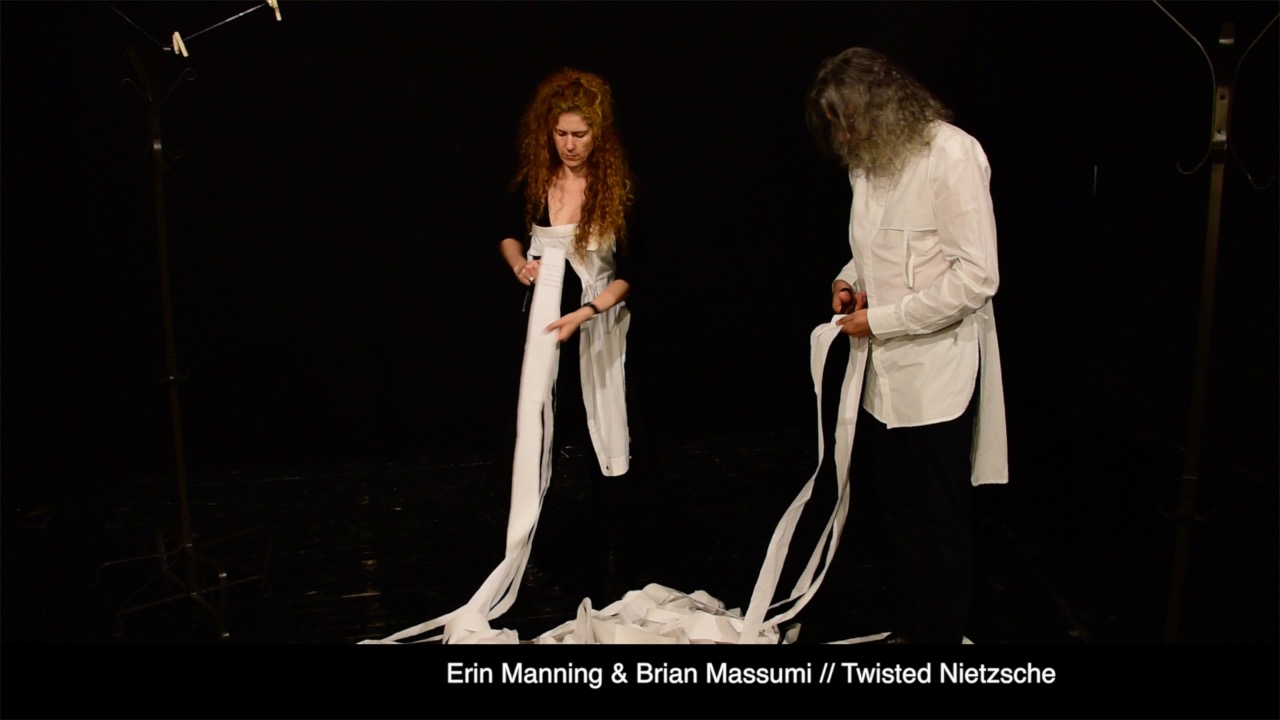
Photo by Christoph Hochenbichler, © Austrian Science Fund (FWF): AR 275-G21
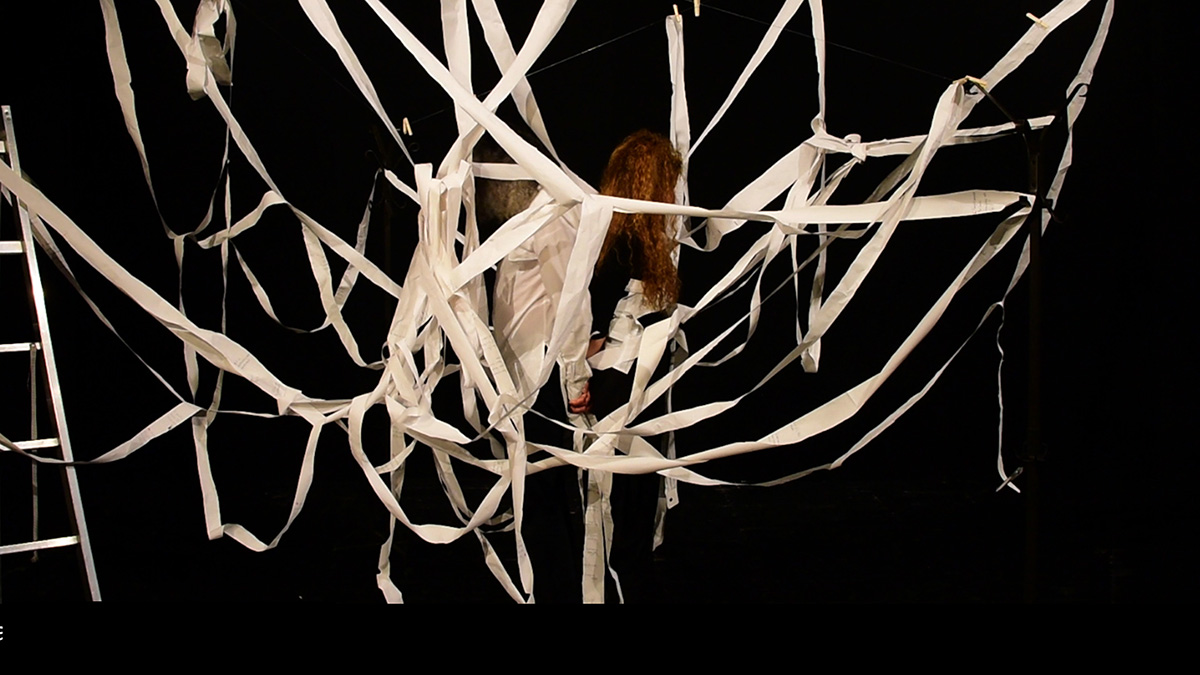
Photo by Christoph Hochenbichler, © Austrian Science Fund (FWF): AR 275-G21
Video documentation of Erin Manning and Brian Massumi
Arno Böhler, University of Vienna
In Spinoza: Practical Philosophy Gilles Deleuze emphasises three major resemblances between Spinoza and Nietzsche: the triple denunciation “of ‘consciousness’, of ‘values’ and of ‘sad passions’” (Deleuze 1988, 17). These practical aspects made Spinozism an object of scandal for his opponents, whilst Spinozists like Deleuze argued that Spinoza had to free us from these three aspects precisely because they stimulate a way of life governed by illusions of transcendence. Such illusions are dangerous, not only for Spinoza, but also for Nietzsche, because they devaluate the value of life itself by virtue of enforcing the regime of the “ascetic ideal” in which a nihilistic “will to nothingness” poisons our earthly existence. In On the Genealogy of Morals Nietzsche is very explicit about this.
We can no longer conceal from ourselves what is expressed by all that willing which has taken its direction from the ascetic ideal: this hatred of the human, and even more of the animal, and more still of the material, this horror of the sense, of reason itself, this fear of happiness and beauty, this longing to get away from all appearance, change, becoming, death, wishing, from longing itself—all this means—let us dare to grasp it—a will to nothingness, an aversion to life, a rebellion against the most fundamental presuppositions of life; but it is and remains a will! (Nietzsche 1989a, 162-163)
According to this passage, the very foundation of a transcendent interpretation of life is based on a hidden aggression of living beings against life itself. Though the fact of a life which has started to hate life as such is self-paradoxical through and through for Nietzsche, there do exist human, or more precise, all too human reasons why somebody develops an aversion against life and its most fundamental presuppositions: Firstly, one has to embody a genuine “rancor against sensuality” and secondly one has to be attracted by the “ascetic ideal”; if both attributes are missing in a philosopher, “then—one can be sure of it—he is always only a ‘so-called’ philosopher” (Nietzsche 1989a, 106-107).
One crucial philosophical point in Nietzsche’s argumentation against the ascetic ideal lies in his assumption that the reason why somebody desires transcendent values is in fact not a matter of somebody’s intelligible but, on the contrary, of somebody’s empirical nature. Firstly, one has to embody a particular constellation of drives secretly operative in a person on an instinctual, pre-reflective level in order to be ready and willing to affirm a mode of being which commands a person to develop a peculiar self- and alter-destructive aversion against life itself in one’s life. The will to nothingness, which regularly pops up in the history of morals thus is nothing less than a matter of somebody’s choice; it is a physiological disposition in which the aversion against life as such became the basic instinct of a mode of being which finds its optimum way of life in the denial of our earthly existence.
Nietzsche finds the specific assemblage of drives (conatus), commanding a person to strive toward the ascetic ideal most explicitly expressed and embodied in the conceptual persona of the ascetic priest. Because “[o]nly now that we behold the ascetic priest do we seriously come to grips with our problem: what is the meaning of the ascetic ideal?” (Nietzsche 1989a, 116). The ascetic priest is the key figure in the struggle between an immanent versus transcendent interpretation of life, because he needs the ascetic ideal physiologically—given that this ideal is the only proper milieu which allows him to preserve his highly self-contradictory mode of being-in-the-world. For him, the question “What is the meaning of the ascetic ideal?” is not just a theoretical issue, it rather expresses the specific struggle for survival of the ascetic priest. His entire “right to exist stands or falls with that ideal: no wonder we encounter here a terrible antagonist—supposing we are antagonists of that ideal—one who fights for his existence against those who deny that ideal” (Nietzsche 1989a, 116).
Though an ascetic life is highly self-paradoxical in itself, insofar as it wants to master not only a part of life but neglects the entire empirical preconditions of life itself, the ascetic priest astonishingly comes into being, as Nietzsche emphasizes, in almost every age and in almost any culture over and over again. Obviously, and most surprisingly, this life-inimical form of life does not die out.
Nietzsche therefore concludes that this genuine mode of being must necessarily appear “in the interest of life itself ” (Nietzsche 1989a, 117). There must exist something like a “death-drive,” a self-contradictory “will to nothingness” within the very structure of life itself, which periodically produces this mode of being hostile to life itself. Under certain recurring circumstances it looks as if the desire to annihilate life would operate in the interest of life itself.
When Nietzsche asks the question what the ascetic ideal in fact means, it is precisely this paradox of a life, haunted by an uncanny wish to die, which is at stake.
Recollecting what has been said so far it comes as no surprise that Nietzsche claimed, already in Gay Science No 335, that the intellectual honesty of a new species of philosophers—philosophers of immanence, as I would like to denote them by now—calls them to study physics rather than meta-physics. Arguing that hitherto all valuations and ideals have been based on ignorance of physics or have been constructed precisely so as to contradict it, in his Gay Science Nietzsche proclaimed his new imperative in diametrical opposition to Kant: “[L]ong live physics! And even more so that which compels us to turn to physics—our honesty!” (Nietzsche 1974, 266).
The philosophers to come, namely “those whose taste and inclination are almost the reverse of their predecessors’” (Nietzsche 1998, 6), are precisely those philosophers, who are finally able to accept that “the lived-body is more surprising and thought-provoking than the old [concept of the] ‘soul’” (Nietzsche 1999, KSA 11, 565 [Group 36, No. 35]).[2]
This proposition is not just one argument among others against the meta-physical, that is to say, ascetic image of thought for Nietzsche. It is rather the expression of the new image of thought he has started to invent at first in the history of philosophy. Making the body the new model of thinking, Nietzsche counters the moral image of thought which asks us to voluntarily dominate, control and discipline our bodies. Up to then philosophers were standing amazed before phenomena like consciousness, will, reason or language, they discovered a thousand ways of moving the body, of dominating the body and the passions, but they missed to have a close look at the body and to ask themselves in line with Spinoza what a body can do without being disciplined and determined consciously by our mind (cf. Spinoza 2000, 167).
Avoiding a close look at instinctual life, secretly operative in the cellar regions of a lived-body, and instead privileging the analysis of the free, self-conscious, decision-making will is precisely Nietzsche’s new definition of what constitutes a meta-physical interpretation of the world, governed by illusions of transcendence. Having no eye for fleshly matters is therefore by no way arbitrary for the species of classical thinkers. It is precisely their specific mode of being, their special mode of desiring: “la bête philosophe”, that is to say, the pre-reflective life secretly operative in the body of a philosopher that strives, instinctively, toward the optimum of favorable conditions which allow philosophers to achieve the maximum power they are able to perform.
But what is it exactly, the conatus of a philosopher is typically striving for according to Nietzsche? “Repose in all cellar regions” (Nietzsche 1989a, 108), „Ruhe in allen Souterrains“ (Nietzsche 1999, KSA 5, 352)—this is what the bodies of philosophers for him are basically longing for. This instinct has even defined their concept of thinking: They experienced thinking to be a releasing life-practice that liberated themselves from the noise of that part of their lived-bodies which unconsciously functions in the basement of their body. Feeling comfortable while thinking detached from their earthly, bodily existence, they finally wanted thinking to be a realm that should operate entirely independently of their desiring machines in a pure mental, disembodied space.
It is not at all remarkable according to Nietzsche that, after so many centuries, philosophers have indeed learned to isolate and detach thinking from their “souterrains”. They wanted to make the cogito, the subject that thinks, the dominant, the ruling, the most powerful drive in the entire fabric of drives they actually embody. And finally they succeeded. Thinking became indeed something disinterested; something “objective;” something, which functions, at least up to a certain degree, indeed separately from the pre-reflective life operative in the lived-body of a philosopher. In detaching oneself from instinctual life, a philosopher consequently does not at all deny his existence according to Nietzsche, “he rather affirms his existence and only his existence” (Nietzsche 1989a, 108).
The performance of thinking, one can resume with Nietzsche, is just the optimum condition a philosopher’s body is characteristically striving for in order to achieve the maximal power his or her conatus is instinctively longing for in the performance of a life.
Schopenhauer’s interpretation of beauty—as a temporary form of silencing all our desires—is only the most telling example for Nietzsche of what it meant for a classical metaphysician like him to realize his optimum. Schopenhauer wanted to get rid of his desiring machine and instead enter exactly that particular state of being in which his cogito is no more disturbed, probably even tortured by the noise of desires, operative primarily in the cellar regions of his lived-body.
Insofar as philosophers wanted thinking to be a realm that functions entirely independent of their instinctual lives, strivings and desires, they are obviously not the best candidates to counter the ascetic ideal for Nietzsche. But the same is true for scientists and the sciences, says Nietzsche: “Don’t come to me with science when I ask for the natural antagonists of the ascetic ideal, when I demand: ‘where is the opposing will expressing the opposing ideal?’” (Nietzsche 1989a, 153). Science too does not really qualify for a natural antagonist of the ascetic ideal because, like meta-physicians, scientists are still interested in a disinterested eye; in an objective, detached, neutral and context free observer. They cannot full-heartedly affirm the perspectivism constitutive for any living being. Nietzsche’s point of view is resolute: Science is just the modern version of the ascetic ideal because, physiologically spoken, “science rests on the same foundation as the ascetic ideal: a certain impoverishment of life is a presupposition of both of them—the affects grown cool, the tempo of life slowed down, dialectics in place of instinct, seriousness imprinted on faces and gestures” (Nietzsche 1989a, 154). The conatus of scientists strives obviously for the same as the conatus of ancient philosophers did. This is the reason why Nietzsche claimed that modern science, from a physiological viewpoint, “is the best ally the ascetic ideal has at present, and precisely because it is the most unconscious, involuntary, hidden, and subterranean ally!” (Nietzsche 1989a, 155)
There exists an unconscious of science, secretly at work in the basements of the lived-bodies, engaged in doing science. It is this hidden condition, a certain type of the social construct of drives and emotions, of a Socratic kind of soberness, that has not yet been laid open in the history of science as a secretly operative affective precondition of science.
Only in the course of long wanderings in the forbidden (cf. Nietzsche 1989b, 218), that is to say, only after having practiced thinking in an almost psycho-analytical manner over years, Nietzsche was able to confess to himself that “the largest part of conscious thinking has to be considered an instinctual activity, even in the case of philosophical thinking” (Nietzsche 1998, 7).
In this proposition we probably do find the most explicit formulation of Nietzsche’s new image of thought. Having the courage to read between the lines of philosophers and having a close look “at their fingers”, namely at the body-part physically engaged in the process of writing, Nietzsche himself finally became capable of unmasking the hidden words and the forbidden truths showing up, silently, in the middle of what philosophers explicitly say and write. Displaced truths like the one that the realm of thinking is grounded in “physiological demands for the preservation of a particular kind of life” (Nietzsche 1998, 7).
Declaring that “‘consciousness’ is scarcely opposite to the instincts in any decisive sense” (Nietzsche 1998, 7), Nietzsche raised a new level concerning the question “What is called thinking?” by assuming that “most of a philosopher’s conscious thinking is secretly guided and channelled into particular tracks by his instincts”. Probably this assumption is the most shocking aspect of his new image of thought for classical philosophers.
Are we meanwhile ready to receive the thought-provoking hit that comes along with this new mode of thinking? Of thinking almost in an artistic manner: not against the flesh, but with it, probably even for the sake of it?
Since philosophers and scientists are not really qualified candidates willing to resist the ascetic ideal by actually inaugurating a counter-ideal—“The ascetic ideal expresses a will: where is the opposing will that might express an opposing ideal?” (Nietzsche 1989a, 146, cf. 153)—Nietzsche was finally forced to call Zarathustra into being: as the long-desired inventor of a counter-ideal to the ascetic ideal.
Being the teacher of an immanent conception of life, whose pride calls on human beings “no longer to bury one’s head in the sand of heavenly things, but to carry it freely, an earthen head that creates a sense of the earth!” (Nietzsche 2005, 28), Zarathustra at first started to distinguish strictly between the “despisers of the body”, who are “angry with life and earth” (Nietzsche 2005, 30-31) and therefore ready to affirm a mode of living governed by illusions of transcendence and, on the other hand, those who “stay true to the earth and do not believe those who talk of over-earthly hopes!” (Nietzsche 2005, 12) Two modes of being, which could not be more contradictory.
But where are Zarathustra’s allies in this struggle between an immanent versus transcendent interpretation of life?
Unmasking the glory of the ascetic priest as a will to nothingness, that makes people believe in a (transcendent) World-Behind (Hinterwelt), Zarathustra actually started to resist the conceptual persona of the ascetic priest in deed. Knowing that he will face “a terrible antagonist” in this combat of somebody “who fights for his existence against those who deny that ideal” (Nietzsche 1989a, 116).
Art —to say it in advance, for I shall some day return to this subject at greater length—art, in which precisely the lie is sanctified and the will to deception has a good conscience, is much more fundamentally opposed to the ascetic ideal than is science. (Nietzsche 1989a, 153-154)
This statement, in which Nietzsche considers art to be much more fundamentally opposed to the ascetic ideal than is science can be grasped a guiding theme of the research-festival Philosophy On Stage#4, Nietzsche et cetera, realized at Tanzquartier Wien in the context of the research project “Artist-Philosophers. Philosophy AS Arts-based Research” (AR275-G21), funded by the Austrian Science Fund (FWF). The basic intention of the research-festival was to stimulate an artistic-philosophical confrontation with Nietzsche’s art-like way of thinking by experimentally testing modes of arts-based philosophy, able and willing to counter in practice the ascetic image of thought.
In preparation of the festival, which finally took place from 26 th–29th November 2015, more than 60 philosophers, artists and scientists were invited to create research contributions for the festival, addressing the following research questions:
At the Philosophy On Stage#4 research festival, finally a total of 43 research contributions were presented—lectures, lecture-performances, interventions, morning and evening readings—in the context of which philosophers established research alliances with artists, in order of generating arts-based images of thought supposed to give back to philosophy its corporeality, materiality and sensibility. Assuming, methodologically, that once philosophers and scientists are asked to generate their ideas on stage, and for the stage, they automatically will develop arts-based-research practices sensitive to and mindful of thematerial conditions in which they actually think and by means of which their way of thinking is in fact subterraneously channelled. Suddenly bodies do matter for them, which usually do not matter for “serious” philosophers and “serious” scientists, whereas they have always mattered for the arts and will necessarily matter for the artist-philosophers to arrive: The light in the room // the mode in which one makes use of one’s body while thinking // the sound and timbre of somebody’s voice // the architecture of the building in which the presentation of a lecture, a lecture-performance, performance or performative intervention takes place // the spatial setting of the audience // the dress code // the way one exposes oneself to others // et cetera.
Philosophy On Stage thus defined artist-philosophers as philosophers who have learned to think like artists, insofar as they are no longer concerned with the conceptualization of general ideas only but also with the concrete spatio-temporal design of material conditions that allow a concept to arrive.
The visitors of Philosophy on Stage—most of all students of philosophy, of theatre, film and media studies at the University of Vienna and of the University of Applied Arts Vienna—were over one entire semester topically prepared for Philosophy On Stage, Nietzsche et cetera, whereas three art labs were realised for the artists, philosophers and scientists ready to stage philosophy where they could collectively develop research contributions to be presented at the Philosophy on Stage#4 event.
The first art-lab, realised from 16th–18th January 2015 at Studio Tanzquartier Wien was about differentiating Nietzsche’s image of thought from other images of thought which, as Wittgenstein writes in his Philosophical Investigations, hold us in cultural-historical captivity. [3]
For Nietzsche, a trained classical philologist, it was evident that the art inimical instincts of Plato, “the greatest enemy of art Europe has yet produced” (Nietzsche 1989a, 154), is still key for defining today’s common image of thought in particular concerning the usual interpretation of the relation between philosophy, the sciences and the arts. Who is under the spell of our European history of mind need not have read or studied Plato to think like Plato. Nietzsche rather assumes that one thinks like he did because over a period of more than 2,500 years the (idealistic) image of thought he created has been cultural-historically implanted so deep that on the contrary we are hardly able anymore to think differently from him: namely post-Plato, that is beyond the disciplining constraints enforced on us by his image of thought. Inevitably. Automatically. Almost mechanically. Quasi instinctively.
In the course of Art-Lab#1, in the context of lectures, the antagonistic images of thought of Plato and Nietzsche were analysed in detail and discussed. Always regarding our goal to deconstruct those images of thought which historically hold us captive, not only in theory but also when it comes to the methodological consequences for the practice of thought.
In the course of Art-Lab#2, realised from 1st–3 rd May 2015, finally the focus of our questioning started shifting towards the ways of presenting and expressing thought.
Now the time had come for starting concrete ways of an inter- and trans-disciplinary cooperation of artists and philosophers.
In several reading circles we read Nietzsche texts together and started to develop concrete research contributions for Philosophy On Stage#4:
Photo by Christoph Hochenbichler, © Austrian Science Fund (FWF): AR 275-G21
Photo by Christoph Hochenbichler, © Austrian Science Fund (FWF): AR 275-G21
Video documentation of Erin Manning and Brian Massumi
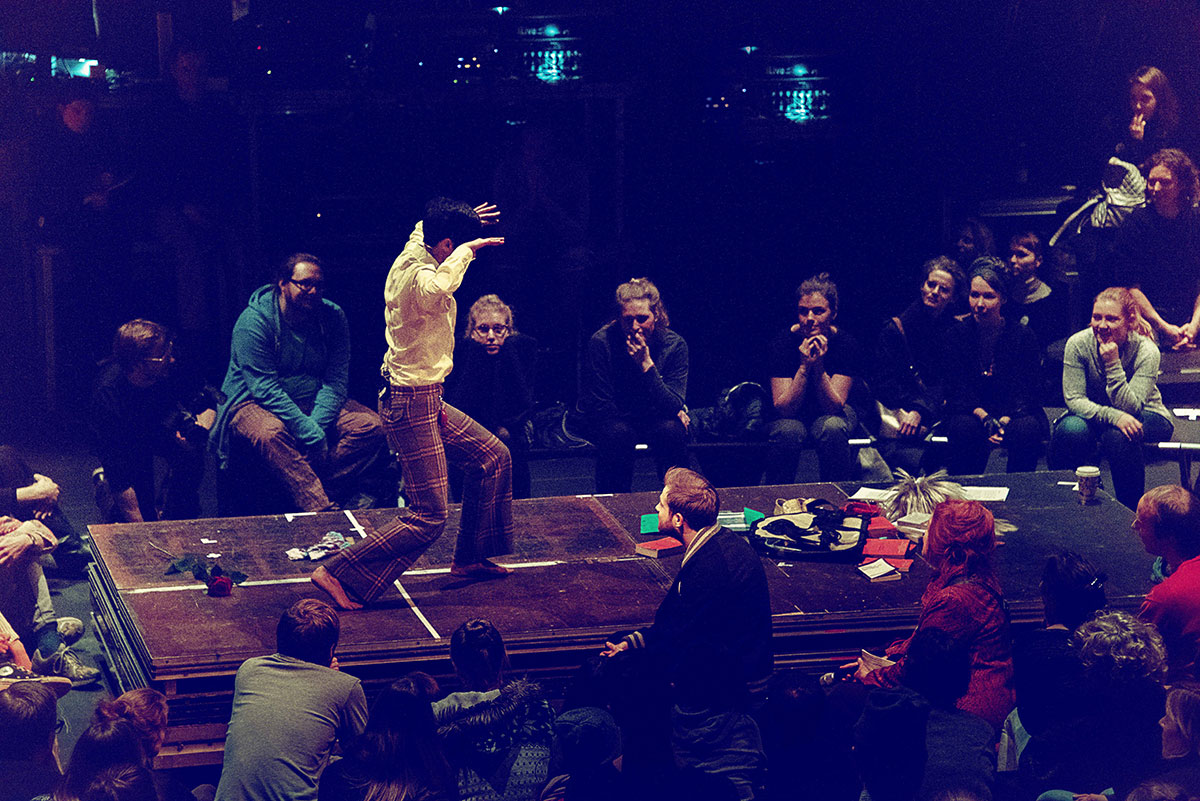
Photo by Christoph Hochenbichler, © Austrian Science Fund (FWF): AR 275-G21
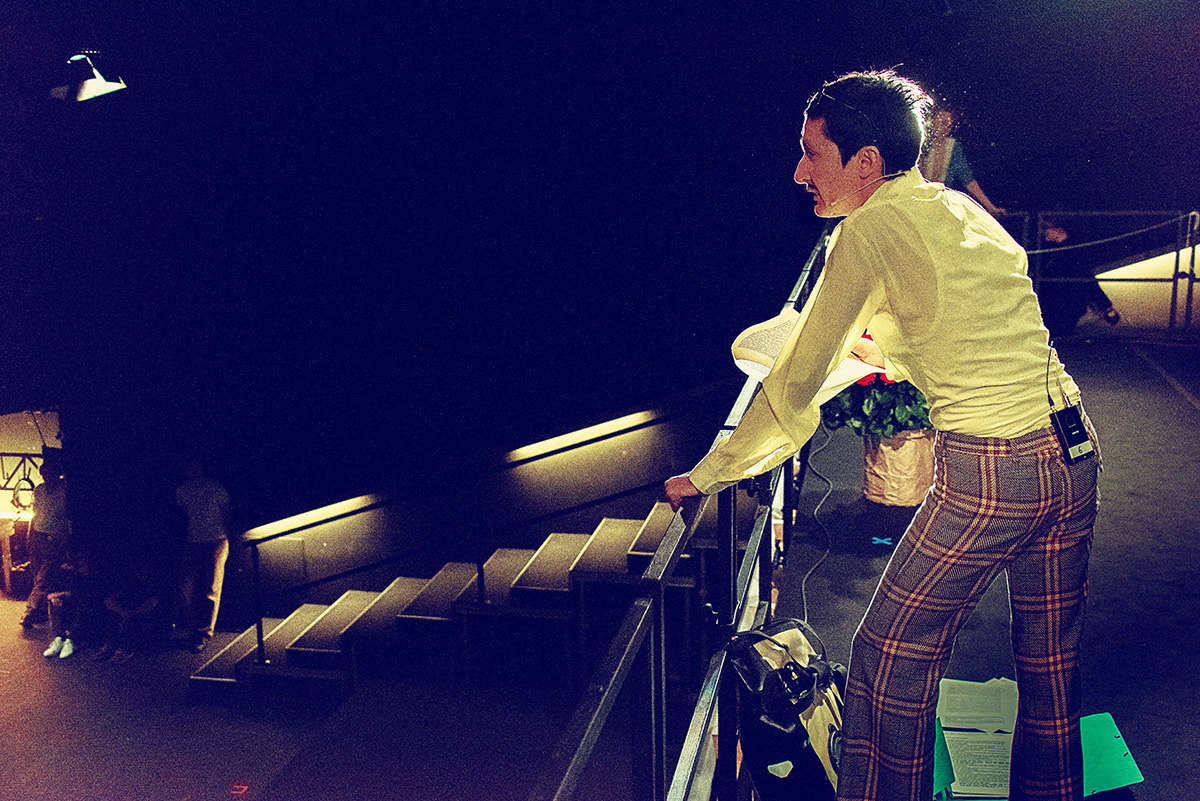
Photo by Christoph Hochenbichler, © Austrian Science Fund (FWF): AR 275-G21
Video documentation of Barbara Kraus
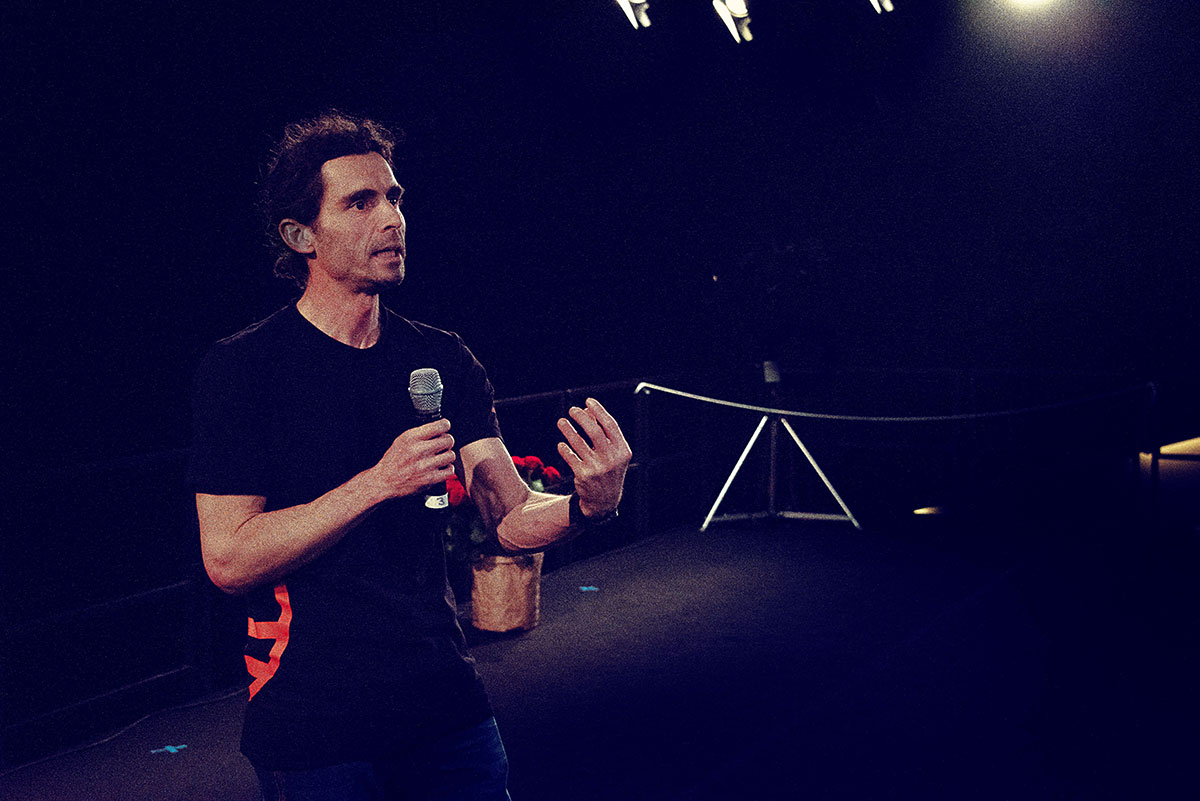
Photo by Christoph Hochenbichler, © Austrian Science Fund (FWF): AR 275-G21
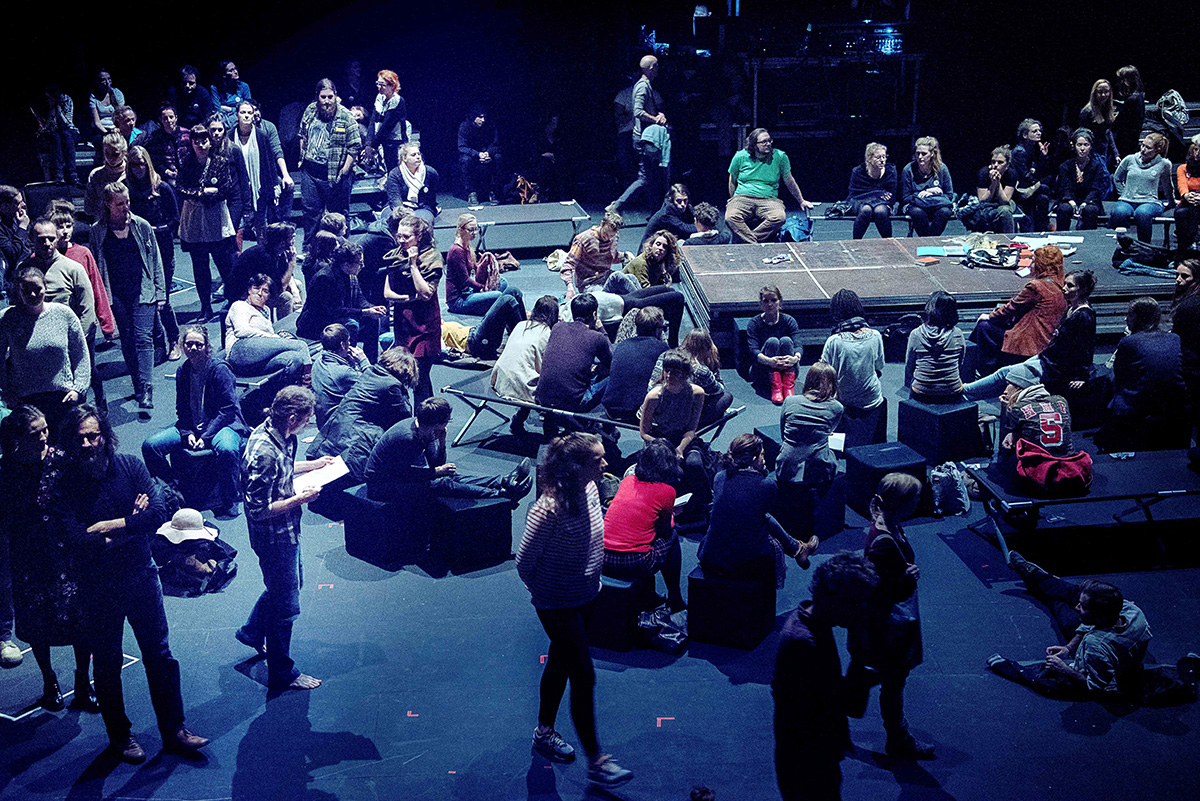
Photo by Christoph Hochenbichler, © Austrian Science Fund (FWF): AR 275-G21
Video documentation of Jens Badura
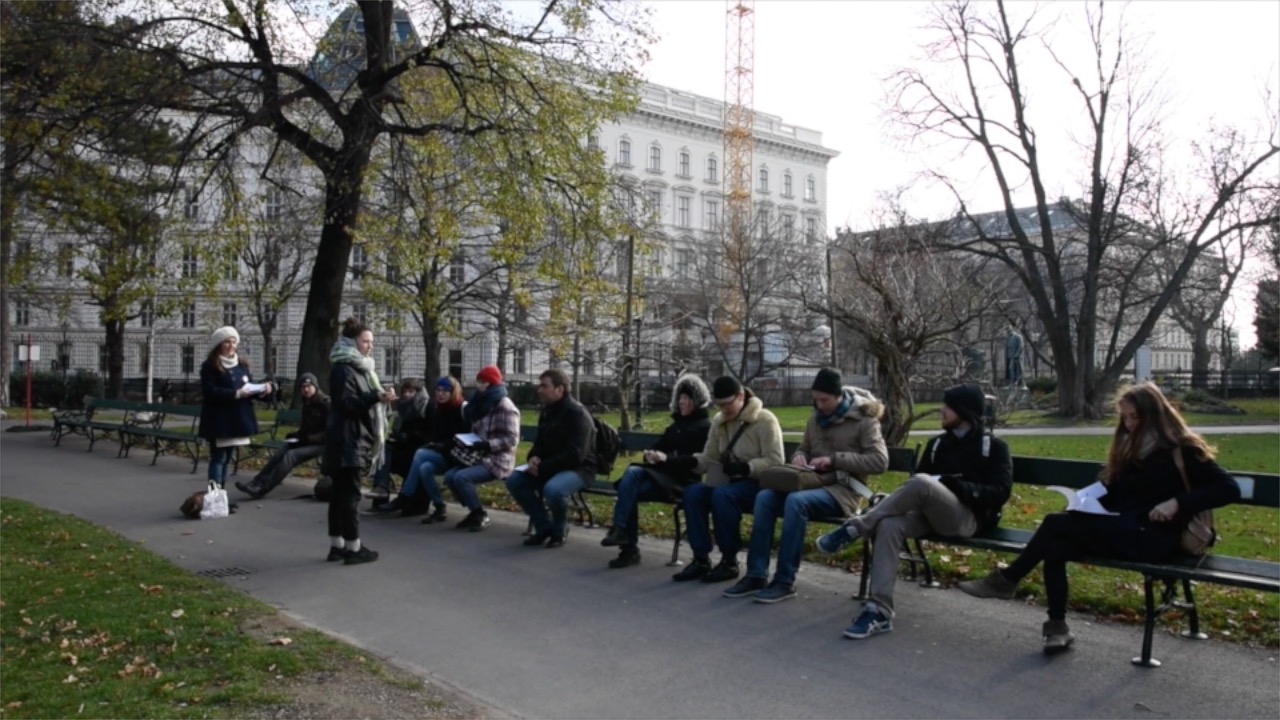
Photo by Christoph Hochenbichler, © Austrian Science Fund (FWF): AR 275-G21
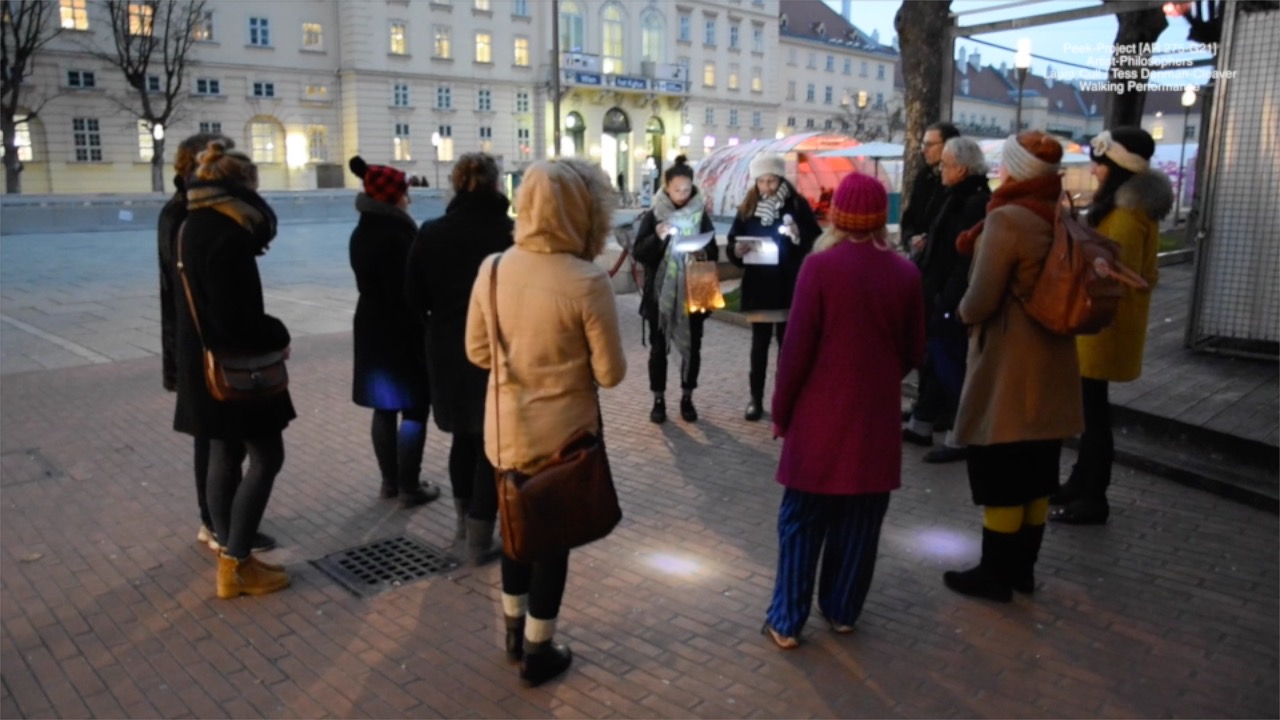
Photo by Christoph Hochenbichler, © Austrian Science Fund (FWF): AR 275-G21
Video documentation of Laura Cull Ó Maoilearca
and Tess Denman Cleaver
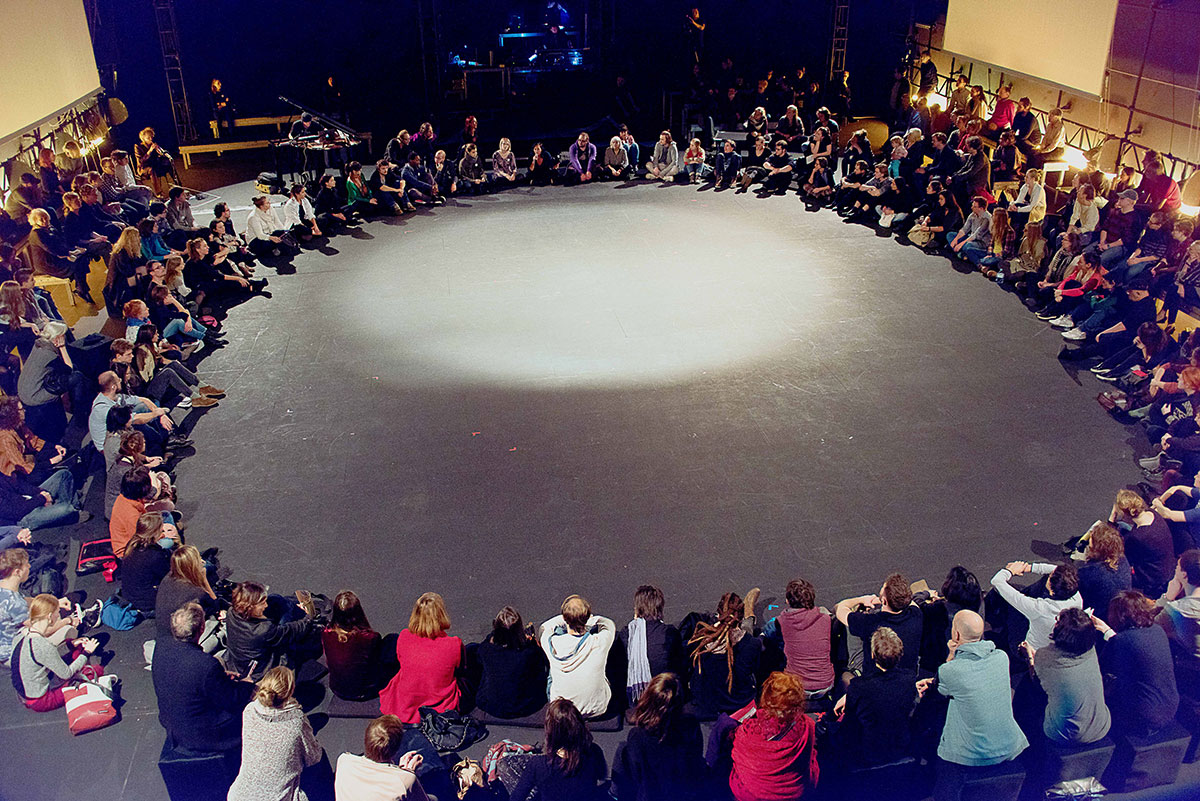
Photo by Christoph Hochenbichler, © Austrian Science Fund (FWF): AR 275-G21
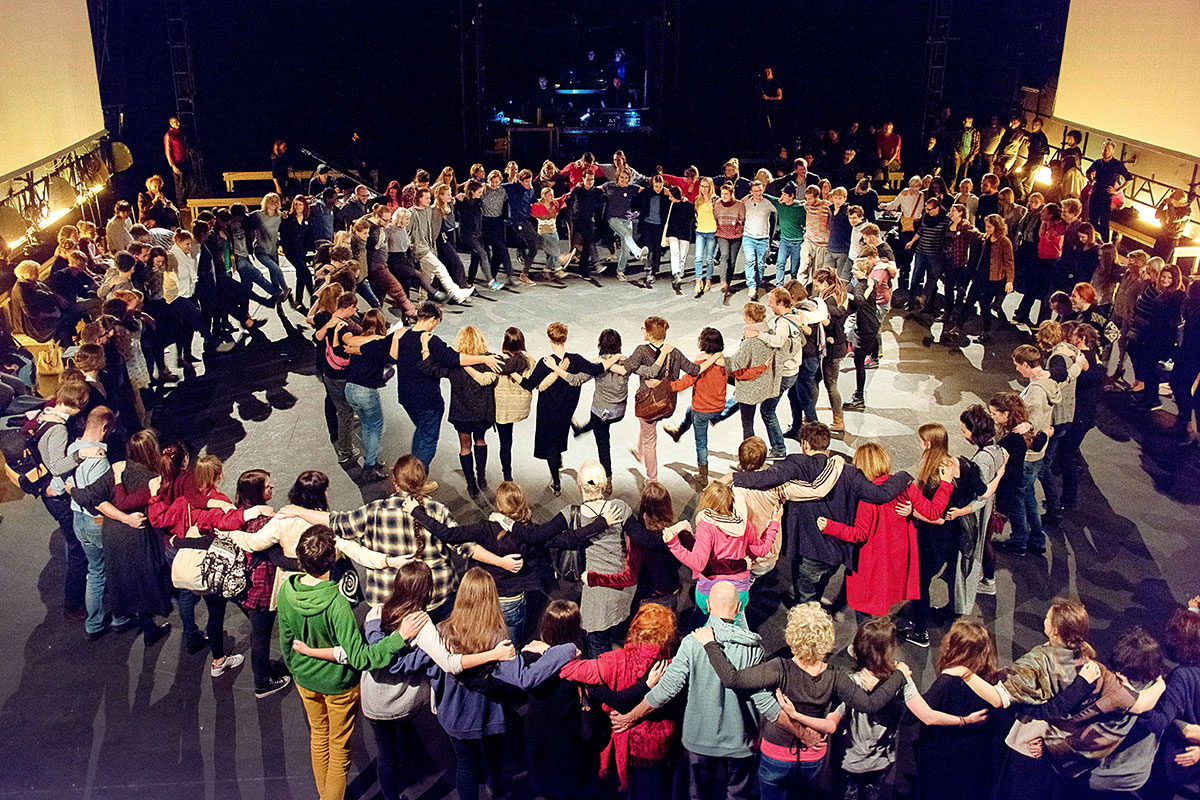
Photo by Christoph Hochenbichler, © Austrian Science Fund (FWF): AR 275-G21
Video documentation of Anna Mendelssohn
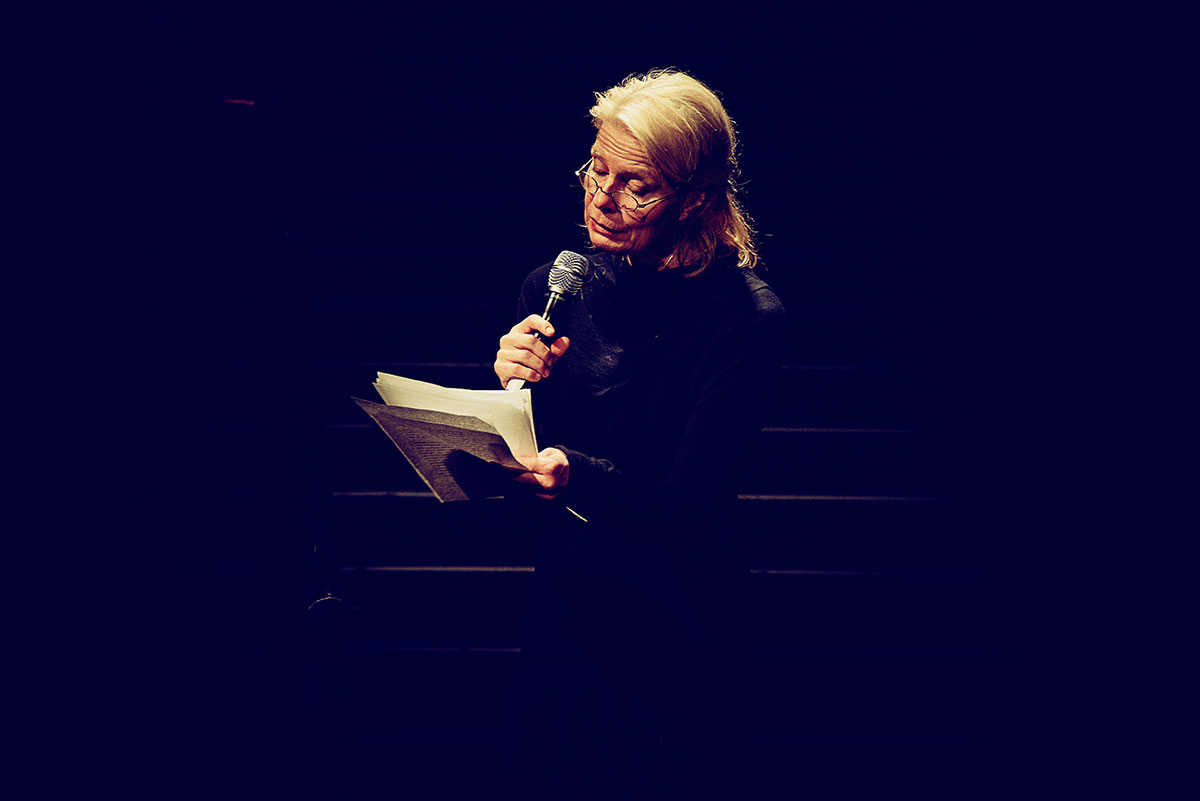
Photo by Christoph Hochenbichler, © Austrian Science Fund (FWF): AR 275-G21
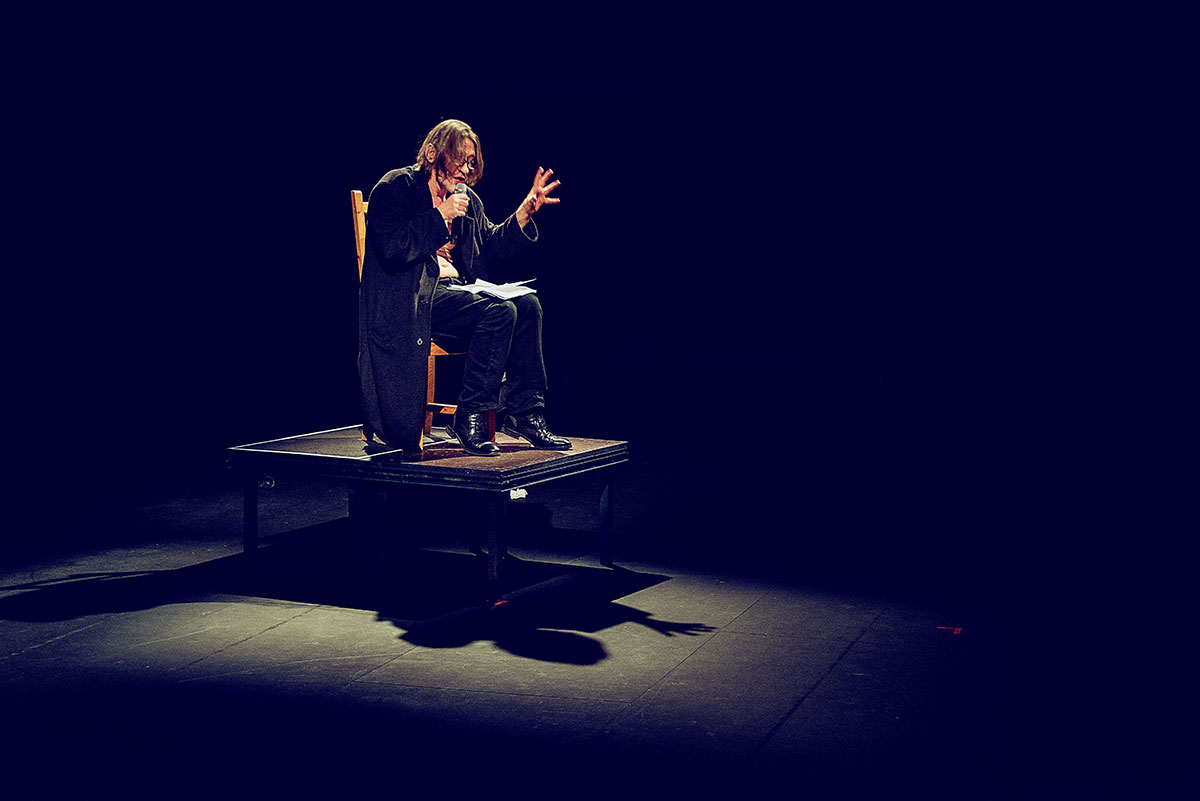
Photo by Christoph Hochenbichler, © Austrian Science Fund (FWF): AR 275-G21
Video documentation of Corinna Kirchhoff and
Wolfgang Michael
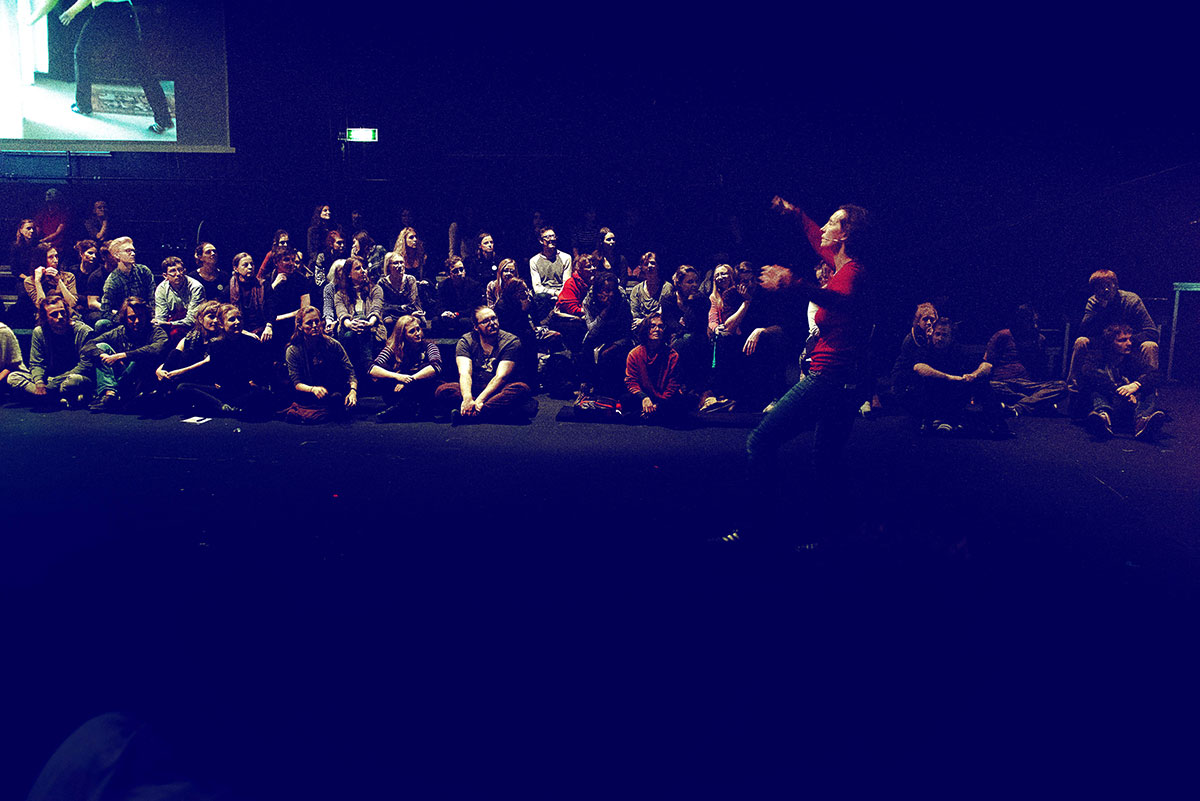
Photo by Christoph Hochenbichler, © Austrian Science Fund (FWF): AR 275-G21
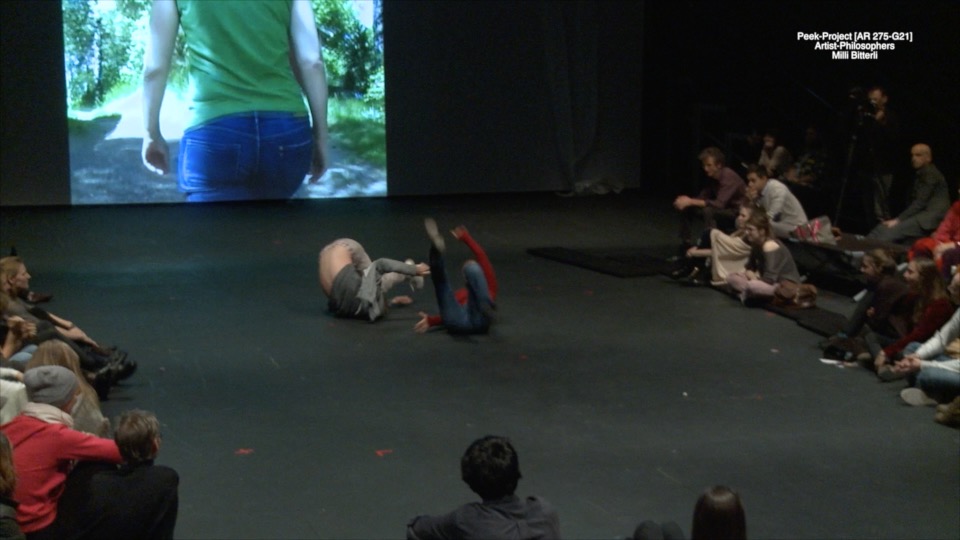
Photo by Christoph Hochenbichler, © Austrian Science Fund (FWF): AR 275-G21
Video documentation of Milli Bitterli
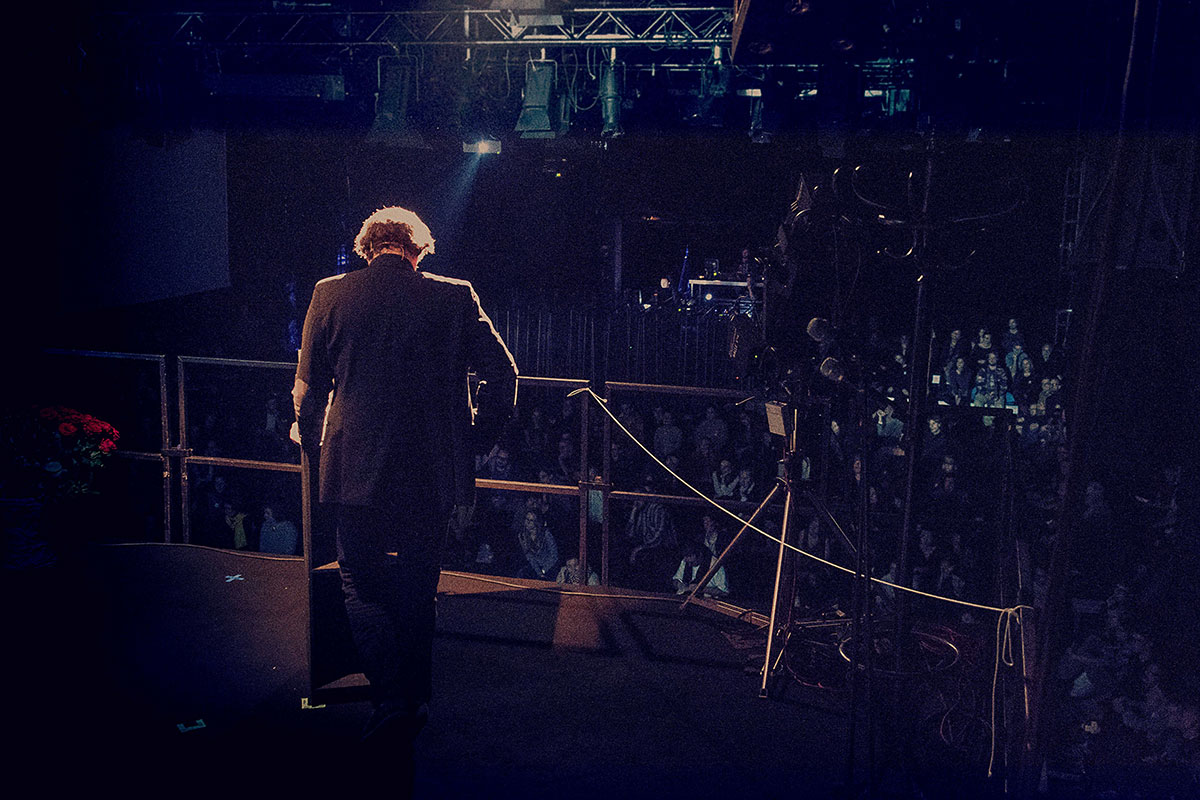
Photo by Christoph Hochenbichler, © Austrian Science Fund (FWF): AR 275-G21
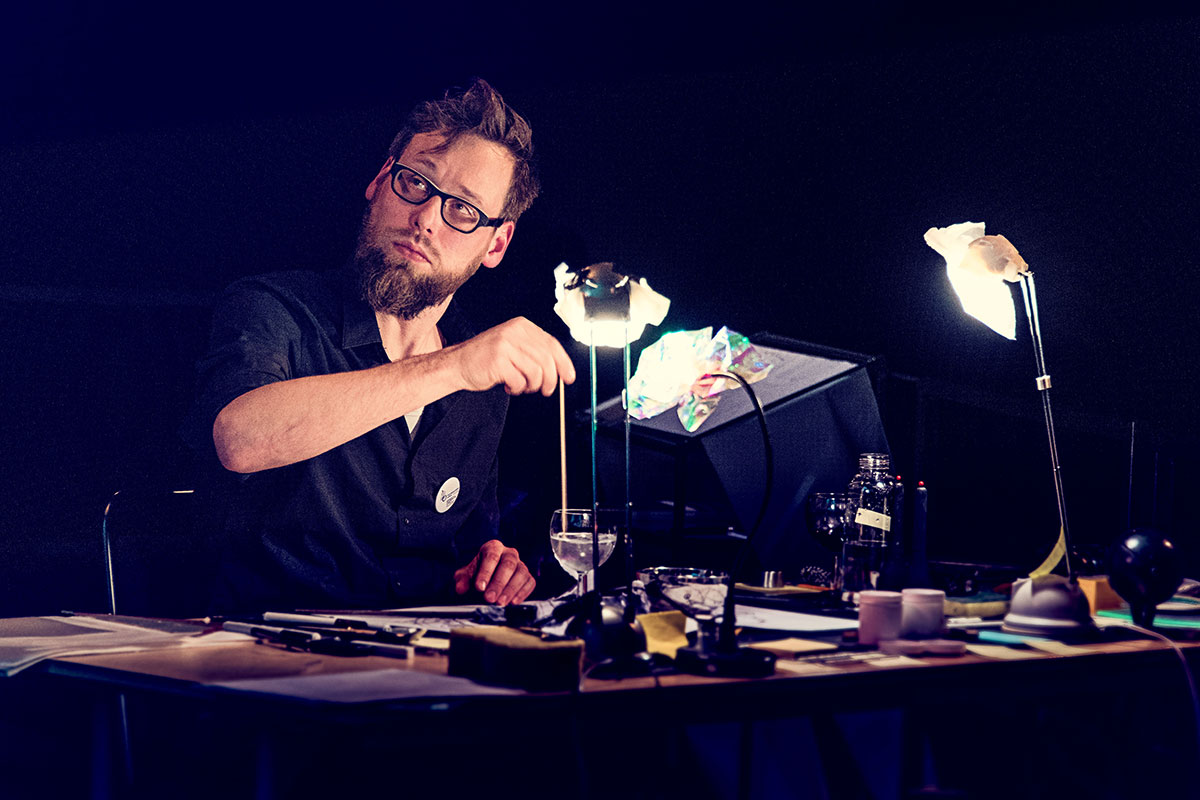
Photo by Christoph Hochenbichler, © Austrian Science Fund (FWF): AR 275-G21
Video documentation of Dieter Mersch and Nikolaus
Gansterer
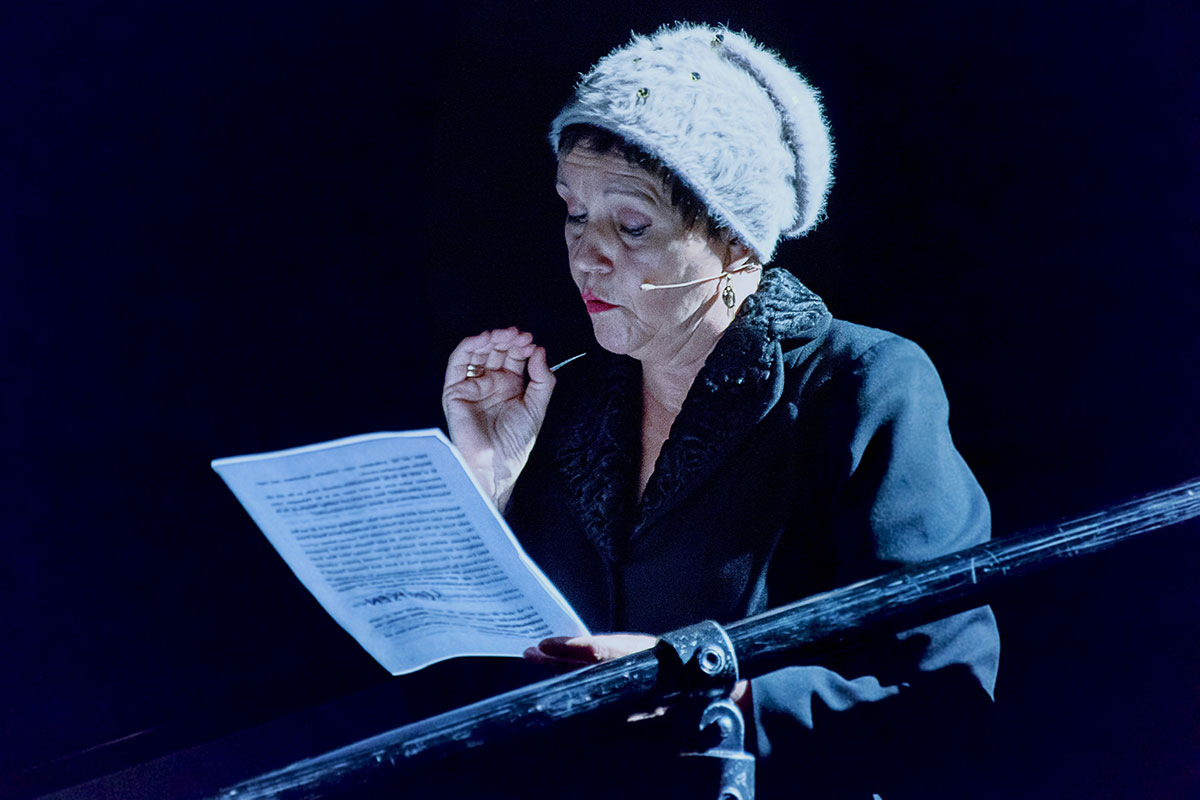
Photo by Christoph Hochenbichler, © Austrian Science Fund (FWF): AR 275-G21
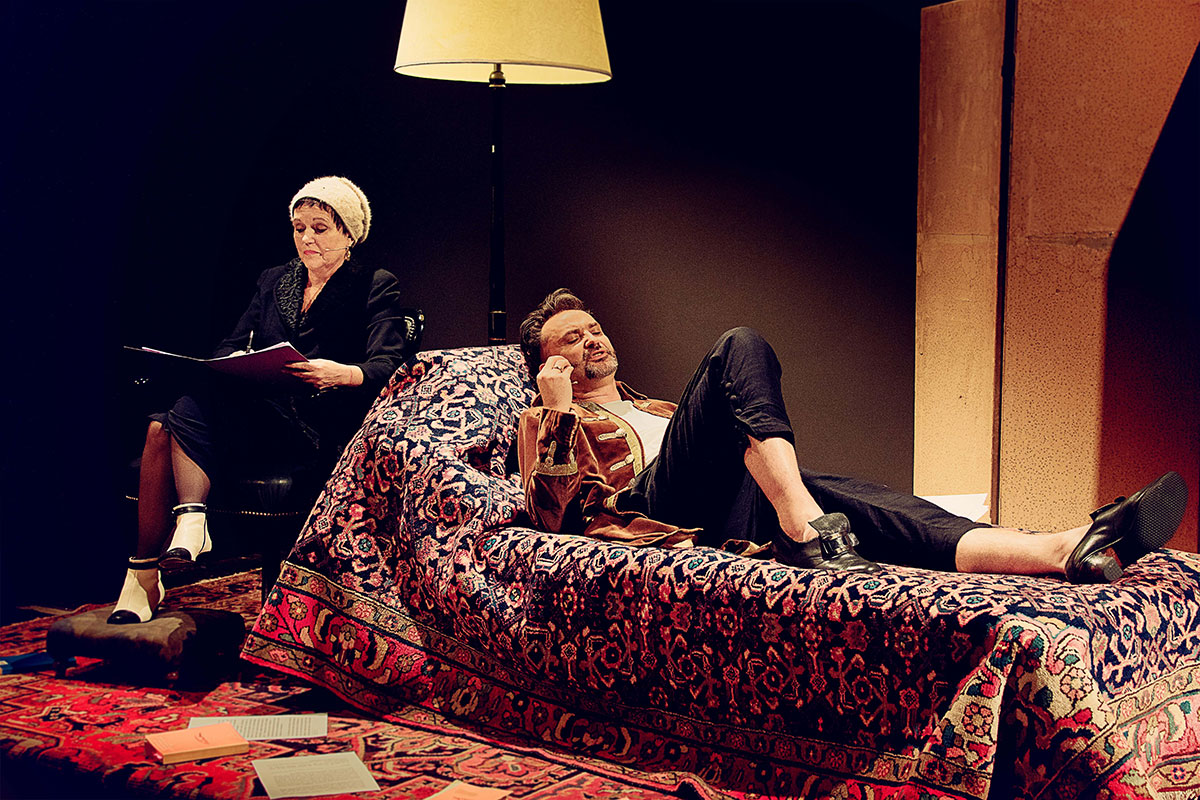
Photo by Christoph Hochenbichler, © Austrian Science Fund (FWF): AR 275-G21
Video documentation of Susanne Valerie Granzer and
Arno Böhler

Photo by Christoph Hochenbichler, © Austrian Science Fund (FWF): AR 275-G21

Photo by Christoph Hochenbichler, © Austrian Science Fund (FWF): AR 275-G21
Video documentation of Hester Reeves
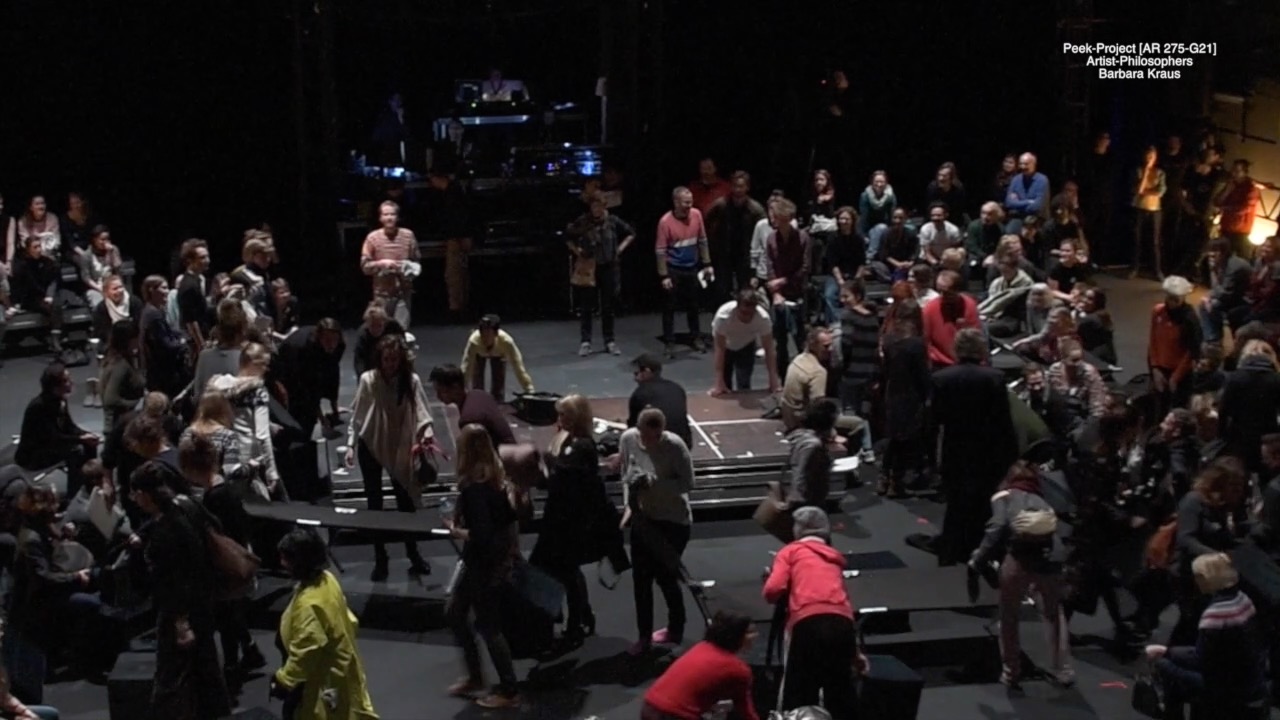
Photo by Christoph Hochenbichler, © Austrian Science Fund (FWF): AR 275-G21
and the Theatre of Assemblage was even directed by the audience.
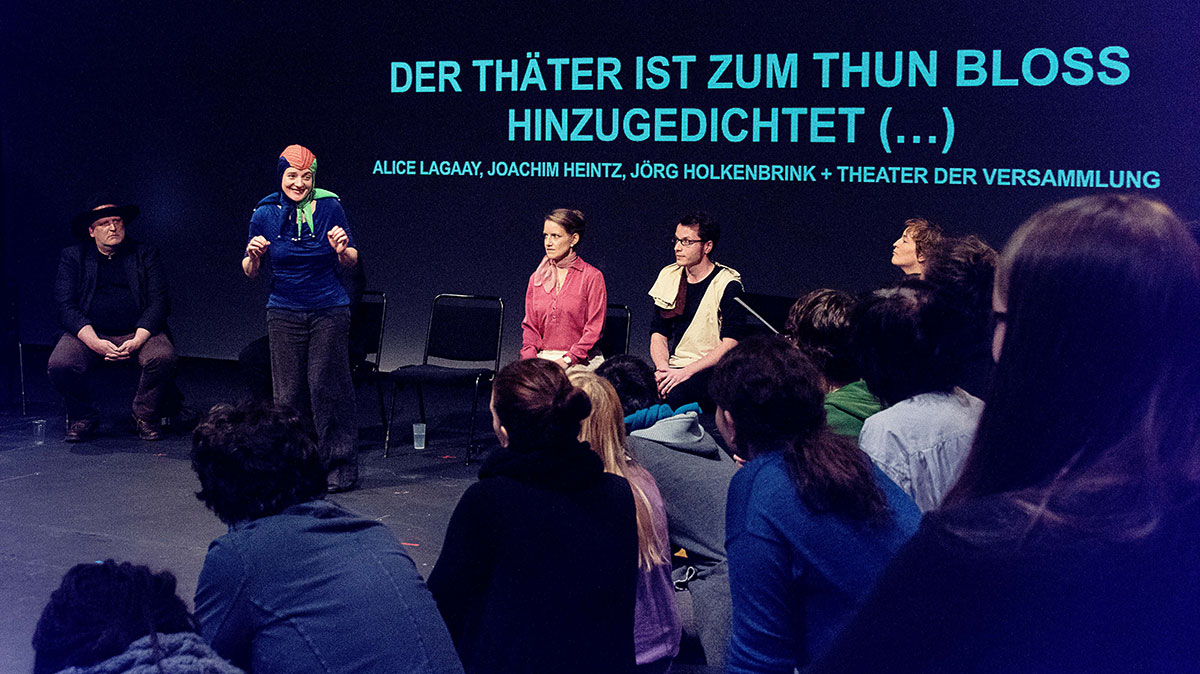
Photo by Christoph Hochenbichler, © Austrian Science Fund (FWF): AR 275-G21
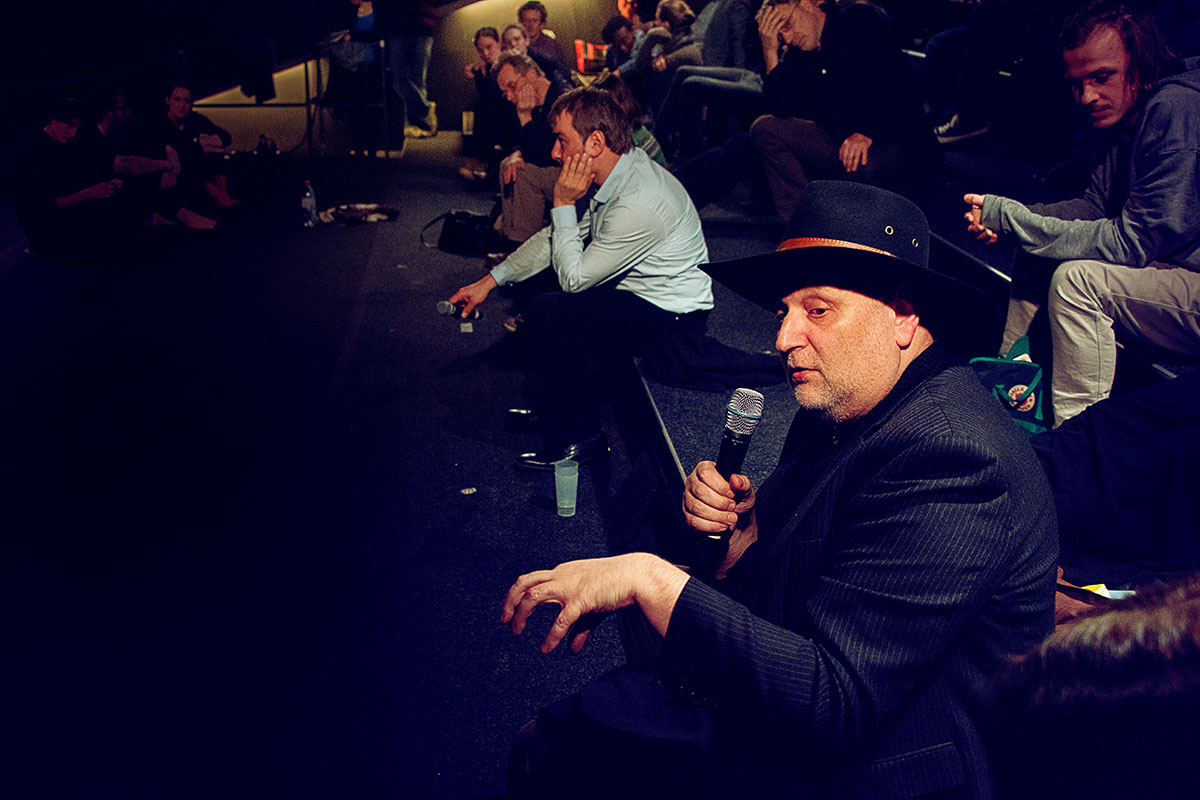
Photo by Christoph Hochenbichler, © Austrian Science Fund (FWF): AR 275-G21
Video documentation of of Alice Lagaay, TdV, and
Jörg Holkenbrink
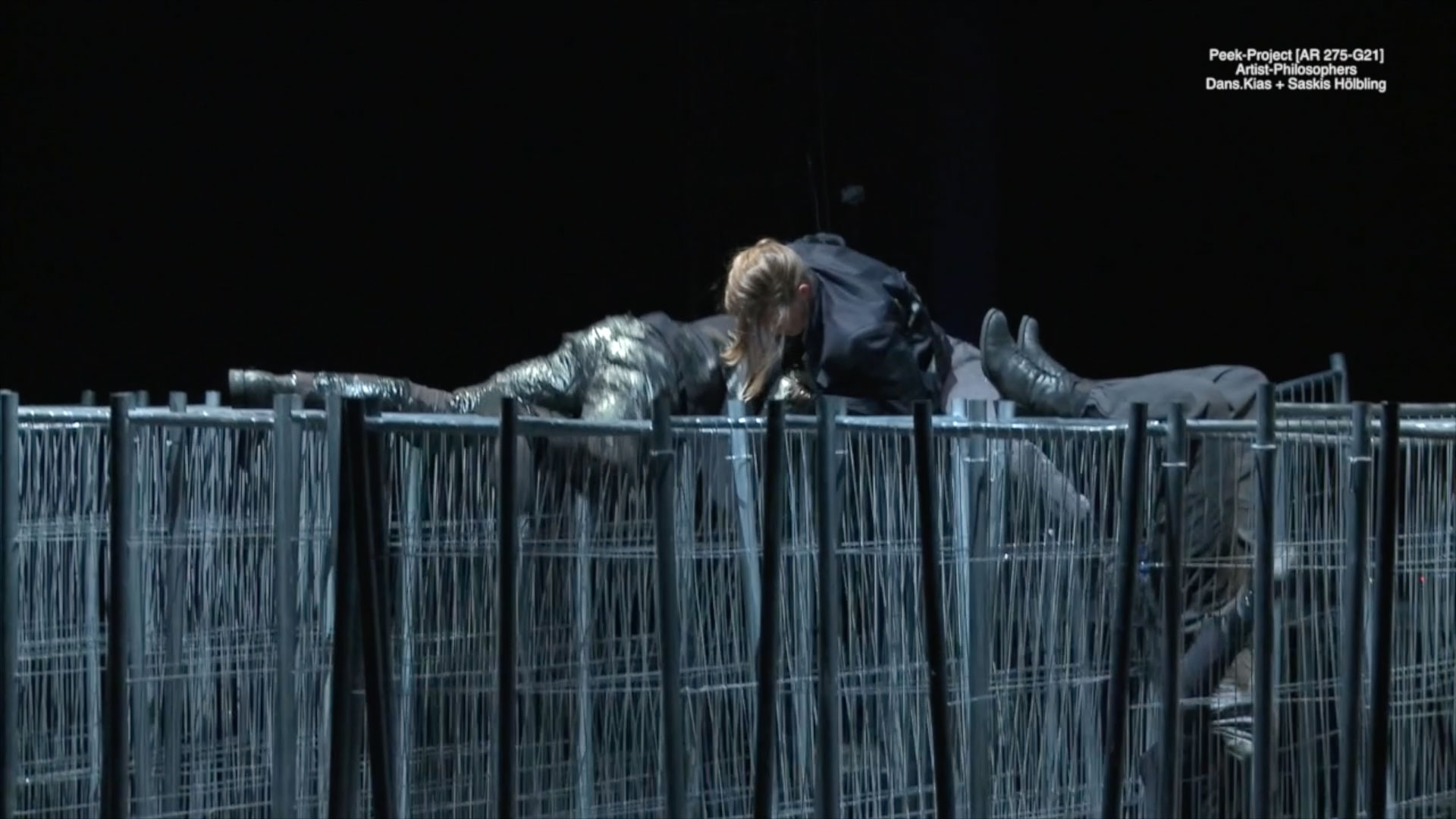
Photo by Christoph Hochenbichler, © Austrian Science Fund (FWF): AR 275-G21
Video documentation of Saskia Hölbling
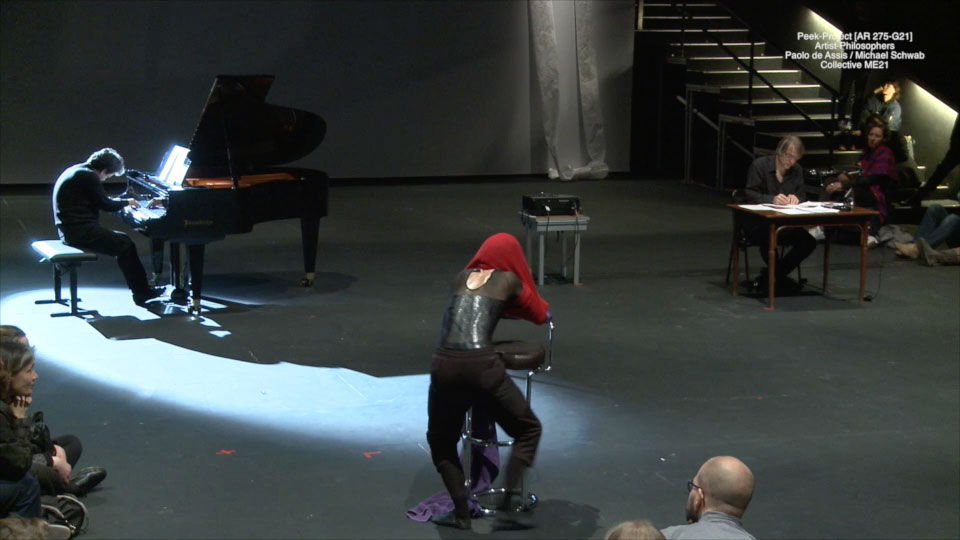
Photo by Christoph Hochenbichler, © Austrian Science Fund (FWF): AR 275-G21
Video documentation of ME21, Paulo de Assis
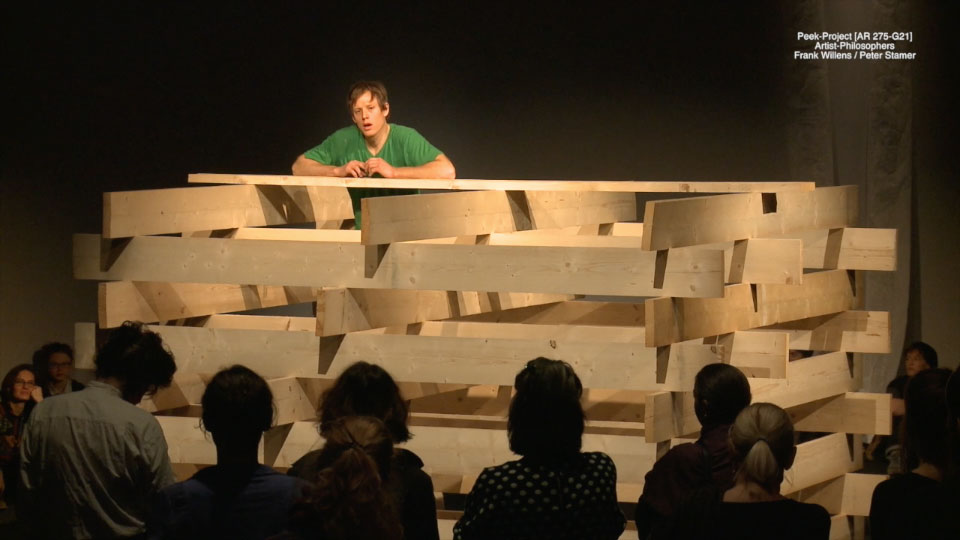
Photo by Christoph Hochenbichler, © Austrian Science Fund (FWF): AR 275-G21
Video documentation of Peter Stamer and Frank
Willens
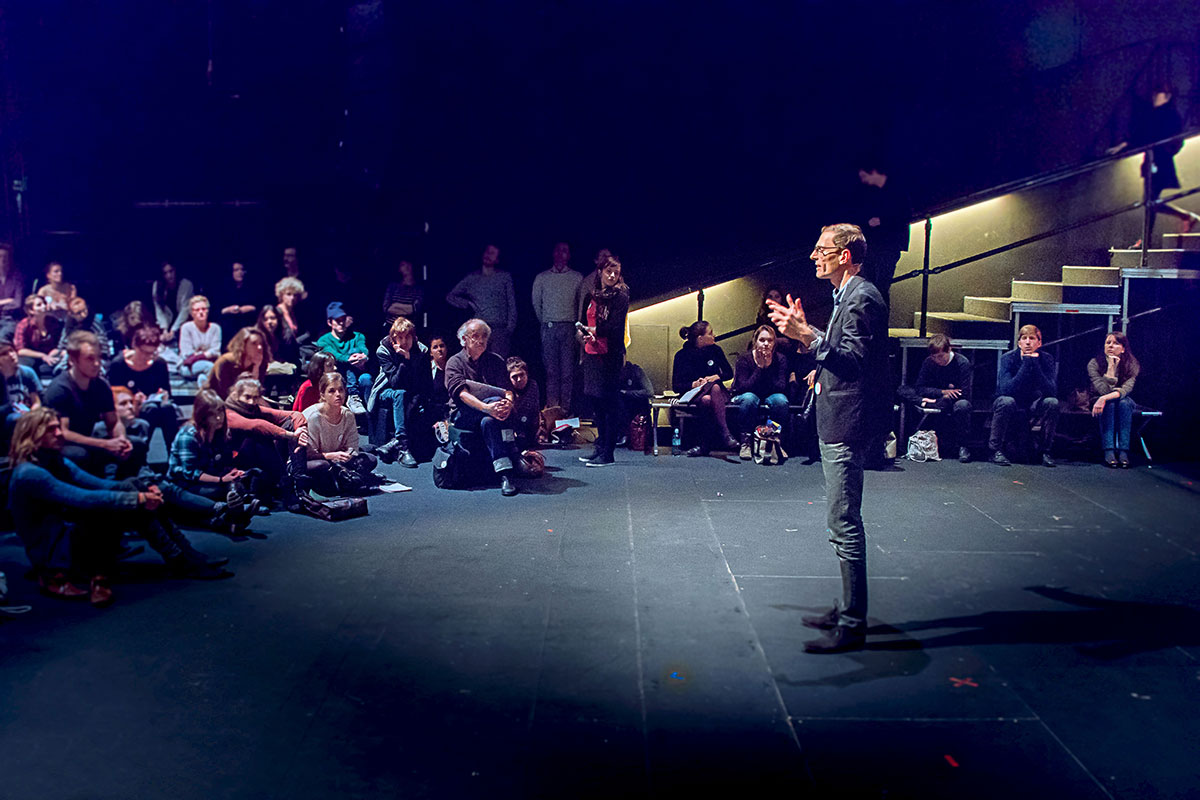
Photo by Christoph Hochenbichler, © Austrian Science Fund (FWF): AR 275-G21
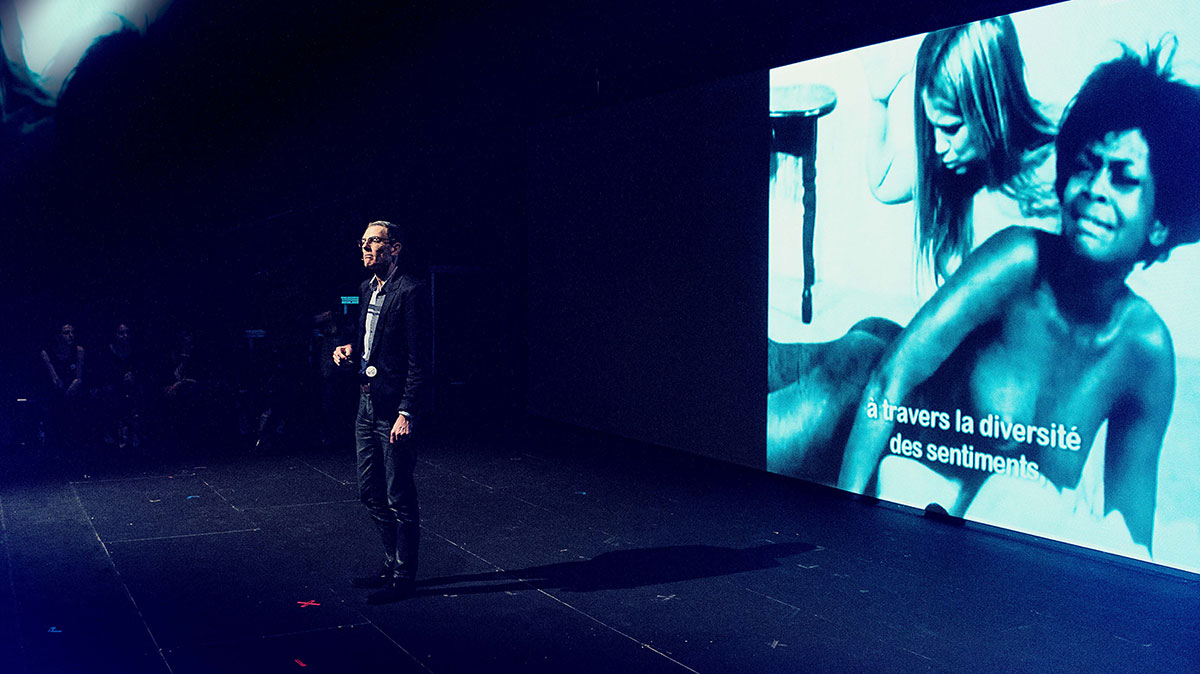
Photo by Christoph Hochenbichler, © Austrian Science Fund (FWF): AR 275-G21
Video documentation of Martin Puchner
In contrast to the classical, academic research on Nietzsche, which happens exclusively by the medium of language and in a conceptual-reflective way, here the reason of the body has become a part of the philosophical practice. Now, with philosophical thought being called to make itself happen as a kind of artistic research, now, being allowed to adopt post-Plato features, the reason of the body is no longer just the topic but an active part of the research processes. Now it does not suffice any longer just to quote a passage from Ecce Homo like this one: “Sit as little as possible; give no credence to any thought that was not born outdoors while one moved about freely—in which the muscles are not celebrating a feast, too. All prejudices come from the intestines. The sedentary life—as I have said once before—is the real sin against the holy spirit” (Nietzsche 1989b, 239).[5] Rather, one is looking for ways, practices and methods of thinking explicitly presenting the corporeality of thinking by way of the act of thinking.
Finally during Art-Lab#3 there happened the final rehearsal for Philosophy On Stage#4. Now the research contributions were located at the venues of Tanzquartier Wien. Mobile research islands were created, allowing for close contact to the audience. The preparations for the festival were thus concluded, for four days Tanzquartier Wien was changed into a transdisciplinary space of research, the audience, most of them university students, playing a significant role in the fragile setting of our research, as we will see in the following.
Philosophy on Stage#4 was ready to start. Right at the entrance the intended research cooperation with the audience was visibly marked. Not without hindrance the audience could enter Hall G of the museum quarter, where most of the festival happened (stage design: Hans Hoffer). Instead of passing immediately through the two entrance doors to Hall G, as it is the common way, the audience was confronted with crowd control barriers as they are used by the police. In the centre there was a huge iron gate through which they could enter. Passing this gate simultaneously triggered two processes: on the one hand, a musical phrase as a kind of welcome, on the other hand the loud click of a camera made clear that everybody was photographed, as it has become common practice for passport controls. Furthermore, everybody saw his/her own image projected on the wall, and if one stopped for a moment, one could read in huge letters:
Thinking depends on forces which take hold of thought.
(Deleuze, Nietzsche and Philosophy, 108)
After having passed this threshold the audience themselves had become cooperation partners of our experimental research setting. A part of that black box reminding many visitors to Plato´s allegory of the cave. For, wide Hall G, with its black walls, had been cleared to form one huge space, so that there might be the impression of a dark underground cave. Instead of the usual rows of seats there were mobile, black cubes as seats as well as camp beds, freely distributed across the room, and at the side walls there was a double row of narrow stage risers which could also be used for sitting. For the philosophers & artists a number of different research islands had been installed.
Over the following 4 days and for more than 38 hours these research settings were used in different ways by all participants. Due to the interdisciplinary cross-over of artistic & philosophical practices, this cave was supposed to provide space for a kind of thoughtful sensing by way of which the conceptual thinking of philosophy touched thinking the unconscious. Quite in the sense of Nietzsche’s criticism of the superstition of the logicians who, as he writes in Beyond Good and Evil, had overlooked the simple fact that usually it is not that “I” am thinking but “id”. That is to say that process-related structure of sensual driving forces which—like the structure of audience, philosophers and artists in the darkness of Hall G—encounter each other in a commonly shared space and, by way of this encounter, create an intensive assemblage of forces and power relations to which thinking, even the thinking of philosophers and logicians, secretly obeys whenever and wherever there happens thinking (cf. Nietzsche 1998, 17-18).
Like Nietzsche envisaging the concept of the artist philosopher as a “higher concept of art” (Nietzsche 1999, KSA 12, 89 [Group 2, No. 66]) as well as the Prelude to a Philosophy of the Future (Nietzsche 1998),[6] both resulting from the transdisciplinary interplay of arts & philosophy, also the students in the context of our research festival were confronted with the task of being sensitive witnesses, “artistic listeners” (cf. Deleuze 1983, 17) who had to combine reflective-conceptual thought with thinking the unconscious driving forces with which arts-based research is always in touch, so that there would result an intensive double reading. This double reading was not only demanded by the artists and philosophers, it was also supposed to explicitly allow for a cooperation of philosophy and audience in the public space. Just as if the non-philosophical was at the heart of philosophy.
In this sense, one could read in the fanfold of our event:
Staging philosophy makes sense with a view to creating an image of thought that seeks to remind us—philosophers and non-philosophers—of the significance of the material condition at work while somebody is doing science and philosophy. This is also what gives arts-based-philosophy an essentially political relevance as it not only draws explicit attention to its own conditions of production, but also seeks to embody and communicate a form of philosophy that is relevant to the experience world in its becoming. Our interventions are such a be-coming. (Böhler and Granzer 2015, n.p.)
Due to the emphasis on those material spatio-temporal conditions within which and out of which one philosophises, often the audience, according to their written comments on the research festival, perceived the research space provided by us as a habitat they shared with others. And that was precisely because, by way of an affective-intellectual double reading, they had to deal with the research questions asked at our Nietzsche laboratory also at a sensory-affective level. This was a kind of research whose questions literally touched the body.
According to their feedbacks, the audience repeatedly perceived actually entering our transdisciplinary research milieu as entering an intensive form of life dominated by philosophy and the arts. Being a sensitive witness of a collectively shared field of intensity, one rather had the impression to be called on to stay continuously, to be present more or less for the entire time of the festival. One had become part of an increased being-together, which made some visitors say in their feedbacks that they had experienced a new way of social togetherness with and among each other. Thus, arts-based research became an intensified form of life which could unfold over four days in the physical co-presence of the researching performers and the researching audience. The festival started on Thursday, November 26th at 6.00 p.m. and ended on Sunday, November 29th at 2.00 p.m. with an intervention, in which the audience was offered to take a piece of Manora Auersperg’s copy of handwritten Nietzsche texts, which she has produced all along the festival on a paper role. Before taking it home, everybody was called to read the piece of text loudly to create a chorus of heterogenous Nietzsche voices.
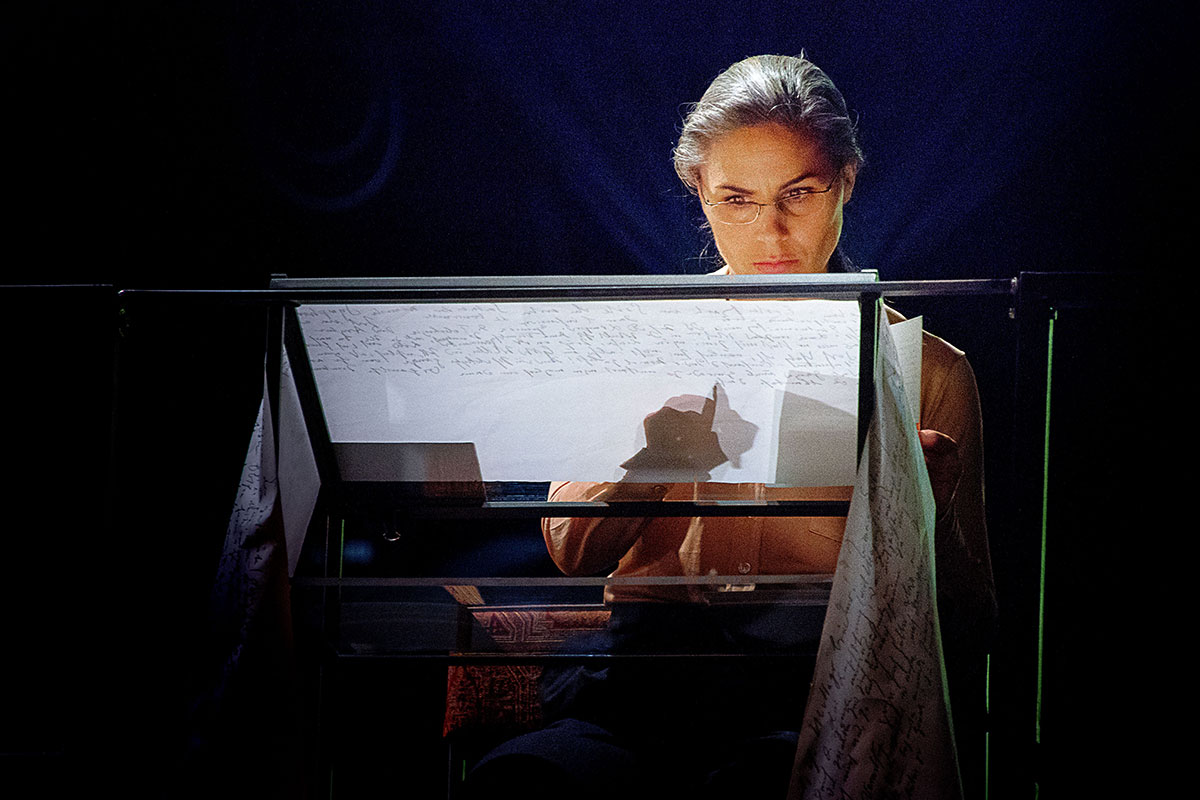
Photo by Christoph Hochenbichler, © Austrian Science Fund (FWF): AR 275-G21
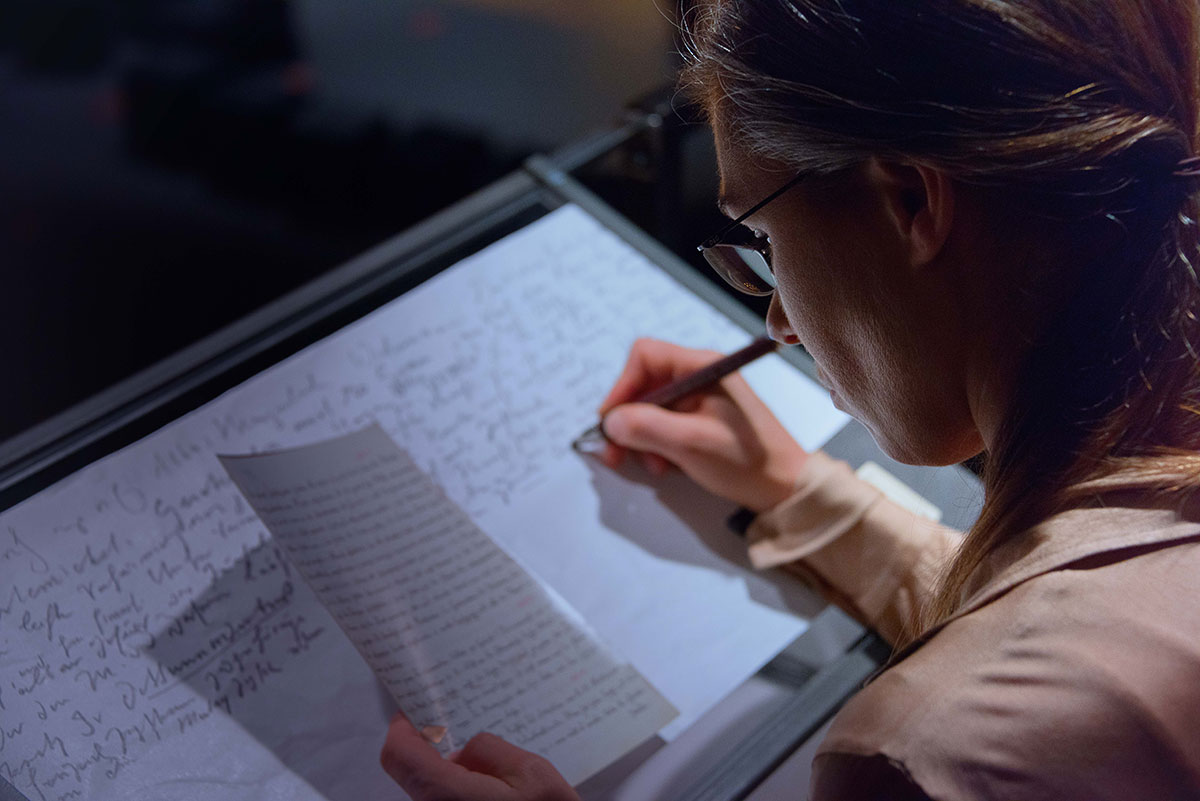
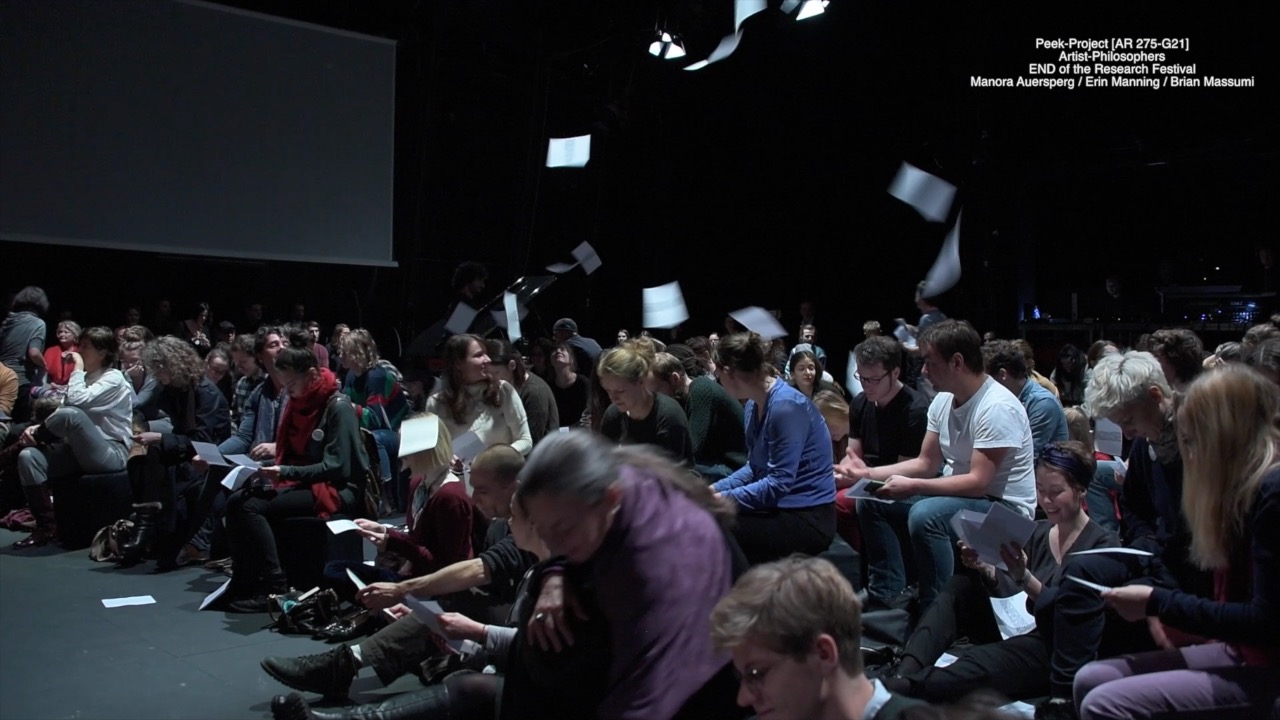
Photo by Christoph Hochenbichler, © Austrian Science Fund (FWF): AR 275-G21
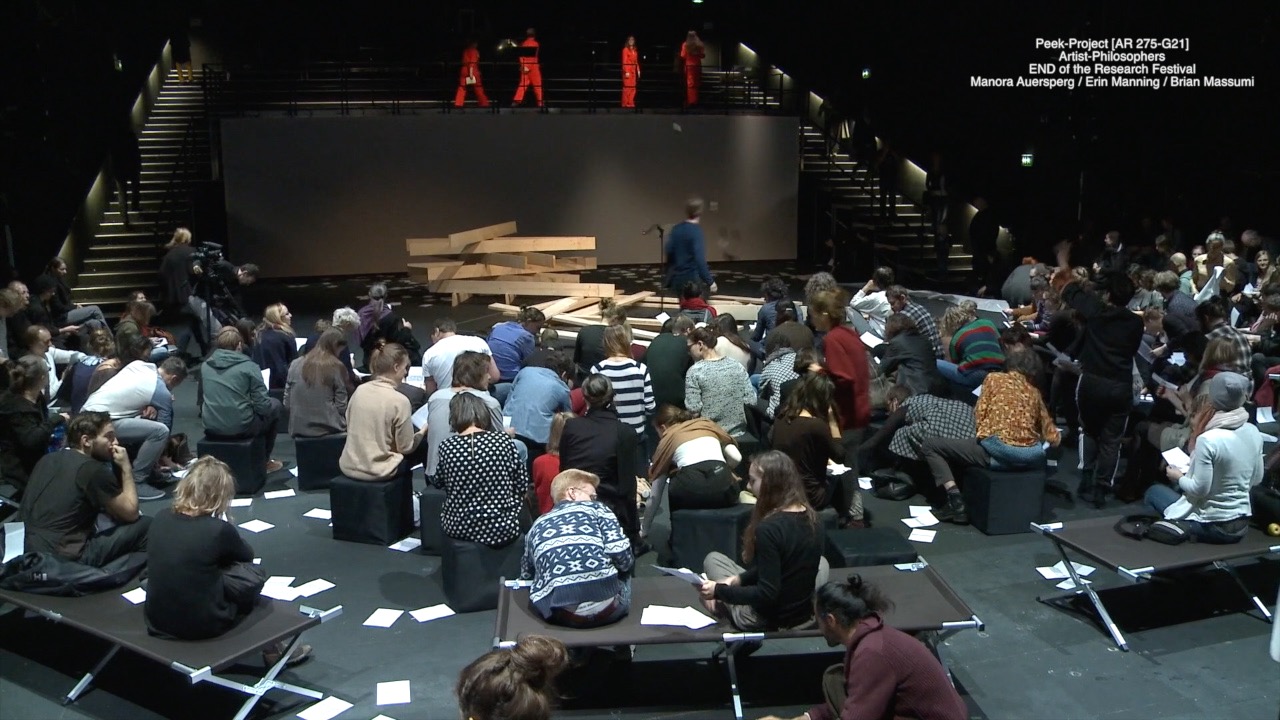
Photo by Christoph Hochenbichler, © Austrian Science Fund (FWF): AR 275-G21
Video documentation of final performance
[1] This article has been realized in the context of the research project “Artist-Philosophers. Philosophy AS Arts-based Research” funded by the Austrian Science Fund (FWF): AR275-G21 in line with the programme for arts-based research (PEEK).
[2] “[…]der Leib ist ein erstaunlicherer Gedanke als die alte ‚Seele’.” Passage translated by Arno Böhler.
[3] “A picture held us captive. And we could not get outside it, for it lay in our language and language seemed to repeat it to us inexorably” (Wittgenstein 1967, 48 [§ 115]).
[4] Einar Schleef performed Ecce Homo shortly before his death in 2000 at Thalia theatre in Hamburg.
[5] Wolfgang Michael reads Ecce Homo: http://homepage.univie.ac.at/arno.boehler/php/?p=9072
[6] “Prelude to a Future Philosophy” is Nietzsche’s subtitle of Beyond Good and Evil.
Böhler, Arno, and Susanne Granzer. 2015. “Philosophy on Stage#4.” Fanfold for the research festival Philosophy On Stage#4, Vienna, Austria, 26–29 November.
Deleuze, Gilles. 1983. Nietzsche and Philosophy. Translated by Hugh Tomlinson. London and New York: continuum.
———. 1988. Spinoza. Practical Philosophy. Translated by Robert Hurley. San Francisco: City Lights Books.
Hegel, Georg Wilhelm Friedrich. 1977. Phenomenology of Spirit. Translated by A. V. Miller. Oxford: Oxford University Press.
Nietzsche, Friedrich. 1974. The Gay Science. Translated by Walter Kaufmann. New York: Vintage.
———. 1989a. On the Genealogy of Morals. Translated by Walter Kaufmann and R. J. Hollingdale. New York: Vintage.
———. 1989b. Ecce Homo. Translated by Walter Kaufmann and R. J. Hollingdale. New York: Vintage.
———. 1998. Beyond Good and Evil. Prelude to a Philosophy of the Future. Translated by Marion Faber. Oxford and New York: Oxford University Press.
———. 1999. Sämtliche Werke. Kritische Studienausgabe in 15 Einzelbänden. Edited by Giorgio Colli and Mazzino Montinari. 3rd ed. München/Berlin/New York: DTV Walter de Gruyter [=KSA].
———. 2005. Thus Spoke Zarathustra. Translated by Graham Parkes. Oxford and New York: Oxford University Press.
Spinoza, Baruch de. 2000. Ethics. Edited and translated by G. H. R. Parkinson. Oxford and New York: Oxford University Press.
Wittgenstein, Ludwig. 1967. Philosophical Investigations. Translated by G. E. M. Anscombe. 3rd Edition. Oxford: Blackwell.
Arno Böhler is an associate Professor at the Institute of Philosophy of the University of Vienna. He is the founder of the performance festival Philosophy on Stage and currently heads the „Artist-Philosophers: Philosophy AS Arts-based-Research” research project at the University of Applied Arts Vienna, funded by the Austrian Science Fund (FWF): AR275-G21. He is the co-founder of BASE (research centre for artistic research and arts-based philosophy, India) and the director of the residence programme there.
Research visits at the University of Bangalore, the University of Heidelberg, at New York University and Princeton University. Invitations to visiting professorships at the Institute of Philosophy of the University of Vienna, at the University of the Arts Bremen, University of Music and Performing Arts Vienna (Max Reinhardt Seminar) and at the University of Applied Arts Vienna. In 1997, together with actress Susanne Granzer, founder of wiener kulturwerkstätte GRENZ-film.
http://homepage.univie.ac.at/arno.boehler/php/
© 2017 Arno Böhler
Except where otherwise noted, this work is licensed under a Creative Commons Attribution-NonCommercial-ShareAlike 4.0 International License.