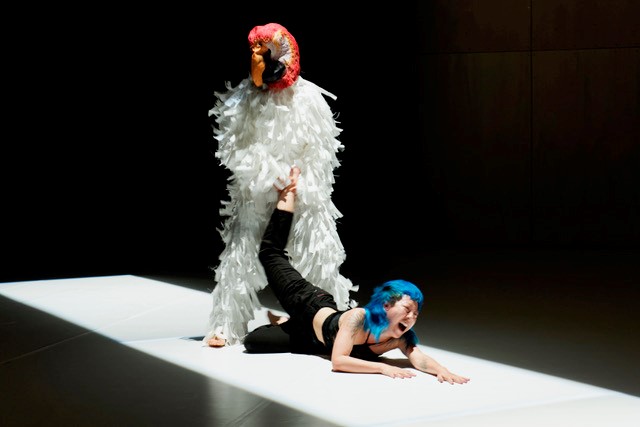
Figure 1: Glitch
Flavia Pinheiro, Artista independente
“Um antílope de um novo tipo foi encontrado na África por um explorador que conseguiu capturar um indivíduo e trazê-lo para a Europa [...] O animal é colocado vivo em uma gaiola e catalogado. Uma vez morto, ele será empalhado e preservado” (Briet 1951, 10).
Acredito que esse não foi um bom começo. Vou recomeçar.
Vou lhes contar uma história sobre aqueles que não deveriam estar aqui (minha própria história, sobre não pertencer)—porque eu devo, porque é o único lugar vazio para mim. Eu tenho que compartilhar a violência que era invisível antes da minha chegada aqui. Vou explicar novamente, mas de outra forma (isso não é verdade). Não será a última vez. Eu posso mudar a história (talvez isso também não seja verdade): vou repetir, interromper, cair e morrer. Essa é uma história sobre como me tornei uma desordeira ou um pássaro zangado.
Quando a violência é invisível porque não estávamos aqui.
Eras e eras atrás, antes que o primeiro barco pudesse ser visto na costa cintilante do novo mundo, papagaios pintaram paisagens do outro lado do Atlântico. Em uma noite de inverno, houve também uma história. Um estudante de uma conhecida instituição de arte estava sentado na cozinha da casa onde agora eu vivo: com uma voz melódica, suave, acariciadora, doce barítono, consistente, o estudante estava narrando o quão fabulosa e fantástica sua experiência tinha sido até então na Faculdade, porque todos eram tão educados e prestativos. Eles encontraram espaço para se desenvolver e aprofundar suas práticas (exatamente o que estavam procurando) para aprimorar suas carreiras e, com o feedback dos colegas, tutores e funcionários, foram capazes de expandir seu envolvimento no campo da arte.
Sem fôlego, lutando em uma encruzilhada.
Você já sofreu alguma violência lá? De forma alguma. Muito pelo contrário.
A violência não existe se nós não estivermos lá.
Carcará / Pega, mata e come / Carcará/ Não vai morrer de fome / Carcará / Mais coragem do que homem / Carcará/ Pega, mata e come
- João Do Vale e José Cândido, “Carcará”
Figure 1: Glitch
A técnica cultural ocidental de documentação é o que vem antes desta experiência; o documento é o aparato tecnológico que diz respeito ao Estado-nação liberal e serve para manter suas estruturas. Esta escrita tenta complexificar as relações entre minha prática artística e as macroestruturas invisíveis do poder, como o documento (prova de existência), com um grito estridente, um nó no pescoço, uma angústia profunda e uma melancolia naufragante. A maioria das instituições culturais reproduzem desigualdades sociais, de gênero, de raça e de classe, principalmente como forma de manter o poder; neste caso específico: aquelas criadas pelas mudanças coreográficas do sul para o norte, a reprodução colonial do cativeiro, do arquivo, da categorização. Com um procedimento analítico a frio—capturando in vitro, morto ou vivo—todas as formas de vida urgentes são enquadradas em termos puramente técnicos, como internacionalização, inclusão e diversidade.
Entre perfis, pratos de petri, vogelhuisje, catálogos zoológicos, estufas e macacos.
Ainda estamos aqui?
Decidi fugir do in vitro, do vidro, do estúdio e das paredes da instituição e fui embora encarnando um pássaro, um prisioneiro nascido em cativeiro que nunca aprendeu a voar e quase morreu neste novo ambiente hostil. Um pássaro que só se queixa de abusos de poder ou de condições desiguais revela a falha da instituição em lidar e reconhecer que expõe e nomeia o pássaro como zangado, incapaz de voar, hermético, complexo, exótico, único e violento.
A exposição de exóticos em cativeiro acontece de forma micropolítica com bactérias, aves, plantas e seres humanos. Esta prática de colocar seres “exóticos” em exposição começou na Europa no início do período moderno, quando os exploradores europeus se dirigiram a todos os cantos do globo. Os marinheiros trouxeram consigo pessoas das áreas recém exploradas, da mesma forma que trouxerampor robjetos estranhos, plantas, e animais a serem apresentados para provar o exotismo e a riqueza de países anteriormente desconhecidos. Junto com a apresentação de seres humanos individuais, grandes exposições foram organizadas a partir do século XVI. Gostaria de contar outra história, na qual a recusa é o conhecimento corporificado da experiência de uma voz coletiva que voa; “ingovernável” como diriam Fred Moten e Sadiya Hartman. Uma história de recusa.
É verdade que a pesquisa artística se assemelha a parques de animais e estufas, prosperando em um estado de cativeiro que é classificado em catálogos de zoológicos e fotos de perfil? Dentro de suas exposições, os candidatos, funcionários e tutores que honram sua herança específica e sua formação utilizam o conceito de representação. Ao mesmo tempo, a falta da pluralidade de vozes para desenvolver metodologias, pedagogias e referências de conteúdo mais amplas continuam a perpetuar um campo restrito de paisagens estrangeiras. De uma perspectiva, este sistema educacional estabelece formas de disciplina, violência, punição e contenção que provocam danos não quantificáveis. Por outro lado, é possível desenhar coreografias fugitivas dentro das fronteiras institucionais, para abrir portais nos quais podemos imaginar planos impossíveis, linhas, danças e camadas de fuga juntas; uma tecnologia compartilhada poderia ser uma forma comum de habitar este espaço como um refúgio. Uma ontologia da fugitividade opera na intersecção dos estudos negros e estudos feministas interseccionais como uma performance de resistência aos sistemas de conhecimento.
Este ensaio é uma tentativa de perguntar—em uma tecnologia de palavras frustrada e submersa, afundada em lágrimas e em nome daqueles que nunca tiveram o direito de viver ou que não pertencem, ou daqueles que nunca estiveram aqui, para aqueles que morreram logo após o nascimento—o que poderia ser se sonhássemos e agíssemos juntos, rumo à indisciplina e à ruptura das macroestruturas.
No encontro, a lentidão e a suavidade estão em oposição àquelas descritas como rápidas, afiadas e barulhentas. Neste encontro, a gramática da exclusão torna-se visível: com estes parâmetros, baseados na hierarquia de uma cosmologia específica, os suaves e lentos têm permissão para executar e legitimar a violência em direção ao rápido, veloz e alto, e à multidão de corpos que são inquietos e desafinados. E assim, um regime de invisibilidade é criado e perpetuado. O antílope, por exemplo, em estado de dança, com sua poderosa musculatura dos membros inferiores, pode permanecer sublime mesmo em alta velocidade. Sempre com medo, sempre bonito, mesmo quando corre no rebanho, recusa teimosamente a quietude, pois a urgência de permanecer vivo está incrustada em sua carne.
Ei, você aí / Me dá um dinheiro aí / Me dá um dinheiro aí / Ei, você aí / Me dá um dinheiro aí / Me dá um dinheiro aí
- Glauco Silva Ferreira, Homero Silva Ferreira, e Ivan Silva Ferreira, Me dá Um Dinheiro Aí”
Talvez seja possível desenvolver aqui como esta estrutura neoliberal tentou matar a dança, assassinar o movimento, destruir os deslocamentos transatlânticos impossíveis, e todas as suas futuridades coreográficas. Ela também se transformou em pobreza: a pletora, potência, exuberância, resistência, calor, vitalidade, destreza, suor, lágrimas e dor, exotizando a carne em pornografia. Talvez não, devido à impossibilidade de relações dentro dos deslocamentos vulcânicos, fissuras, rupturas, explosões, floresta tropical, umidade e contaminação que transformaram a RAIVA em AÇÃO, criando uma ruptura, uma bomba, uma dinamite.
Para uma bactéria vinda de um contexto altamente contagioso do sul; transladada e deslocada neste experimento in vitro chamado “realidade”, as opções disponíveis seriam morte imediata ou um modo de sobrevivência mutante transmutado em ritmo, velocidade, nitidez e precisão em uma coreografia radical. As bactérias juntas também podem mudar o ambiente. Eu estava imerso em uma placa de petri, um tubo de ensaio neste reino; e todos os meus movimentos, pensamentos, desejos e espécies companheiras desapareceram, escafederam-se. Eu esqueci tudo. Estava sob controle e vigilância dos “verdadeiros cientistas” que estavam nomeando, descrevendo, catalogando, comentando, redigindo, categorizando, compreendendo, lendo, escutando, analisando e criticando.
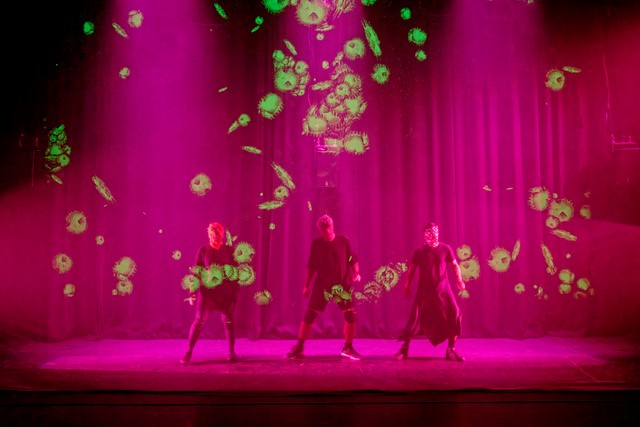
Figure 2: 7 Solos for 11 Bacterias Falling Through
Não posso me lembrar.
Sou um pássaro nascido em cativeiro,
tranquilamente melancólico
com o perpétuo sonho de liberdade
Eu sou colonizado
Eu mal consigo ver através das barras de raiva
com minhas asas cortadas
Mal posso fazer vôos rasos
desta condição in vitro
preso
com lágrimas sufocando na minha garganta
Eu invejo aqueles que voam livremente, que se aglomeram
que nunca foram catalogados
Eu esqueci como cantar e nunca aprendi a voar
Nasci em um cativeiro, em um país estrangeiro e me esquartejei.
de um túmulo de sonhos
Eu estou constantemente gritando um pesadelo
sempre com raiva porque não consigo sentir a brisa.
Embora eu seja um pássaro, não posso voar. Decidi usar a mesma tecnologia: vamos escrever, ouvir e ler. “As ferramentas do mestre nunca desmontarão a casa do mestre”, disse Audre Lorde.
E se dormirmos e sonharmos juntos? Não estamos todos mortos a esta altura? Eles podem sentir alguma coisa? Podemos sentir alguma coisa?
Congelamento, quietude, a quem pertence a lentidão?
Não consigo me lembrar.
Vou lhes contar outra história sobre pássaros...
As pegas são normalmente sedentárias e passam invernos perto dos seus territórios de nidificação, mas as aves que vivem perto do limite norte de sua região na Suécia, Finlândia e Rússia podem se mover para o sul em condições climáticas adversas. As pegas têm sido observados participando de elaborados rituais sociais, possivelmente incluindo a expressão de tristeza (dor/luto). O auto-reconhecimento espelhado foi demonstrado nas pegas européias, tornando-as uma das poucas espécies a possuir esta capacidade. Sua inteligência é equivalente à dos grandes símios (chimpanzés, gorilas e orangotangos) em termos de cognição social, raciocínio causal, flexibilidade, imaginação e prospecção. Elas estão em toda parte aqui na Holanda. Um dia eu estava voando baixo e encontrei uma ferida aberta, uma “Pega” esmagada, atropelada com as tripas de fora. Lembrei-me das cores, das frutas, do samba, do Zé Carioca, da Carmen Miranda, do Rio, e do Carnaval brasileiro.
Entre Papangus, Caretas e La Ursa.
Ei pessoal / Ei moçada /Carnaval começa no Galo da Madrugada. / Ei pessoal / Ei moçada / Carnaval começa no Galo da Madrugada.
- “Hino do Galo da Madrugada”
“Um documento é a prova de um fato” (Briet 1951, 9).
Quero destacar a semelhança das tecnologias coloniais disfarçadas de experimentos científicos no arquivamento de espécies, macacos humanos, objetos e artefatos. Declaro guerra contra este processo através da expressão de uma perspectiva micro, como se segue:
O que acontece quando se isola uma bactéria do seu ambiente biológico habitual é que, embora ela não possa prever completa ou precisamente os efeitos sobre todo um organismo, ela permite uma análise mais conveniente para os cientistas. Experimentos de laboratório também verificaram que quando algumas bactérias são expostas a uma grande quantidade de antibióticos, elas se tornam superbactérias. As tentativas anestésicas de sintonizá-las, desacelerá-las e adaptá-las não as põem a dormir, mas as deixam realmente, realmente irritadas. Neste sentido, a mente selvagem contribuiu para esta tecnologia ao enquadrar intelectualmente e através de uma metodologia sofisticada uma compreensão particular do mundo: uma forma de analisar, distinguir e classificar; uma lógica baseada em dialética e raciocínio que nem sempre servem às cosmovisões do “sul global”.
Minha prática, chamada Tentativas de sobreviver na apnéia, lida com uma série de pontuações que abordam várias constrições aéreas em áreas insalubres de alto risco (não seguras de forma alguma). A apnéia é um bloqueio do fluxo de ar em um indivíduo, e os efeitos resultantes (falta de oxigenação, pressão arterial elevada e uma sensação geral de asfixia), destacam uma noção somático-política de “apnéia” de uma condição geral de existência dos indivíduos racializados em uma situação colonizada. O que é respirar em um mundo sufocado por hegemonias tóxicas e por catástrofes ecológicas e sanitárias? Você sabia que as mitocôndrias respirando oxigênio são vestígios das primeiras bactérias mutantes vivendo em simbiose? Devido aos esforços fotossintéticos das bactérias, o planeta tem uma atmosfera com oxigênio, permitindo que um gás venenoso seja traduzido em brisas agradáveis, mantendo vivos araras, papagaios e pegas. A questão é como imaginar uma possível coreografia a partir desta apnéia: Como respirar fundo e sentir a brisa?
O que aprendemos desta relação simbiótica institucional é que se um texto pode dar palavras a algo—uma dificuldade, uma violência, uma injustiça, uma dinâmica—ou se ele pode dar nome a algo que ainda não foi nomeado exatamente da mesma maneira, então as pessoas o encontrarão, mesmo que não encontrem um fio condutor no idioma; elas o agarrarão; persistirão com ele.
Ouvi dizer que o mundo vai-se acabar / Que tudo vai pra cucuia / O sol não mais brilhará
Mas se deixarem / Um bombo e uma mulata / E um trombone de prata O frevo bom viverá
Pode acabar o petróleo Pode acabar a vergonha
Pode acabar tudo enfim Mas deixem o frevo pra mim.- Capiba, “Trombone de Prata”
Voltando à Faculdade: a possibilidade de aprender com os colegas da instituição poderia ser lida como uma contaminação de microorganismos. Um se transforma em milhões, e as existências plurais se tornam visíveis através da modificação de um e do outro. Mas o conhecimento como algo que é construído e transformado coletivamente só pode ser mantido em um ambiente de aprendizagem entre pares se o entorno não sabotar a generosidade e a resiliência por um processo de atomização e isolamento. Os mecanismos da instituição devem ser transparentes: o acesso aos recursos precisa contribuir para a comunidade, não para enraizar preconceitos, mas para encorajar a reflexão e a tomada de decisões comuns para diminuir as desigualdades de classe, gênero e raça. Um vocabulário comum é necessário para abordar estas questões a partir de uma posição anti-racista, anti-colonial, para reconhecer privilégios e decisões estéticas baseadas em declarações hegemônicas dentro do campo da arte.
Tornar-se um bando de aves não deve ser uma conquista impossível. O intercâmbio institucionalizado entre os pares deve visar um motim ou uma celebração evitando qualquer feedback que possa ser comportamental e descritivo; comentando e criticando práticas como se um “ vocabulário neutro” pudesse existir tende à exotização e categorização. A atomização - ou anti-agrupamento—é uma tecnologia especificamente projetada para atingir aqueles que só podem sobreviver em bandos e enxames. Quando as aves espalham as sementes das árvores florestais entre nós... Como descreve Nelly Wat, Sara Ahmed—em sua palestra “Complaint as Queer Method”—retorna continuamente à metáfora de uma caixa postal “ocupada por aves nidificando, que ela usa para visualizar o que uma reclamação pode parecer; a caixa postal, embora não tenha sido criada para as aves que nidificam dentro dela, torna-se um abrigo seguro. No entanto, o ninho também pode ser perturbado pelas cartas dentro dele” (Wat 2019: np). Citando Ahmed: “Sabemos tanto da tentativa de transformar os mundos que não nos acomodam”. Mas essa luta também pode ser muito dura. Quando temos de lutar pela existência, podemos acabar sentindo que lutar é a nossa existência. E por isso, precisamos uns dos outros. Precisamos nos tornar os recursos um do outro” (Ahmed em Wat 2019, n.p.).
South Boom Boom é uma tentativa de sobreviver na apnéia, um trabalho contínuo, uma possibilidade de reimaginar o mundo, uma forma de escapar do cativeiro, desenhar linhas fugitivas, resistir, voar, conceber resistências, migrar, reinventar uma catástrofe, deformar as formas de opressão através do tempo.
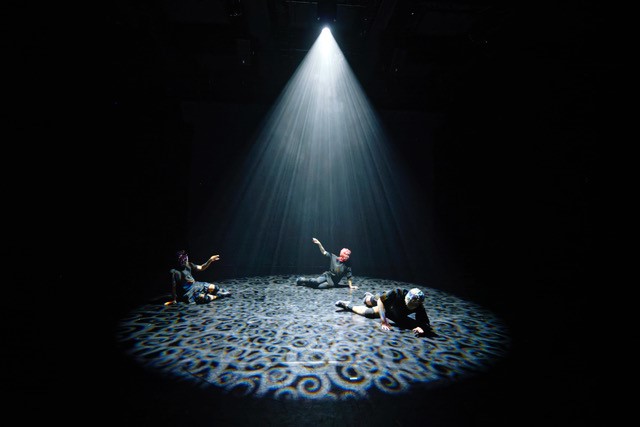
Figure 3: 7 Solos for 11 Bacterias Falling Through
“An antelope of a new kind has been encountered in Africa by an explorer who has succeeded in capturing an individual and bringing it to Europe [...] The living animal is placed in a cage and catalogued. Once it is dead it will be stuffed and preserved” (Briet 1951, 10).
I believe it was not a good beginning. I will start over again.
I will tell you a story about the ones who were not supposed to be here (my own story, about not belonging)—because I must, because it is the only empty spot for me. I have to share the violence that was invisible before I got here. I will explain it again but differently (that is not true). It will not be the last time. I can change the story (maybe that is also not true): I will repeat, interrupt, fall and die. This is a story about how I became a troublemaker or an angry bird.
Quando a violência é invisível porque não estávamos aqui.
Eons and eons ago, before the first boat could be seen on the glittering shore with the new world, parrots painted landscapes on the other side of the Atlantic. On one winter lockdown evening, there was also a story. One student from a well-known art institution was sitting in the kitchen of the house that I now live in: with a melodic, soft, caressing, sweet baritone, consistent voice, the student was narrating how fabulous and fantastic their experience had been so far at the School, because everyone was so polite and helpful. They found space to develop and go deep in their practice (exactly what they had been looking for) to upgrade their career and with the feedback from peers, tutors, and staff they were able to expand their involvement in the art field.
Breathless striving at a crossroads.
Have you ever suffered violence there? Not at all. Quite the opposite.
Violence does not exist if we are not there.
Carcará / Pega, mata e come / Carcará / Não vai morrer de fome / Carcará / Mais coragem do que homem / Carcará/ Pega, mata e come/
- João Do Vale and José Cândido, “Carcará”
Figure 1: Glitch
The Western cultural technique of documentation is what comes before this experience; the document is the technological apparatus that concerns the liberal nation-state and serves to maintain its structures. This writing tries to complexify the relations between my artistic practice and the invisible macro-structures of power like the document (proof of existence) with a shrill scream, a knot in the neck, deep anguish, and a sinking melancholy. Most cultural institutions reproduce inequalities of social, gender, race, and class, mainly as a way to maintain power; in this particular case: those created by the choreographic shifts from south to north, the colonial reproduction of captivity, of the archive, of categorization. With a cold analytic procedure—capturing in vitro, dead or alive—all urgent life forms are framed in neat terms such as internationalization, inclusion, and diversity.
Between profiles, Petri dishes, vogelhuisje, zoo catalogues, greenhouses, and apes.
Are we still here?
I decided to escape from the in vitro, the glass, the studio, and the walls of the institution and went away embodying a bird, a captive-born who never learned how to fly and almost died in this new hostile environment. A bird who only complains about abuses of power or unequal conditions unveils the failure of the institution to deal with and to acknowledge that, by exposing and naming the bird as angry, unable to fly, hermetic, complex, exotic, unique, and violent.
The exposure of captive exotic ones happens in a micropolitical way with bacteria, birds, plants, and humans. This practice of putting 'exotic' beings on display began in Europe in the early modern period, when European explorers made their way to every corner of the globe. Sailors brought people with them from the newly explored areas, much as they might present foreign objects, plants, and animals to prove the exoticism and wealth of previously unknown countries. Along with the presentation of individual human beings, major exhibitions were organized from the 16th century onward. I would like to tell another story, in which refusal is the knowledge embodied experience of a collective voice that flies; “ungovernable” as Fred Moten and Sadiya Hartman would say. A story of refusing.
Is it true that Art Research resembles animal parks and greenhouses, thriving in a state of captivity that is classified in zoo catalogues and profile shots? Within their exhibits, applicants, staff, and tutors, honoring their specific heritage and background, utilize the concept of representation. At the same time, the lack of plural voices to develop methodologies, pedagogies, and broader content references continue to perpetuate a narrow field of foreign landscapes. From one perspective, this educational system enacts forms of discipline, violence, punishment, and containment that do unquantifiable damage. On the other hand, it is possible to draw fugitive choreographies inside the institutional borders, to open portals in which we can imagine impossible planes, lines, dances, and layers of escaping together; a shared technology could be a common way of inhabiting this space as a refuge. An ontology of fugitivity operates at the intersection of Black studies and feminist science and technology studies as a performance of resistance to systems of knowledge.
This essay is an attempt to ask—in a frustrated and submerged, tear-sunken technology of wording and on behalf of the ones who never had the right to live or who do not belong, or those who have never been here, for those who died right after birth—what it could be if we dream and act together, towards indiscipline and disruption of macrostructures.
In the encounter, slowness, and softness stand in opposition to the ones described as fast, sharp and loud. In this encounter, the grammar of exclusion becomes visible: with these parameters, based on the hierarchy of a specific cosmology, the soft and slow are allowed to perform and legitimize violence towards the fast, quick and loud, and the multitude of bodies that are restless and out of tune. And thus, a regime of invisibility is created and perpetuated. The antelope, for example, in a state of dance, with its powerful musculature of the lower limbs, can remain sublime even at high speed. Always afraid, always beautiful, even when running in the herd, it stubbornly refuses stillness, because the urgency to stay alive is deep in its flesh.
Ei, você aí / Me dá um dinheiro aí / Me dá um dinheiro aí / Ei, você aí / Me dá um dinheiro aí Me dá um dinheiro aí
- Glauco Silva Ferreira, Homero Silva Ferreira, and Ivan Silva Ferreira, “Me dá Um Dinheiro Aí”
Perhaps, it will be possible to elaborate here on how this neoliberal structure tried to kill the dance, assassinate the movement, destroy the impossible transatlantic displacements, and all its choreographic futurities. It has also changed into poverty: the plethora, potency, exuberance, resistance, heat, vitality, dexterity, sweat, tears, and pain, exoticizing the flesh into pornography. Perhaps not, due to the impossibility of relations within volcanic displacements, fissures, breakages, explosions, rainforest, humidity, and contamination that have transformed RAGE into ACTION, creating a rupture, a bomb, dynamite.
For a bacteria from a highly contagious context from the south; trans-dislocated and relocated in this in vitro experiment called “reality,” the available options would be immediate death or a shapeshifting survival mode transmuted in rhythm, speed, sharpness, precision in a radical choreography. The bacteria together can also change the environment. I was immersed in a petri dish, a test tube in this realm; and all my movements, thoughts, desires, and companion species disappeared, and vanished away. I forgot everything. I was under control and surveillance by the “real scientists” who were naming, describing, cataloging, commenting, wording, categorizing, understanding, reading, listening, analyzing, and criticizing.
Figure 2: 7 Solos for 11 Bacterias Falling Through
I can not remember.
I am a captive-born bird,
melancholic at ease
with the perpetual dream of freedom
I am colonized
I can barely see through the bars of rage
with my clipped wings
I can barely take shallow flights
from this in vitro condition
trapped
with tears choking in my throat
I envy those free-flying, flocking around
who have never been catalogued
I forgot how to sing and never learned how to fly
I was born in captivity in a foreign country and quartered.
from a grave of dreams
I am constantly shouting a nightmare scream
always angry because I can't feel the breeze.
Even though I am a bird, I cannot fly. I decided to use the same technology: Let’s write, listen and read. “The master’s tools will never dismantle the master’s house,” said Audre Lorde. And if we sleep and dream together? Aren’t we all dead by now? Are they anesthetized? Can they feel anything? Can we feel anything?
Freeze, stillness, to whom does slowness belong?
I cannot remember.
I will tell you another story about birds...
Magpies are normally sedentary and spend winters close to their nesting territories, but birds living near the northern limit of their range in Sweden, Finland, and Russia can move south in harsh weather. Magpies have been observed engaging in elaborate social rituals, possibly including the expression of grief. Mirror self-recognition has been demonstrated in European magpies making them one of only a few species to possess this capability. Their intelligence is equivalent to that of the great apes (chimpanzees, gorillas, and orangutans) in terms of social cognition, causal reasoning, flexibility, imagination, and prospection. They are everywhere here in the Netherlands. One day I was flying low and found an open wound, a smashed “Maggie” run over with the guts in the open air. I remembered the colors, the fruits, the samba, Ze Carioca, Carmen Miranda, Rio, and the Brazilian Carnival.
Entre Papangus, Caretas e La Ursa.
Ei pessoal / Ei moçada / Carnaval começa no galo da madrugada. / Ei pessoal / Ei moçada / Carnaval começa no galo da madrugada.
- “Hino do Galo da Madrugada”
“A document is a proof in support of a fact” (Briet 1951, 9).
I want to highlight the resemblance of colonial technologies disguised as scientific experiments in the archiving of species, human apes, objects, and artifacts. I declare war against this process through voicing a micro perspective as follows:
What happens when you isolate bacteria from their usual biological surroundings is that, while it may not fully or accurately predict the effects on a whole organism, it permits a more convenient analysis for the scientists. Laboratory experiments also have verified that when some bacteria are exposed to a high amount of antibiotics they become super-bacteria. Anaesthetic attempts to make them attune, slow down, and adapt do not put them to sleep but make them really, really angry. In this sense, the savage mind contributed to this technology, by framing intellectually and through a sophisticated methodology, a particular understanding of the world, a way of analyzing, distinguishing, and classifying; a logic based on dialectics and reasoning which does not always serve “global south” cosmovisions.
My practice, called Attempts to survive in apnea, deals with a series of scores that address several air constrictions in high-risk unhealthy areas (not safe at all). Apnea is a blocking of airflow within an individual, and the resulting effects (lack of oxygenation, higher blood pressure, and an overall sense of suffocation) highlight a somatic-political notion of “apnea” to a general condition of existence for racialized individuals in a colonized situation. What is it to breathe in a world suffocating by toxic hegemonies and ecological and sanitary catastrophes? Did you know that the mitochondria breathing oxygen are vestiges of the first mutated bacterias living in symbiosis? Due to the photosynthetic efforts of bacteria, the planet has an atmosphere with oxygen, allowing a poisonous gas to be translated into enjoyable breezes, holding up macaws, parrots, and magpies. The question is how to imagine a possible choreography from this apnea: How to take a deep breath and feel the breeze?
What we learn from this institutional symbiotic relation is that if a text can give words to something—a difficulty, violence, an injustice, a dynamic—or if it can name something that had yet to be named in quite the same way, then people will find it, even if they do not find a lead in the language; they will grab hold of it; they will persist with it.
Ouvi dizer que o mundo vai-se acabar/ Que tudo vai pra cucuia/ O sol não mais brilhará /
Mas se deixarem/ Um bombo e uma mulata/ E um trombone de prata O frevo bom viverá
Pode acabar o petróleo Pode acabar a vergonha
Pode acabar tudo enfim Mas deixem o frevo pra mim.- Capiba, “Trombone de Prata”
Going back to the School: The peer-to-peer learning possibility of the institution could be read as a contamination of microorganisms. One becomes millions, and plural existences become visible through the modification of one and the other. But knowledge as something that is constructed and transformed collectively can only be held in a peer-to-peer learning environment if the surroundings do not sabotage the generosity and resilience by a process of atomization and isolation. The mechanisms of the institution must be transparent: the access to resources needs to contribute to the community, not to engrain prejudices but to encourage reflection and common decision making to diminish the inequalities of class, gender, and race. A common vocabulary is needed to address these issues from an anti-racist, anti-colonial position, to acknowledge privileges and aesthetic decisions based on hegemonic statements within the art field.
Becoming a flock of birds should not be an impossible achievement. The institutionalized exchange between peers should aim for a riot or a celebration avoiding any feedback that could be behaviorist and descriptive; commenting and criticizing practices as if a so-called “neutral vocabulary” could exist tends towards exoticization and categorization. Atomization—or anti-flocking—is a technology specifically designed to target those who can only survive in flocks and swarms. When the birds spread the seeds of forest trees among us… As Nelly Wat describes, Sara Ahmed—in her lecture “Complaint as Queer Method”— continues to return to the metaphor of a post box “occupied by birds nesting, which she uses to visualize what a complaint can feel like; the post box, though it was not created for the birds that nest within, becomes a safe shelter. Yet the nest can also be disturbed by the letters within” (Wat 2019, n.p.). Quoting Ahmed: “We know so much from trying to transform the worlds that don’t accommodate us. But that fight can also just be so damn hard. When we have to fight for existence, we can end up feeling that fighting is our existence. And so, we need each other. We need to become each other’s resources” (Ahmed in Wat 2019, n.p.).
South Boom Boom is an attempt to survive in apnea, a continuous work, a possibility to reimagine the world, a way to escape captivity, draw fugitive lines, resist, take flight, conceive resistances, migrate, reinvent a catastrophe, deform the shapes of oppression across time.
Figure 3: 7 Solos for 11 Bacterias Falling Through
Ahmed, Sara. 2012. On Being Included: Racism and diversity in institutional life. Durham, NC: Duke University Press. https://doi.org/10.1515/9780822395324
Briet, Suzanne. 1951. Qu'est-ce que la documentation? Paris : Éditions documentaires, industrielles et techniques.
Moten, Fred, and Sadiya Hartman. 2014. “Fugitivity and waywardness.” Arika, 27 September. Accessed 28 April 2022. https://arika.org.uk/archive/items/episode-6-make-way-out-no-way/fugitivity-and-waywardness
Wat, Nelly. 2019. “Complaint as Queer Method: Sara Ahmed Lectures at McGill.” The McGill Daily, 21 October. https://www.mcgilldaily.com/2019/10/complaint-as-queer-method/
Flavia Pinheiro is a choreographer and performer from Recife, Brazil currently based in Amsterdam. Her research foregrounds networks of resilience and resistance to systems of knowledge by fabulative speculations around Science and Technologies. Her artistic practice in an ongoing attempt to create breathing and vital conditions; in an unstoppable dance she creates improbable exchanges with the nonhumans such as bacterias, plants, birds, antelopes and ghosts. She focuses in states of survival and a refusal of captivity by proposing a radical ontological turn. She navigates in different medias (photography, video, performance, installation, sound, writing) to underline how diversity and transversality can contribute to (un)learning colonial pedagogies.
https://flavia-pinheiro-site.webflow.io/
© 2022 Flavia Pinheiro
Except where otherwise noted, this work is licensed under a Creative Commons Attribution-NonCommercial-ShareAlike 4.0 International License.