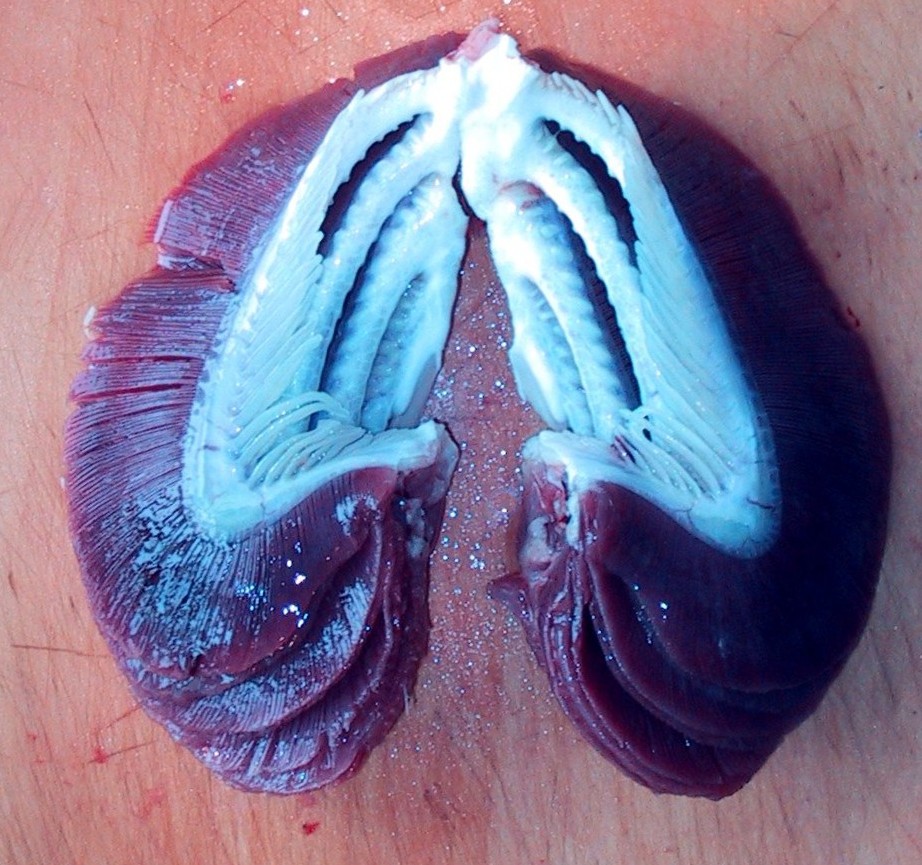
Isis Andreatta, DAS Graduate School, Amsterdam
“a cada travessia
mais subaquática me torno
as orelhas conchas
as costelas guelras.
estamos virando peixes
e somos muitos.”
Esta escrita é um devaneio sobre habitar o abismo da vida sub-atlântica. Um esboço de uma narrativa especulativa sobre como subverter margens físicas e metafísicas. Mergulhando. Um ato confiante na estratégia de que delirar entre as bordas é uma forma de existir para além dos estigmas da Terra Firme.
Trata-se de mais uma estória sem fim. Sem herói. Sem conflito. Um fragmento, uma semente, um grão de areia. Tal como milhares de estórias cotidianamente inventadas por debaixo dos destroços e da violência das águas que afogam vidas quando estas tentam corajosamente boiar ou nadar para além das superfícies e das fronteiras que lhes foram impostas.
Aos que estão seguros em suas embarcações ou obstinados por chegar enfim à terra continental, nada parece estar acontecendo. São incapazes de escutar o falatório subaquático. Insistem em usar armas de pesca e tecnologias de controle das marés. Possuem inúmeras ferramentas de expropriação das águas, mas mal sabem nadar.
Já para os que não têm a opção de boiar, o melhor a fazer é puxar uma boa dose de ar e—com os pulmões cheios— mergulhar no abismo das águas oceânicas.
Aos seres apartados da margem, portanto, o abismo é experiência comum. Seja pelos diagnósticos psiquiátricos, seja por definições normativas de gênero, por subjugação de raça, por qualificações capacitistas e/ou por condições sócio-geo-econômicas de classe apropriar-se das habilidades da vida subaquática é um gesto não só de resistência, mas de retomada do sentido comum de delirar a vida para além do paradigma da Terra Firme.
Em subversão à racionalidade compulsória e aos deslocamentos forçados de vidas de uma superfície plana a outra, o abismo oceânico é, então, habitat para uma infinidade de seres dissidentes da norma. Dessa multidão, corpos estigmatizados tanto pela desrazão como pela outridade inventada e praticada por aqueles que pairam seguros sob a superfície (ou assentam seus pés sob a firmeza da terra) encontram na vida sub-atlântica um lugar possível para existir e estabelecer elos de aliança.
Entre as experiências das loucuras, por exemplo, o oceano se revela como um lugar por onde uma super-vida emerge. Uma transcendência ficcional que brota para além das narrativas lineares, vitoriosas, nítidas e evidentes que constituem a imaginação colonial e sua perspectiva violenta de vida social.
No interior dos oceanos, a verticalidade do corpo ereto se desfigura. Se horizontaliza. Comunidades inteiras submersas cantam os cantos das baleias. Linguagem aquosa, que se espalha em ondas lentas e toca a pele de todos que nos entre-mares habitam.
Embaixo das águas, é possível perder verdadeiramente a sensação de peso. A realidade concreta do corpo se torna ilusão enquanto os ouvidos se tapam a cada centímetro em direção ao fundo.
Com tempo, prática e sabedoria a pressão diminui. O universalismo de um único idioma é pouco provável que vingue, pois as águas mudam a todo tempo de temperatura e o ambiente nunca permanece estável por muito tempo. Uma vez submerso, o silêncio ensurdecedor inicial aos poucos abre espaço dentro das têmporas, que por sua vez se tornam conchas acústicas capazes de escutar sons de outros tempos.
No abismo sub-atlântico é possível também abrir os olhos e deixar arder as córneas oculares até que seja possível enxergar um borrão nebuloso. Uma paisagem embaçada. Nessa paisagem indefinida habitam outras criaturas marítimas. Todas sem forma legível. Seres de tamanhos e cores diversas. São milhares de tipos de vidas que foram lançadas ou lançaram-se voluntariamente no abismo cuja criação é estratégia daqueles que se consideram seguros o suficiente para dividir um lado do outro. Que separam, nomeiam, distinguem, comparam, definem, qualificam o que é terra firme, o que é margem e o que é oceano.
Portanto, aos habitantes sub-atlânticos cabe desde o fundo preservar os mistérios da vida-sem-borda a fim de gozar outro tipo de força gravitacional que constitui o mergulho da experiência de dissidência. A magia é, portanto, saber que o abismo é, em si, pura inseparabilidade. E que é nele por onde se diluem por completo as divisórias que foram impregnadas aos seres subaquáticos, vindos de oceanos vários, que compartilham—sempre com muita coragem, luta e sequela—a experiência de atravessar fronteiras e perceber que não há mais nem destino nem partida. Que há apenas as águas e a linha hemisférica em si.
Para quem vive submerso, a superfície é apenas passagem. Ou tampouco existe. Seja para dar saltos ou conferir o brilho da luz do sol, já se sabe que tentar nadar na superfície é muito mais exaustivo do que a apnéia do mergulho. Apesar da superfície parecer plana, sua solidez é irreal.
Uma vez embaixo, o deslocamento é condição de existência. Não existe a possibilidade de parar. Mesmo em pausa, a força das marés não cessa de mover os corpos. A natureza dinâmica dos redemoinhos é, justamente, o meio pelo qual se encontra o alimento. Os oceanos parecem ser sempre os mesmos, mas as suas águas profundas não cessam de se mover e se transformar.
Saber o percurso não é o que mais importa. Não há uma direção precisa a seguir. Dentro do interior das fronteiras não há sentido retilíneo. O tempo é definitivamente multidirecional, denso e irregular. O percurso de ir é, na realidade, a constante prática de fabular guelras para si, já que no abismo o oxigênio é absorvido por órgãos inventados e adaptados para viver na escassez e vulnerabilidade sistêmica.
Abaixo e além do paradigma continental—onde para muitos não é possível nadar—as palavras escapam em desordem e se misturam com as vozes de outros seres. Em cacofonia formam linguagens e anatomias ininteligíveis, porém capazes de narrar e especular com exatidão a experiência encarnada de não estar nem lá nem cá. Linguagens que são como fragmentos do enorme e complexo exoesqueleto de corais multicoloridos por onde habitam, camuflam e deliram as vidas subaquáticas.
Portanto, compartilhar o delírio que constitui a paisagem do fundo do mar faz dos seres sub-atlânticos habilidosos o suficiente para, sempre que for preciso, produzir com os seus movimentos e vozes ondas gigantes que atravessam quilômetros e, cujo efeito é—mesmo que passageiro—provar aos habitantes da Terra Firme o quão frágil, instável e imperfeita é a borda.
Esta foi uma prática. Um experimento em processo. Um exercício de depor a partir de um corpo nu que se move sem fim. Que aprende a nadar a cada mergulho. Que tem interesse em especular a travessia da borda ao mar. Do mar à borda. Trata-se de um desdobramento de uma coreografia pessoal chamada “Verde Abismo” (https://vimeo.com/manage/videos/458783221 [senha: Abismo]), em desenvolvimento na DAS Choreography em Amsterdam. Mais um elemento a ser colocado na bolsa verde, cujo interior contém outros pequenos objetos que estão sendo encontrados em travessia.
“with each crossing
the more subaquatic I become
my ears, seashells
the ribs, gills.
we're becoming fish
and we are many.”
This writing is a reverie about inhabiting the abyss of sub-atlantic life. An outline of a storytelling about subverting physical and metaphysical margins. Diving. A confident act of raving deliriously along the edges is a way of existing beyond the stigmas of Terra Firme.
This is another never-ending story. No hero. No conflict. A fragment, a seed, a grain of sand. Just like thousands of stories invented every day under the debris and violence of the waters that drown lives when they bravely try to float or swim beyond the surfaces and borders imposed on them.
To those who are safe in their boats or bent upon reaching the mainland at last, nothing seems to be happening. They are helpless to hear the underwater chatter. They insist on using fishing traps and tide control technologies. They possess innumerable tools for expropriating the waters, but they can barely swim.
For those who do not have the option to float, the best thing to do is to pull in a good dose of air and—with full lungs—dive into the abyss of ocean waters.
For those creatures cut off from the margin, the abyss is a common experience. Whether through psychiatric diagnoses, normative definitions of gender, subjugation of race, ableism and/or class-socio-geo-economic conditions, appropriating the skills of underwater life is a gesture not only of resistance, but of resuming the common sense of dreaming life beyond the paradigm of Terra Firme.
Subverting compulsory rationality and the forced displacements of lives from one flat surface to another, the oceanic abyss is then a habitat to an infinity of beings dissenting from the norm. From this multitude, bodies stigmatised both by unreason and by the otherness invented and practised by those who hover securely beneath the surface (or place their feet under the firmness of the earth), find in sub-atlantic life a possible place to exist and establish alliances.
In relation to experiences of madness, for example, the ocean reveals itself as a place through which a super-life emerges: a fictional transcendence that sprouts beyond the linear, victorious, sharp and evident narratives that constitute the colonial imagination and its violent perspective on social life.
Inside the oceans, the verticality of the upright body disappears. It becomes horizontal. Whole submerged communities sing the songs of whales. A watery language that spreads in slow waves and touches the skin of all those who live between the seas.
Underwater, it is possible to truly lose the feeling of weight. The concrete reality of the body becomes an illusion as the ears cover every inch towards the bottom.
Over time, practice and wisdom, the pressure eases. The universalism of a single language is unlikely to succeed, because the water changes temperature all the time and the environment is never stable for long. Once submerged, the initial deafening silence gradually makes room inside the temples, which in turn become acoustic shells capable of listening to sounds from other times.
In the sub-atlantic abyss, it is also possible to open your eyes and let the corneas burn until you can see a hazy blur. A foggy landscape. In this undefined landscape live other sea creatures. All of them without a legible form. Beings of various sizes and colours. They are thousands of types of lives that were thrown or voluntarily threw themselves into the abyss, whose creation is a strategy of those who consider themselves safe enough to divide one side from the other; to separate, name, distinguish, compare, define, qualify what is solid ground, what is shore and what is ocean.
Thus, it is up to the sub-atlantic inhabitants to preserve the mysteries of life-without-ground from below in order to enjoy another kind of gravitational force that constitutes the plunge of the experience of dissidence. Magic, therefore, is knowing that the abyss is in itself pure inseparability. It is knowing that the abyss is where the dividing lines that impregnate underwater beings are completely diluted; these beings who, coming from several oceans, courageously share the experience of crossing borders and the realisation that there is no more destination than there is departure. There are only the waters and the hemispheric line itself.
For those who live underwater, the surface is just a passage—or, it doesn’t exist at all. Whether it is to breach or to check out the glint of the sunlight, we already know that trying to swim on the surface is much more exhausting than holding your breath to dive. Although the surface appears flat, its consistency is unreal.
Once below, displacement is a condition of existence. There is no possibility of stopping. Even in pausing, the force of the tides does not stop moving bodies. The dynamic nature of the eddies is precisely the means by which food is found. The oceans seem to be always the same, but their deep waters never cease to move and transform.
Knowing the route is not what matters most. There is no precise direction to follow. In the ocean, there is no linear direction. Time is definitely multidirectional, dense and irregular. The outward journey is, in reality, the constant practice of creating gills for oneself since, in the abyss, oxygen is absorbed by organs invented and adapted to live in systemic scarcity and vulnerability.
Below and beyond the continental paradigm—where for many it is not possible to swim—words escape in disorder and mingle with the voices of other beings. In cacophony, they form unintelligible languages and anatomies, but those that are capable of narrating and speculating with accuracy the embodied experience of being neither here nor there. Languages which are like fragments of the enormous and complex exoskeleton of multicoloured corals where underwater lives live, camouflage and rave.
Sharing the delirium that constitutes the seabed landscape makes sub-atlantic beings skilled enough to produce giant waves with their movements and voices whenever necessary: tidal waves that cross kilometres and whose effect—even if fleeting—is to prove to the inhabitants of Terra Firme how fragile, unstable and imperfect the edge is.
This was a practice, an experiment in process. An exercise in testifying from a naked body that moves endlessly; that learns to swim with every dive; that is interested in speculating the crossing from the edge to the sea. From the sea to the edge. This is an unfolding of a personal choreography research called “Verde Abismo”— https://vimeo.com/manage/videos/458783221 [password: Abismo]—in development at DAS Choreography. One more element to be placed in the green bag, whose interior contains other small objects that are being found in the crossing.
Gumbs, Alexis Pauline. 2018. M Archive: After the end of the world. Durham, NC: Duke University Press.
Le Guin, Ursula K. 2021. A teoria da bolsa de ficção. 1st edition. São Paulo: n-1 edições.
Mombaça, Jota. 2021. Não vão nos matar agora. 1 st edition. Rio de Janeiro: Cobogó.
PI, Ana e Novo, Maria F. 2021. “RÁDIO CONCHA: dança e filosofia.” https://www.youtube.com/channel/UCfvZGbxPAZA8JLcmC-nYBJQ
Isis Andreatta (1988) is a Brazilian dance maker [São Paulo/BR] and works as performer, choreographer, therapist and educator. Her artistic practice has been focused on the emergence of movement and writing with na interest in investigating non-hierarchical relationships between perception, imagination and physicality. She's been interested in contexts involving interdisciplinarity among knowledge situated in the frontiers between art, therapy, philosophy and politics such as: contemporary clinical mental health, principles of somatic education, decolonial philosophies and cultural studies. She is co-director and member of Grupo VÃO since 2009 and since 2017 she’s co-coordinator of the Open Theater and Clinic Group, a context of artistic and clinical approaches with people undergoing psychiatric treatment.
Currently based in Amsterdam she's doing a master DAS Choreography [2021-2023] at DAS Graduate School (through the Holland Scholarship]
www.isisandreatta.com and www.grupovao.com
© 2022 Isis Andreatta
Except where otherwise noted, this work is licensed under a Creative Commons Attribution-NonCommercial-ShareAlike 4.0 International License.