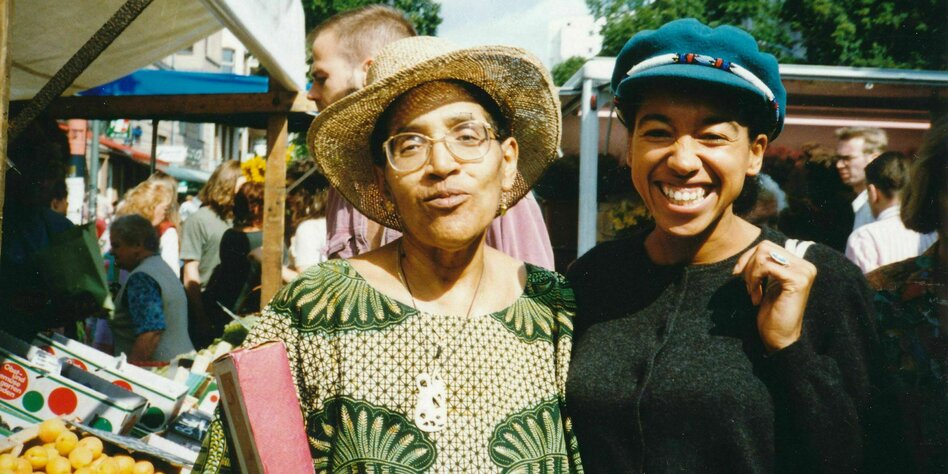
Figure 1: Photo of Audre Lorde and May Ayim, Berlin 1991. From the film Audre Lorde – The Berlin Years 1984 to 1992. Copyright Dagmar Schultz.
Stefan Hölscher, Independent Researcher
In my contribution to this volume on Responsive Bodies I want to take a closer look at recent Black feminist identity politics in German theater in order to think about what the Caribbean philosopher Sylvia Wynter calls ‘Man.’ In this regard later in this text I will focus on the video clip series Colonastics (2020) by Joana Tischkau. I will do so in relation to the colonial roots of post-war racism in Germany, more precisely the time after its reunification in 1989. In front of this background my claim is that Afro-German feminist theater makers in the last couple of years have been responding to a certain white dominant culture (see Rommelspacher 1995) in the country I am living in as a white German, where right-wing political parties like the Alternative für Deutschland (AfD) are getting stronger again right now, unfortunately. The responsiveness corresponding with the aesthetic practices of the theater makers being discussed here questions, I am claiming with Wynter, ‘Man’ as a dominant genre of being human and thereby brings forth a true pluralization of German society. Joana Tischkau, like her colleagues Anta Helena Recke and Magda Korsinsky, presents a counter-narrative distinctly formulated in opposition to regimes of whiteness and the white gaze as institutionalized forms of colonialist patriarchy in German society. The works by Korsinsky, Recke, and Tischkau—besides their problematization of European colonialism—carry another history that connects German to US-American contexts and—via Audre Lorde and May Ayim—can be traced back to the American Black feminist Combahee River Collective and even further.
This focusing upon our own oppression is embodied in the concept of identity politics. We believe that the most profound and potentially most radical politics come directly out of our own identity, as opposed to working to end somebody else’s oppression. In the case of Black women this is a particularly repugnant, dangerous, threatening, and therefore revolutionary concept because it is obvious from looking at all the political movements that have preceded us that anyone is more worthy of liberation than ourselves. We reject pedestals, queenhood, and walking ten paces behind. To be recognized as human, levelly human, is enough. (Combahee River Collective 1977)
Prominently stated by the Combahee River Collective, this text alludes to a public speech originally directed at white feminists in the US in 1851 by the early Black feminist Soujorner Truth. Today, the Statement (1977) by the Combahee River Collective is an important reference point also in Germany. It is even canonical here for differently positioned writers in the field of left-wing identity politics, from Natasha A. Kelly to Fatma Aydemir, and from Hengameh Yaghoobifarah to Max Czollek. Left-wing identity politics in Germany, as in the USA, can be understood as the politics of marginalized groups emerging from their oppressed identity in order to reconfigure societal structures and the respective subject positions related to these (see Kastner and Susemichel 2018). As such, it responds to existing power relationships and attempts to direct them towards an openly democratic transformation.
Following the historical legacy of Black feminism in the US, recent left-wing German identity political actors assume an intersectional perspective. Performed along the axes of race, class, and gender, for them identity is not just individually chosen and does not solely emerge from self-attributions, but is first of all sociogenetically co-determined through violent external attributions. Drawing from his experience as a practicing psychiatrist in colonial contexts, Frantz Fanon, an important reference point for Wynter´s critique of ‘Man’ as well, wrote about sociogenesis half a century ago in Black Skin, White Masks (1952):
What emerges then is a need for combined action on the individual and the group. As a psychoanalyst I must help my patient to ‘consciousnessize’ his unconscious, to no longer be tempted by a hallucinatory lactification, but also to act along the lines of a change in social structure. In other words, the black man should no longer have to be faced with the dilemma ‘whiten or perish’ but must become aware of the possibility of existence; in still other words, if society creates difficulties for him because of his color, if I see in his dreams the expression of an unconscious desire to change color, my objective will not be to dissuade him by advising him to ‘keep his distance’; on the contrary, once his motives have been identified, my objective will be to enable him to choose action (or passivity) with respect to the real source of the conflict, i.e., the social structure. (Fanon 1961, 80)
Similarly, some activists of left-wing identity politics make their own intersectional position in the German dominant culture the departure point for political interventions. They thereby complicate the existing racist structures of the Federal Republic of Germany, which is supposedly ‘reunified’ for more than three decades now, from its margins.
Unlike the USA, Germany’s examination of its participation in Europe’s colonial history and critical reflection on its racist policies regarding the exploitation and oppression of so-called ‘guest workers’ after the Second World War has only just begun. This became even more important in 2015, when the civil war in Syria and the respective migration movements resulted in an increasingly racist public discourse and in the first rise of the, by then still emerging, new right-wing political party Alternative für Deutschland (AfD). The atmosphere here is comparable to the atmosphere back in the 1990s. At that time, shortly after the end of the Cold War and the fall of the iron curtain, a new ‘German’ identity emerged, resulting in exclusion, threats, and violent attacks on non-white Germans and other people living—and working and paying taxes—in the Federal Republic.
Against this background I would like to examine the historical resonance between varying Black feminist identity politics on both sides of the Atlantic and put these in conjunction with the practices of the three contemporary Afro-German feminist theater makers Korsinsky, Recke, and ultimately Tischkau, whose video clip series Colonastics (2020) I will analyze in detail towards the end of this essay. I will do so by putting their practices in contrast to right-wing identity politics, since their concern is to conceptualize identity beyond essentialism. Inspired by Black feminism, actors oriented within identity politics reveal complicated power relations and thereby advance a concrete pluralization of German society in a time when in many places all around the world nationalism and racism are growing stronger again. My aim is to reconstruct the historical genesis of the urgent Black feminist institutional critique that currently takes place in German theater. By exposing dominant practices of gazing and marking bodies in a white gaze regime, this critique empowers hitherto underrepresented subjectivities and establishes new encounters with one another.
Since the publication of the anthology Your Homeland Is Our Nightmare (Aydemir and Yaghoobifarah 2018), a debate about left-wing identity politics has been raging in Germany. The dispute was escalated primarily by white men like Bernd Stegemann, a dramaturge, essayist, and professor in Berlin, who blames the political engagement of marginalized groups in Germany for the decay of its bourgeois public sphere and sees in their growing visibility a kind of ‘moral trap’ (see Stegemann 2018 and 2021a). Stegemann also intervened in the racist scandal at the Düsseldorfer Schauspielhaus in early 2021 in which Ron Iyamu, an Afro-German actor and then member of the ensemble, had personally been called ‘slave’ by some of his colleagues. During the rehearsal of a staging of Georg Büchner’s piece Danton’s Death the same colleagues also had used the N-word against Iyamu. Instead of understanding the deeply racist dimension of this scandal, Stegemann published a text in the Frankfurter Allgemeine Sonntagszeitung in which he denied the lived experience of the Black actor (Stegemann 2021b). According to Stegemann, Iyamu should not feel threatened by comments that refer to his Blackness if he wants to be taken seriously as a professional actor.
Decidedly against positions like Stegemann’s, I read artistic practices in contemporary German theater inspired by Black feminist identity politics as political precisely because they insist on the specificity of modes of experience, social positions, and speaker positions for the purpose of problematizing real-existing power relations. By problematizing the relations of gazing and the marking of bodies on stage these theater makers respond to the world surrounding them—a world which is inscribed by both colonial history in general and the history of pre- and post-war racism in Germany more specifically. Theater in Germany was and still is a state-subsidized, bourgeois, and predominantly white institution, a place of gazing, marking, and thereby of representing bodies along the axes of race, class, and gender. Yet, with the negotiation of practices of visibility, society as a whole is transformed, even if only on a microscale. Therefore, I am consistently positive about the micropolitics of left-wing identity politics, but would prefer to differentiate historically between different facets of identity political practice.
The first collective critique of white post-war German dominant culture was formulated by a coalition of cultural workers mainly with labor migration family backgrounds which called itself Kanak Attak, raising its voice both in the field of literature and in theater venues. The aesthetic stance of Kanak Attak between the mid-1990s and the early 2000s consisted of appropriating violent foreign markers against the backdrop of racist discourses about former so-called ‘guest workers’ in Germany. It turned those into self-markers in order to politicize intra-European racialized relations of exploitation in a supposedly reunified Germany. Different to this approach, more recent cultural criticism formulated by Black feminist artists in German theater digs deeper into history. The works of artists such as Korsinsky, Recke, and Tischkau are characterized by the consideration of colonial-historical contexts that go far beyond twentieth-century inter-European relations of oppression. Through a more complex aesthetics, whose language is shaped by digital media, they affirm intersectional insights into the gazing and marking of bodies more clearly than the stylistic device of critical affirmation coined by Kanak Attak nearly twenty years ago.
Nowadays some former members of Kanak Attak, such as Massimo Perinelli (2019), claim that the belated reception of Critical Whiteness Studies in Germany has put an end to the anti-racist movement.[1] Yet, they focus on Germany’s situation in the 1990s solely from the perspective of those labelled as children of Turkish or Southern or Eastern European ‘guest workers’ by Germany’s white dominant culture. Unfortunately, this leaves out discourses that in US contexts already have been spreading further for decades, especially in the wake of Black Studies, such as Wynter´s critique of a white concept of the human as ‘Man’. At least Critical Whiteness Studies in Germany has finally in the last few years also rightfully provoked an expansion of the anti-racist gaze in regard to European colonial history.
Both terms ‘guest worker’ and ‘slave’ carry a racist burden, but they do so very differently and not really on comparable scales. Only a critical perspective on European colonial history can enable a deeper analysis of those differences and quite differently situated subjects. In this regard, Black feminism in Germany goes further than Kanak Attak did back in its time.
The three Afro-German theater makers I am referring to here produce their pieces in the wake of Black feminist thought as it has been developing in Germany in dialogue with US discourses. Since the 1980s, in the Federal Republic, Black feminists like Lorde and Ayim in West Berlin have demanded a minimum degree of public visibility which until then had been reserved solely for white people, namely for white heterosexual cis-men. Already before the fall of the wall and the following German reunification, Black feminism existed in Germany, but only recently has it regained relevance, also in the field of artistic practices. Helmut Schmidt, Germany’s chancellor from 1974 till 1982, had claimed in the early 1990s that the fall of the wall made growing together what belonged together, yet without addressing non-white Germans. Those non-white Germans—and people living and working in Germany without German passports—had been an almost politically invisible part of society on both sides of the iron curtain, being racialized and marginalized both in the West and in the East of Germany. While the white part of the nation felt rejuvenated, at least on television, due to the fantasy of a sudden marriage of former West and former East, Black feminists criticized Germany’s new self-representations as exclusive representations of a closed society.[2] It was primarily through the political agenda of Lorde and Ayim in the late 1980s and early 1990s, as well as through new alternative publication houses such as the Orlanda Frauenverlag, that Black and queer milieus emerged and became more visible than ever before. These milieus were sensible in regard to all kinds of oppression in German society and the mechanisms of exclusion connecting them, thus facilitating translations between US and German Black thought. Already before the fall of the wall and the discourse by Kanak Attak in the later 1990s, debates emerged that luckily enough in recent years are returning in the work of Afro-German feminist theater makers.
Figure 1: Photo of Audre Lorde and May Ayim, Berlin 1991. From the film Audre Lorde – The Berlin Years 1984 to 1992. Copyright Dagmar Schultz.
This is particularly relevant for theater and performance productions like Korsinsky’s Patterns (2019), Recke’s The Mortifications of Humanity (2019), and Tischkau’s Playblack (2019), all of which were created shortly before the beginning of the COVID-19 pandemic. While Korsinsky’s Patterns (2019) deals with questions of self-empowerment, Recke’s The Mortifications of Humanity (2019) pluralizes a white understanding of identity by diversifying modes of experience. Tischkau’s Playblack (2019) uses Michel Jackson’s self-representations to address colorblindness in pop music for the gaze of a white middle-class audience by staging Black performers parodying the TV format of the Mini Playback Show, an entertainment show broadcast on German TV from 1990 to 1998 in which children imitated well-known artists and their hits.
In a sophisticated way, these works deal with the arguments presented by Lorde and Ayim aesthetically and on the level of representation. They apply theatrical means to critically reflect on hegemonic practices of representation and visibility, respectively the gazing and marking of bodies. They taught me, from my subjective perspective as a white German, that the deployment of Black feminist identity politics in contemporary German theater can be understood as a response to and as an urgent marking back of the violations caused by the complex entanglements of subjectivity and power in Germany’s dominant culture. By means of this marking back that Wynter names ‘Man’—and in my context here the assumption of a unified, white-German, allegedly universal experiential space and a bourgeois public sphere—is problematized on the level of its power structures. This reflects what Ayim had noted already in 1994, four years before the founding of Kanak Attak in 1998:
For me, writing from the margins means finding words for things and situations that don’t seem to exist when you take on the experiences and perspectives of those who have/possess privilege and power. As a Black writer in ‘wannabe white Germany,’ it’s important to me to articulate and change perspectives on racism, sexism, and identity. (Ayim 2021, 279)
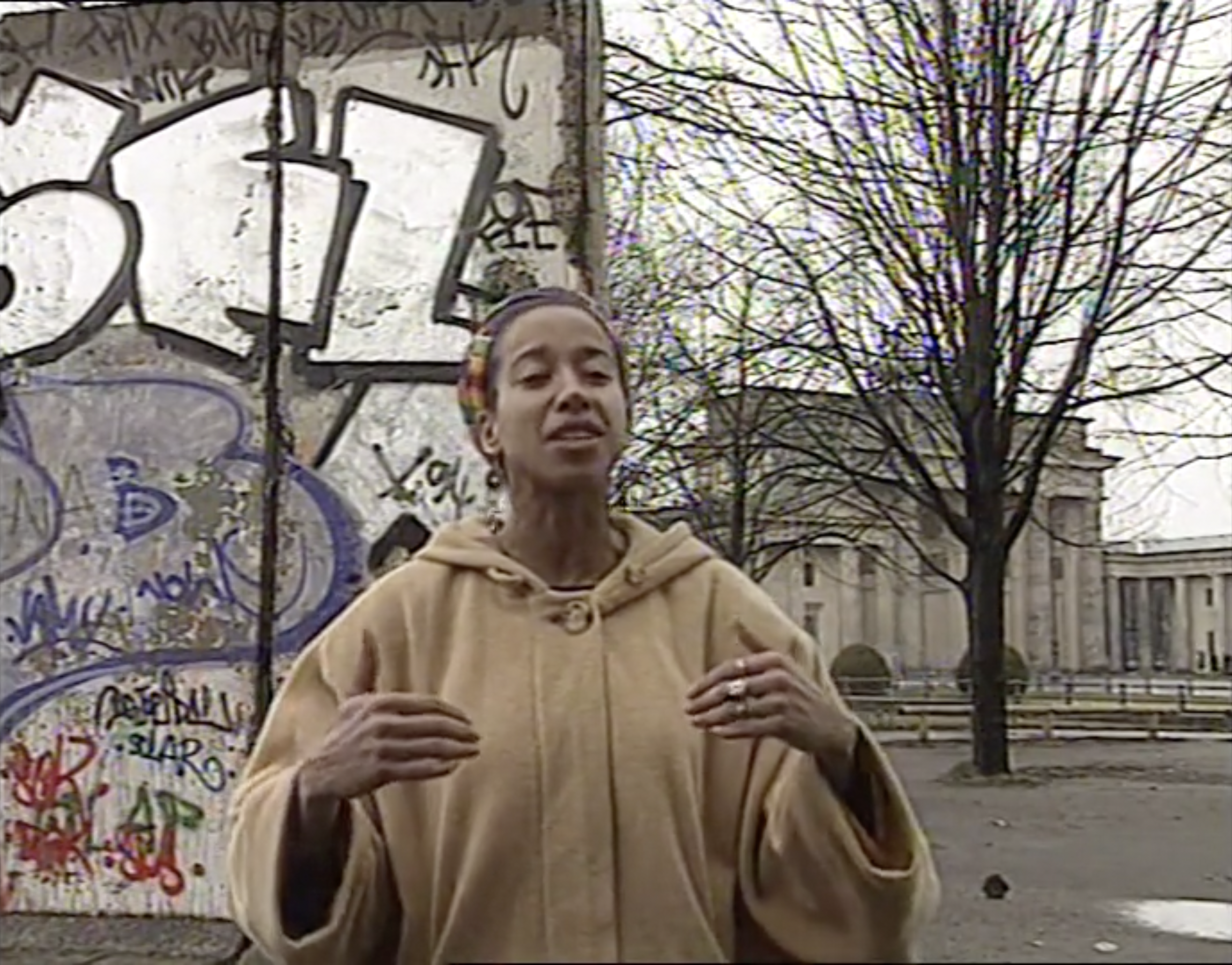
Figure 2: May Ayim in front of the Berlin Wall at the beginning of the 1990s. Still from the film Hoffnung im Herbst (Hope in Autumn, 1997) by Maria Binder.
In Patterns (2019), a production by Ballhaus Naunynstraße, Magda Korsinsky stages a ten-member group of young Black women, alluding to self-empowerment practices brought forth by Lorde and Ayim in the 1980s and 1990s Berlin as well as to US contexts already of the 1960s and 1970s. In Korsinsky’s piece, in addition to self-attributions and the accompanying empowerment of a group of ten young Afro-German women, the focus lies on external attributions directed at Black female subject positions by male and, above all, white (male) subject positions. By reappropriating images related to the violent history of representation of Black women, she raises the question of how subjectivity and power are inscribed in representation. Her production critiques the white German gaze regime through a transformative use of representational techniques and the opening of shared perspectives in regard to the interplay of intersectionality and subjectivity.
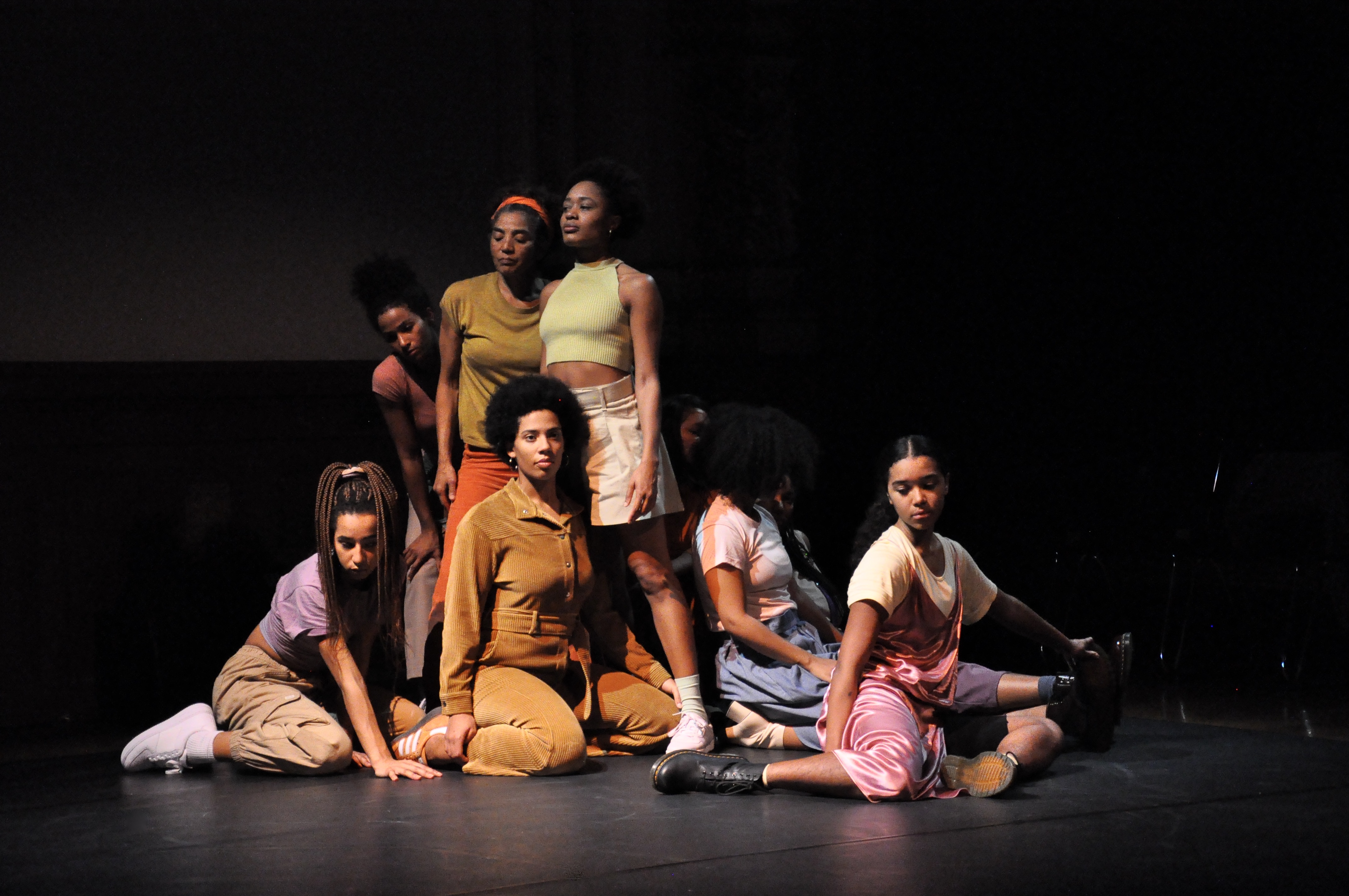
Figure 3: Patterns (2019) by Magda Korsinsky. Copyright Ballhaus Naunynstraße. Photo: Wagner Carvalho.
In many scenes of the group choreography the performers are gazing back at the spectators, switching a fundamental power structure in theater: Who looks at whom and how? In a very sophisticated way Korsinski plays with the intersectional complexities of a regime which, through the white gaze, positions people and subjectivities in Germany rather differently. Besides what is represented and made visible on stage publicly in the form of the piece itself, during the rehearsal process she gathers a bigger group of young Afro-German women, initiating a collective process of self-empowerment and thereby bringing back on stage what also Lorde strived for when she was living in Berlin during the 1980s and 1990s, encountering Ayim and many other new friends to focus on their identity as Black German women. These processes of self-identification, both as individuals and as a group subject, also take place in Korsinsky´s production, e.g. when single women talk about their specific experience in contemporary German society or when they exchange about the similarities between their racist experiences in this country.
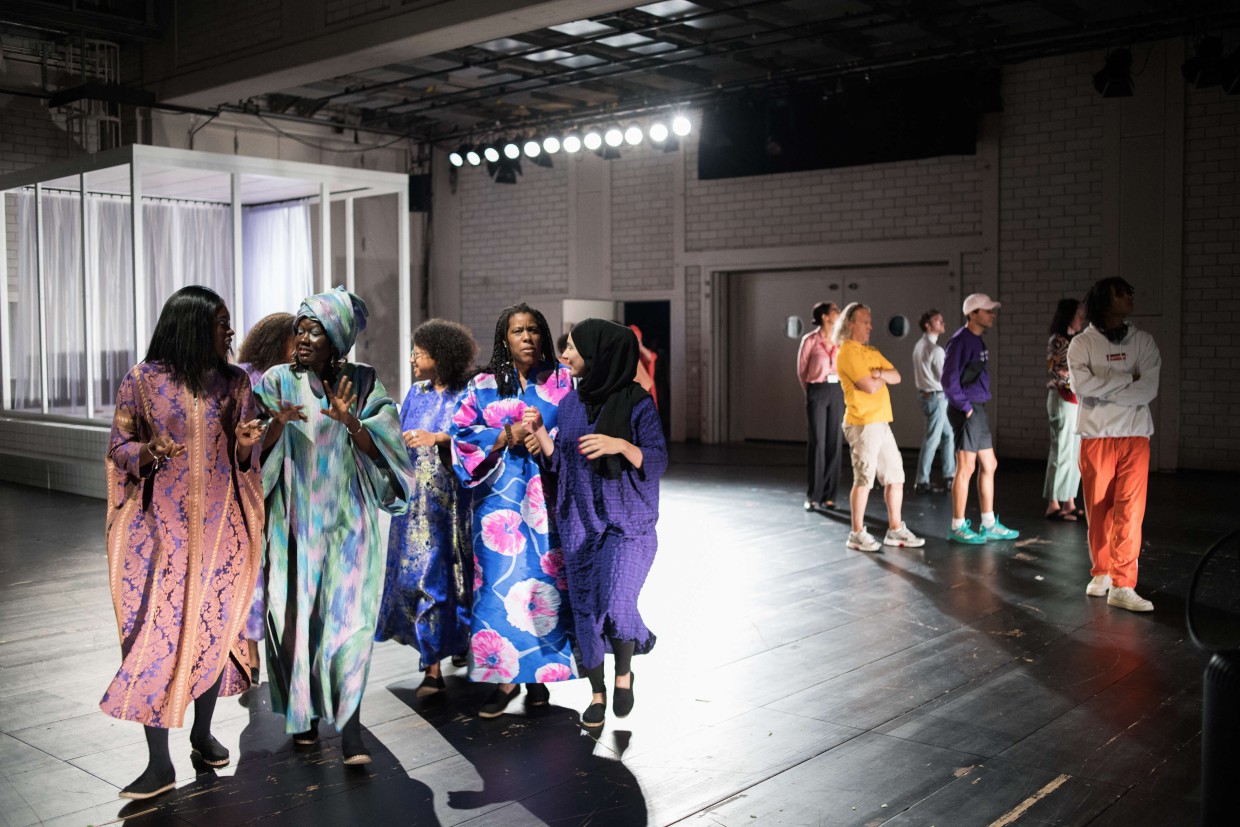
Figure 4: The Mortifications of Humanity (2019) by Anta Helena Recke.
Recke’s The Mortifications of Humanity (2019) reveals another facet of Black feminist identity politics in contemporary German theater. It consists of complicating identity by staging subject positions in a way that they can be experienced in their ambivalently performative aspects. The center of the stage is occupied by a group of mostly white viewers of the painting Monkeys as Art Judges (1889) by Gabriel Cornelius von Max (1840–1915). Von Max was Darwinist in his views, professor at the Royal Academy of Fine Arts in Munich and mainly into historical painting, though many of his works contain spiritual and mystic aspects as well. What the audience of Recke’s piece witnesses at its core scene is that a group of mainly white people speculate in a white cube at the center of the stage about what is depicted in the painting and to whose gaze it might be dedicated. But the piece opens with Black performers moving around it, imitating monkey-like movements and apparently being afraid of what might be hidden inside the white cube. The scene connotes both the opening sequence of the famous movie 2001: A Space Odyssey (1968) by Stanley Kubrick and racist stereotypes of Black bodies from the many documents which have been produced in the frame of European colonial history.
With core references to Wynter’s critique of ‘Man’, Zakiyyah Iman Jackson analyses these racist implications and colonial-historical traces in an understanding of the human as ‘Man’ as follows:
Universal humanity, a specific ‘genre of the human,’ is produced by the constitutive abjection of black humanity; nevertheless, the very constitutive function of this inverted recognition reveals that this black abjection is transposing recognition, and inclusion that masks itself as an exclusion. (Jackson 2020, 23)
Recke orients speaker positions towards questions of a gaze marked by a dominantly white and bourgeois culture. She questions the dominant politics of representation by ‘Man’ through the particularity of subject positions both crossed and produced by race, class, and gender. In the first half of her piece, the white cube is still the place where pictorial descriptions are confronted with each other. In the second half, the stage set transforms into an opaque cube that rotates in space while a diverse crowd of bodies enters and circles around its empty center. The performers wear costumes from multiple historical and geographical contexts, unfolding a tableau vivant in different colors and spiraling around the very place where all the descriptions have been formulated so far, anchored in whiteness as their unmarked point of departure. Recke’s production pluralizes identity by expanding, beyond this whiteness, into many others: those who have been excluded, suppressed, and dehumanized in the course of European colonial history. Thus, a white experiential space which misconceives itself as universally centered frays at its margins.
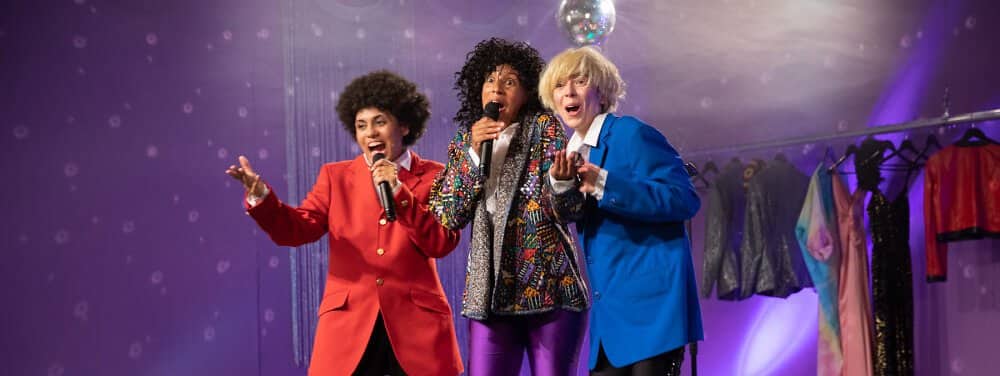
Figure 5: Playblack (2019) by Joana Tischkau.
Tischkau’s Playblack (2019) is a production based on her final piece in the frame of the MA Study program Choreography and Performance at the Institute for Applied Theater Studies at Justus Liebig University Giessen. It had its premiere at Künstlerhaus Mousonturm in Frankfurt am Main and is not only a complex mesh between white clichés of Blackness and a Black gaze on white ways of looking, but also the transformation of subjectivity by means of translating specific modes of experience into one another.[3] Tischkau parodies stereotypical images. By contrasting forms of representation typical for Michael Jackson’s famous appropriations of whiteness with a Black feminist view on white European TV formats such as the Mini Playback Show or Wetten, dass...?, she shows how race and class positions are produced. The 1990s in Germany were characterized by racist uprisings and a new nationalism in the public sphere as well as in the private spheres of living rooms with new mass media entertainment, formatted for TV and being imported mainly from the US. These represented German society as a coherent entity, leaving aside the multiple intersectional conflicts dividing it. In reference to these predominantly white representational formats, Tischkau further complicates power relations on the level of gender. She stages three women, two of them Black and one white, who embody the role of male and stereotypically masculine TV hosts. Later on in the performance, she stages two women: a Black woman impersonating Michael Jackson and a white woman performing as Thomas Gottschalk, the blonde and blue-eyed white German host of the Wetten, dass...? show. Sitting wide-legged, mansplaining, and appeasing a crowd of youngsters, the Gottschalk-persona explicitly shifts the constitution of an otherwise rather unmarked gaze regime established by white, cis-male, heterosexual, and bourgeois people and shifts the very components constituting its structure.
Korsinsky’s, Tischkau‘s, and Recke’s three productions from 2019 do not only make Black (female) subjectivity visible in contemporary German theater. They also transform white subjectivity by clearly defining it as dominant in relation to their specific Afro-German positions. At the same time, by problematizing ‘Man,’ they deconstruct the cultural and political efficacy of representation in predominant self-conceptions of Germany as a nation. The three pieces are not only a critique of white ascriptions to others, but also a critique of practices that are connected to white self-ascriptions. They examine subjectivity along the axes of race and gender, encouraging further analysis of power relations along the axis of class.
To further develop my argument, I now want to take a closer look at Tischkau’s video clip series Colonastics (2020). This work sheds a critical light on Europe as both a geographical region and a politically violent entity. Although it originated as an unintended response to the pandemic restrictions to live events in the field of performing arts, in this digital trilogy Tischkau developed her analysis of whiteness further. Commissioned by the Goethe Institute for the online festival Latitude in June 2020, her three clips refer to the TV format of home workout and gymnastics videos from the 1980s (see her interview with Ommen 2020). Since that time and following the early VHS tapes produced by the white US-American actress Jane Fonda,[4] many celebrities have brought the gym home; mainly to white women striving to be part of the growing middle-class, teaching them how to stay fit and healthy with the help of often culturally appropriated practices such as aerobics, yoga, and other ‘exotic’ techniques of the body and self. In the meantime, the dispositif of those training instructions has evolved through media from VHS to digital formats. Now circulating through the Internet, the unmarked center around is a talking head, one individual, often a well-known white VIP in their respective fields of expertise, who represents a role model for others to follow. This individual then initiates repetitive actions and new habits others are encouraged to repeat as a physical exercise and for the optimization of an all-too often white body and subjectivity.
Rehearsing gymnastics in front of a TV or computer screen is in direct correlation to what Aníbal Quijano and Walter D. Mignolo would call the colonial matrix of power: a disciplining and normalization of bodies, subjectivities, and their interaction with each other for the sake of white notions of experience. In contrast to a one-sided understanding of interaction, where one instructs and the other follows, as is clearly stated in The Darker Side of Western Modernity, “[w]e need to move from universality to pluriversality; to decolonize the imperial concept of the Human and to build decolonial notions of Humanity” (Mignolo 2011, 242). Long before the rise of the global middle-class in the booming economy of the 1980s and 1990s, early modern European colonial history since the fifteenth-century taught techniques and protocols akin to and preceding contemporary gymnastics. They were used by white men to adapt racialized, gendered, and colonized bodies to further the demands of their plantation system. The Black visual artist and thinker Grada Kilomba has analyzed in detail how far European colonialism, which violently marked other bodies, is still inscribed in ongoing practices of gazing and looking.
Another fantasy is that if one makes enough effort to explain, one will be accepted and will thus escape the violence of everyday racism. I am therefore talking about the fantasy of perfectionism toward the white audience and how this again imprisons the Black subject in a colonial order. (Kilomba 2016, 142)
The structures determining how bodies are located and from where they speak in historically segmented relationships of oppression are rather complex but centered in what Wynter calls ‘Man.’ They inhabit language and other kinds of social structures as well, even choreography. In this context, the idea of the self-possessed bourgeois individual has been from the beginning bound to the violent denial of responsiveness, the displacement of others, and—in the case of slavery and its many dehumanizing aspects—the expulsion of everything about bodies, subjectivities, and their reciprocal interaction which does not fit to the idea of a disciplined, normalized, and white male experience as the center of the world.
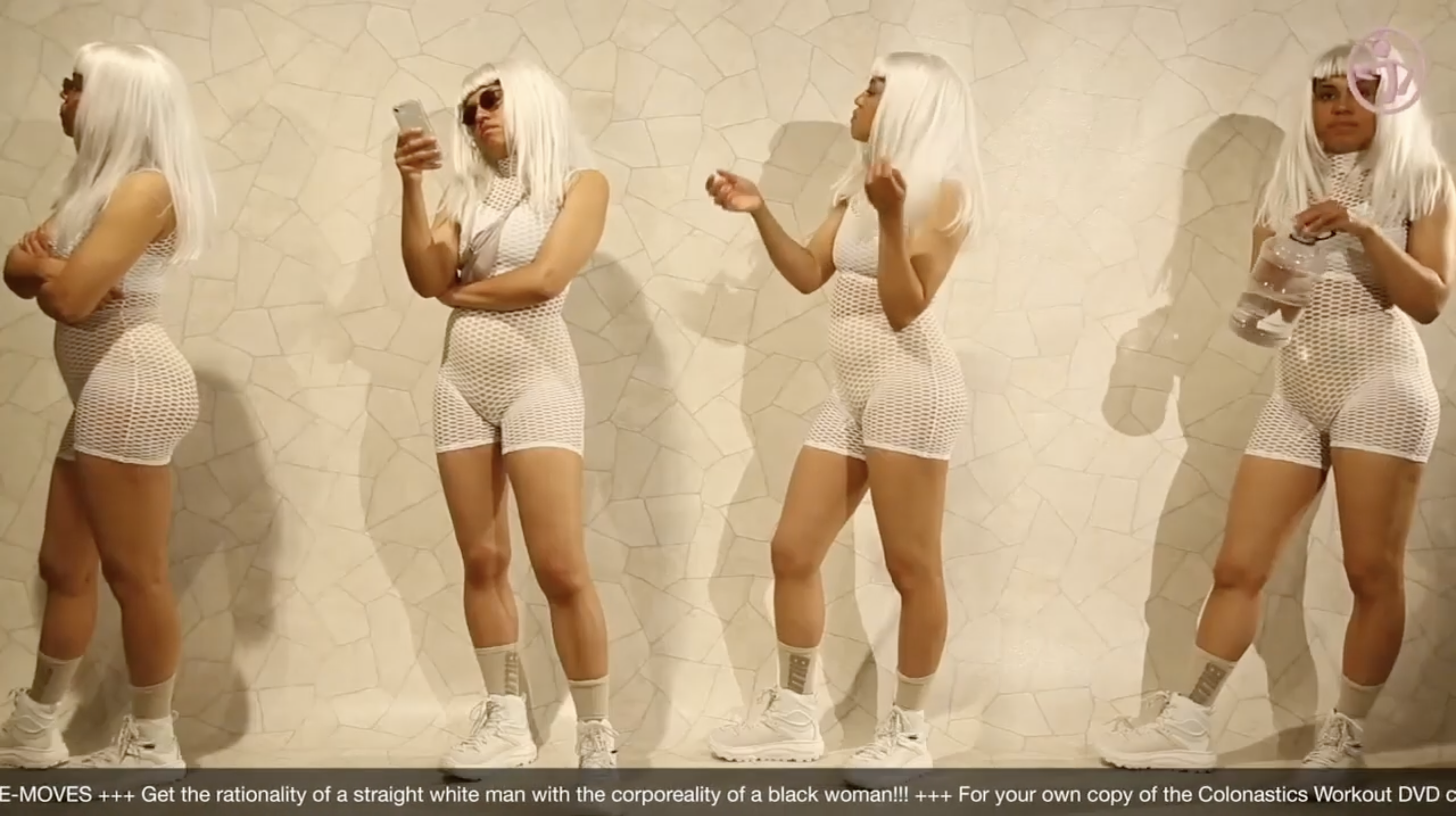
Figure 6: Still from the video clip Techno Drill (2020) by Joana Tischkau. https://vimeo.com/432107626
Under the overarching title Colonastics (2020), Tischkau published three video clips on her Vimeo channel, entitled Bavarian Warmup, Rockout, and Techno Drill. In these clips, she parodies the elements of discipline and normalization which accumulate in the format of the home workout video and explicates its elements as colonial layers in relation to a globally dominant white male concept of subjectivity becoming dominant and going global as what Wynter calls ‘Man’. Not only does she demonstrate training videos as dominated by whiteness and masculinity but even more so the different styles of pop music and culture she refers to—including German folklore, hard rock, and hipster-style techno. Particularly remarkable is the clip Techno Drill (2020), where Tischkau mimics a white male coach who, during the lockdown, misses nights out at Berlin’s famous techno club Berghain. Feeling trapped in his large apartment in Berlin-Mitte, the coach introduces the viewer to simple dance steps. With this persiflage, Tischkau questions ‘Man’ as a specific white genre falsely over-representing other genres of the human.
Tischkau’s work reflects a distinction made by Wynter. For Wynter, ‘Man’, who in her view is deeply inscribed by colonial modernity, must be repetitively performed and continuously reenacted in the colonial matrix of power—just as were gender roles in the heteronormative matrix of power as explicated by Judith Butler in the late 1990s. In her essay The Ceremony Found (2015), she describes the emergence of ‘Man’ in the course of modern European colonial history in two steps, which in their chronological order she connects with the terms Man(1) and Man(2). She proposes a first step at the end of the fifteenth-century, when in the frame of the Western Renaissance a ‘degodding’ of the originally religious idea of the self-possessed individual took place.
These Lay-humanist intellectuals had therefore initiated nothing less than […] a new secular (i.e., degodded, desupernaturalized) cosmogonically ratio-centric […] rather than theocentric answer to the question of who-we-are. Nevertheless, this new secular answer was one that Lay-humanist intellectuals had dialectically projected over and against, and thereby in specific response to, the extreme fourteenth-century, High Scholastic version of medieval Latin-Christian Europe’s order-instituting and order-legitimating, theologically absolute answer to the same question. (Wynter 2015, 190–191)
What Wynter calls Man(1) is a form of subjectivity which replaces the monotheistic understanding of god with the idea of a white subjectivity as its new deity, pushing away the rest of the world to his margins. Although Man(1) is only a particular genre of the human, he over-represents being human in general while conquering and subjecting the whole world and other genres of being human under his own unmarked subjectivity, claiming to represent an almost magical kind of universal space and time.
While Man(1) considers himself a secular, rational, and self-possessed version of the divine individual, Man(2) enters the stage in the Eighteenth Century. Imagining himself as a solely surviving biological organism in an externalized ‘nature’ and a biocentric homo oeconomicus, Man(2) is still a model to which others adjust their bodies, subjectivities, and interaction by entering various forms of training and exercise. Contrasting Man(2) and responding to the present situation of colonial modernity, Wynter hopes for a
[…] human response to the question of who-we-are [which] would effect such a mutation through its separation of the being of being human (in its hitherto innumerable genre-specific particularities) from being human in the purely biocentric terms of our present globally hegemonic, monohumanist and secular Western, yet no less genre-specific, now (neo)Liberal conception as Man(2). In so doing, this new answer necessarily elucidates and disenchants the rhetorico-discursive strategies by means of which the lexical concepts of Man and Human, because of their similarity of sound, are made to imply that their referent populations are also the same. (Wynter 2015, 193)
Neither is Man the human nor is he more human than Woman, although in the course of colonial history specifically white men subjected other genres of the human under their rather narrow understanding of humanity. Against this understanding, its “rhetorico-discursive strategies” (Ibid.), and its still dominant position, not only but also in Germany, the three Black feminist theater makers being discussed here are working.
How far does Tischkau with her video clip series Colonastics elucidate and disenchant these “rhetoric-discursive strategies” (Wynter 2015, 193)? Besides the phonetic similarity between woman and human, one might find answers to this question by remembering the history of Black feminism since Combahee River Collective’s Statement (1977) and by taking a closer look at Techno Drill (2020). The authors of the Statement (1977) made their own specific subject position as Black women visible by differentiating themselves from other, less marginalized and more dominant subject positions such as those of white women and Black men. In doing so, they insisted on their specifically oppressed identity as the very place from where they wrote their statement and from where they spoke. Also, Tischkau is very aware of her own position as an Afro-German in relations of power. From that explicitly positioned identity she implicitly addresses the white (male) viewers of her video clip series differently than non-Black (and male) subjects could do. “Get the rationality of a straight white man with the corporeality of a black woman!!!” (Tischkau 2020), one can read for example after the credits and title in the ticker line running through the lower horizontal end of the image.
Wearing a white wig, white sport shoes, short leopard print leggings, and a leopard print top, all well-known from late twentieth-century, the choreographer establishes herself as a rather masculine trainer by mansplaining and proudly striking single fitness poses. In contrast to her white male tone, her outfit responds to the exoticizing elements in the format of the home workout video as well as to its sexist qualities. With this, Tischkau exposes a gap between her subjectivity as a Black woman and that of the white female biocentric body that the parody of the equally white male coach aims at. This is at least my reading as the white, cis-male, heterosexual author of this text: Jane Fonda’s aerobics, as part of a certain US cultural imperialism and as a fitness activity for mainly white middle-class women in Germany during the 1980s, can hardly be separated from the male gaze that is already at work in the practice and promotion of aerobics. Although Colonastics (2020) is more reflective of male than of female (cis, white, colonialist, bourgeois) subjects, it also criticizes the latter´s participation in a dominant gaze regime, respectively its submissive support of the former.
Partly contrasted by the more emancipatory or subversive reception of Fonda in both white and non-white gay communities, aerobics in Tischkau’s work seems to support an implicitly white and heterosexual gaze regime dedicated to and reproducing the hegemony of ‘Man.’ Further complicating and explicating historically interwoven power relations, Tischkau problematizes this gaze regime in a both funny and smart way.
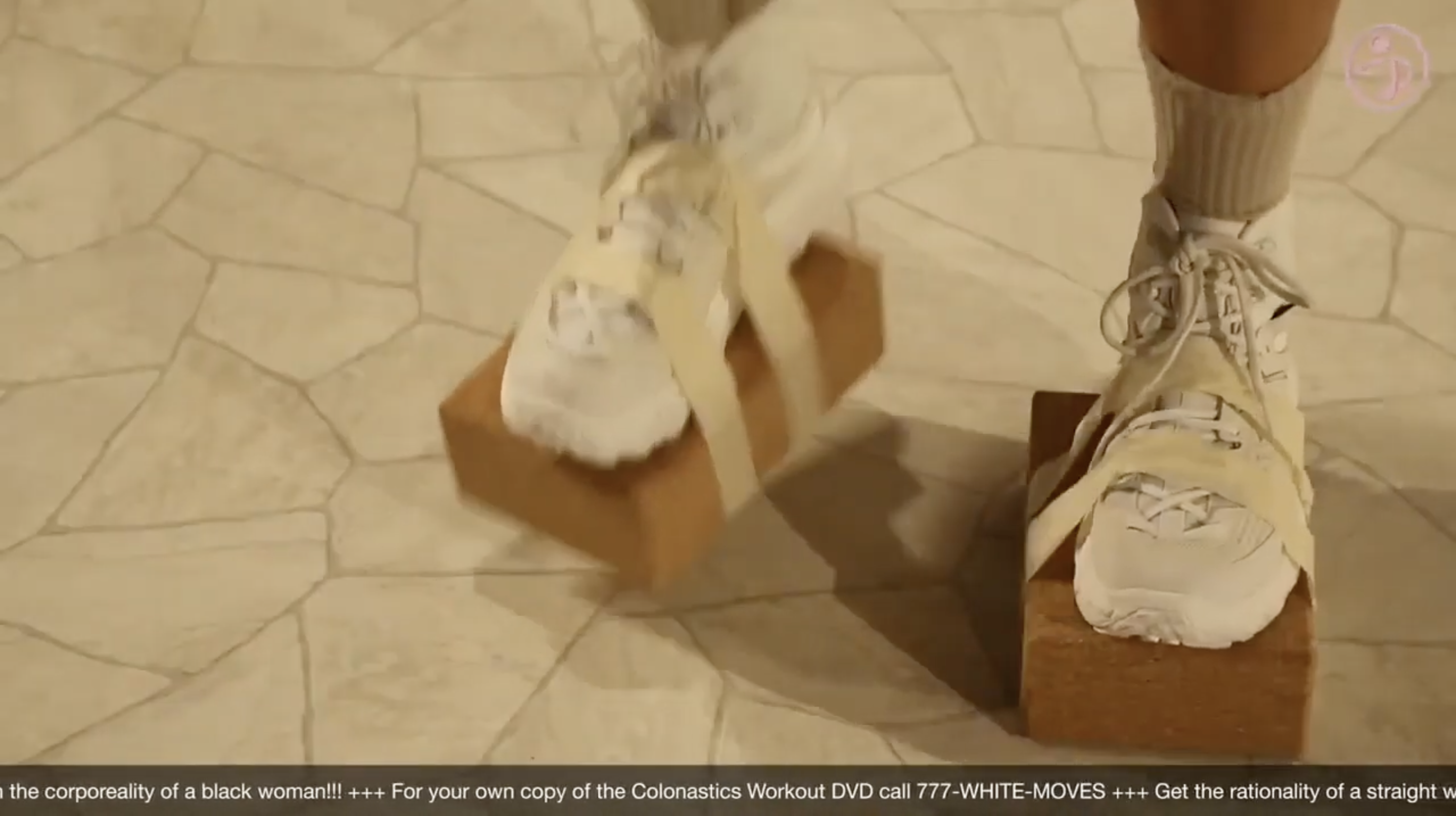
Figure 7: Still from the video clip Techno Drill (2020) by Joana Tischkau. https://vimeo.com/432107626
With Wynter one could say that at least in Germany since the 1980s mainly white women have been rehearsing the biocentrism of Man(2) with Fonda as the norm, making themselves fit into the white male desire of a healthy and sporty body. This does not mean that white women do not have any agency (including economic) both in the colonial and in the heteronormative matrix of power or that they were not responsible for their active engagement in discourses and practices of colonialism, classism, sexism, and homophobia. But, like Wynter, Tischkau puts ‘Man’ center stage. In the course of the introduction into Techno Drill (2020) the choreographer makes clear there is nothing ‘natural’ about the biocentric idea of the body put forward by Man(2), although in modern European colonial history it has been very intimately connected to the fantasy of a nature to be conquered, normalized, and made productive by externalization, marginalization, and extraction. From the beginning the biocentric body had to be produced by modes of discipline and normalization, both on the plantation and later in factories and private living rooms around the world, also those of the middle-class in Germany.
With her series of video clips entitled Colonastics (2020), Tischkau not only parodies the format of the home workout video. She explicates it as a historically ambivalent formatting of human subjectivity. By relating this subjectivity to the whiteness being inscribed into different styles of contemporary pop music and culture, she also transforms their means and ends into more ambiguous directions. While training instructions were very much about a physical workout for one’s (white and female) self since 1980s, Colonastics (2020) is rather about the sociogenetic working through white and male concepts of the body being racialized and rendered female. It is the examination of the subjectivity of self-determined colonizers disciplining and normalizing their marginalized others. It is about the difference between ‘Man’ as a homogenous over-representation of the human and the plurality of human subjectivities. In her essay “The Ceremony Found” (2015), Wynter claims:
In our contemporary, planetarily extended, intra-human situation, our being human in the now globally homogenized, monohumanist terms of the secular West’s Man—specifically in the biologically absolute terms of the Western and westernized bourgeoisie’s (neo)Liberal-humanist, homo oeconomicus conception—is now itself a […] cosmogonically chartered and encoded and, thereby, fictively constructed and performatively enacted genre of being […] human. (196)
According to Wynter, ‘Man’ could establish himself as a ‘universal’ subjectivity and as a role model for others on a global scale by ‘genre-specific practices’ (199) which, as techniques of the body and self, have been replacing other practices and genres of being human by training and exercising specifically a white subjectivity and mode of experience.
These colonizing practices of visibility and representation and the violence of the marking gaze being inscribed therein are even shaping recent techno culture, as one can see in the main part of Tischkau’s Techno Drill (2020). Although techno music has Black origins in Detroit in the late 1980s and early 1990s, Tischkau, wearing sunglasses and a white net dress, problematizes its contemporary appropriation by self-possessed white hipster-subjects and describes their dancing as “arrhythmic, monotone, and stiff”. The main motif of the workout she presents in Techno Drill (2020) is called step touch and consists of a simple movement loop where one stamps one’s feet on the ground without changing place—‘all white people love it, they do it all the time, to whatever music, you can do it to any music’, one can hear her saying, being mediated by a voice-over. At some point she even attaches bricks with tape to her shoes to make Techno Drill (2020) harder to execute. The 5-minute-34-second clip is about individuals mainly interacting with and circulating around themselves. ‘If you don’t get the rhythm, it doesn’t matter—you are the rhythm’, she instructs her followers. ‘You’re still white, that’s right’, Tischkau says bluntly.
Tischkau’s marking back and rendering explicit of the colonial-historical violence imposed by white European dominant culture coincides on a micropolitical scale with the current social transformation of Germany´s public sphere more generally and with the belated confrontation of Germany with its colonial history. Beyond the ideology of the bourgeois individual and Germany’s supposed immutable white identity (which people like Stegemann try to protect), there are multiple facets of Black feminist identity politics in contemporary German theater. My historical analysis, combined with short readings of three different German theater productions by Korsinsky, Recke, and Tischkau from 2019 and my longer reading of the latter’s Colonastics (2020) series, brings me to the following conclusion: By recalling the transatlantic history of Black feminism, the three German theater makers I have been briefly presenting here contribute important impulses to the real, concrete pluralization of Germany as both an experiential space inscribed by history and a democratic public sphere. As an ethical response to the racism which still exists in Germany´s contemporary dominant culture they translate Fanon’s concept of sociogenesis into the social patriarchy of the Federal Republic. On this level they bring forth aesthetically more complex self-descriptions of a nation-state called Germany, more so at least than its former chancellor Helmut Schmidt was able to formulate when he talked about people ‘naturally’ growing together shortly after the fall of the wall, a wall that was built after a longer history of violence caused by the subjectivity of ‘Man’ as a still dominant genre of being human, not only but also in Germany.
[1] Perinelli‘s polemic does not do justice to the recent state of affairs of research in Critical Whiteness Studies in Germany. See also Arndt (2017a; 2017b).
[2] In regard to the imaginative aspects of such a nation state see Balibar (1990).
[3] For the complexity of the aesthetic approach Tischkau is following see hooks (1992).
[4] See for example “1970s: Jane Fonda Workout” (Decades TV Network, 2018) and “Jane Fonda - Original Workout (Trailer)“ (Music on TV1, 2016).
Arndt, Susan. 2017a. “Weißsein. Die verkannte Strukturkategorie Europas und Deutschlands.” In Mythen, Masken und Subjekte. Kritische Weißseinsforschung in Deutschland, edited by Susan Arndt, Maureen Maisha Eggers, Grada Kilomba, and Peggy Piesche, 24–28. Münster: Unrast.
———. 2017b. “‘Rassen’ gibt es nicht, wohl aber die symbolische Ordnung von Rasse. Der ‘Racial Turn’ als Gegennarrativ zur Verleugnung und Hierarchisierung von Rassismus.” In Mythen, Masken und Subjekte. Kritische Weißseinsforschung in Deutschland, edited by Susan Arndt, Maureen Maisha Eggers, Grada Kilomba, and Peggy Piesche, 340–356. Münster: Unrast.
Aydemir, Fatma, and Hengameh Yaghoobifarah, eds. 2018. Eure Heimat ist unser Albtraum. Berlin: Ullstein.
Ayim, May. 2021. “Schreiben von den Rändern.” In May Ayim. Radikale Dichterin, sanfte Rebellin, edited by Ika Hügel-Marshall, Nivedita Prasad and Dagmar Schultz, 271–283. Münster: Unrast. Translation of the citation into English by the author.
Balibar, Étienne. 1990. “The Nation Form: History and Ideology.” In Race, Nation, Class, edited by Étienne Balibar and Immanuel Wallerstein, 86–106. Translated by Chris Turner. London: Verso.
Combahee River Collective. 1977. Statement. https://www.blackpast.org/african-american-history/combahee-river-collective-statement-1977/. Accessed 16 September 2022.
Decades TV Network. 2018. “1970s: Jane Fonda Workout.” https://www.youtube.com/watch?v=u86NaR3z6FE.
Fanon, Frantz. 1961. Black Skin, White Masks. Translated by Richard Philcox. New York: Grove Press.
hooks, bell. 2015. “The Oppositional Gaze. Black Female Spectators.” In Black Looks. Race and Representation, 115–132. New York and London: Routledge. https://doi.org/10.4324/9781315743226
Jackson, Zakiyyah Iman. 2020. Becoming Human. Matter and Meaning in an Antiblack World. New York: New York University Press. https://doi.org/10.18574/nyu/9781479873623.001.0001
Kastner, Jens, and Lea Susemichel. 2018. Identitätspolitiken. Konzepte und Kritiken in Geschichte und Gegenwart der Linken. Münster: Unrast.
Kilomba, Grada. 2016. Plantation Memories. Episodes of Everyday Racism. Münster: Unrast.
Music on TV1. 2016. “Jane Fonda - Original Workout (Trailer).“ https://www.youtube.com/watch?v=deKHYCsjseg.
Ommen, Prasanna. 2020. “Colonastics Talk with Joana Tischkau“. Latitude Festival, Goethe Institute, Berlin, 4 –6 June. https://www.youtube.com/watch?v=1SLn_bWJTys
Perinelli, Massimo. 2019. “Triggerwarnung! Critical Whiteness und das Ende antirassistischer Bewegung.” In Triggerwarnung. Identitätspolitik zwischen Abwehr, Abschottung und Allianzen, edited by Eva Berendsen, Saba-Nur Cheema, and Meron Mendel, 77–90. Berlin: Verbrecher Verlag.
Rommelspacher, Birgit. 1995. Dominanzkultur. Texte zu Fremdheit und Macht. Berlin: Orlanda Frauenverlag.
Stegemann, Bernd. 2018. Die Moralfalle. Für eine Befreiung linker Politik. Berlin: Matthes & Seitz
———. 2021a. Die Öffentlichkeit und ihre Feinde. Stuttgart: Klett-Cotta.
———. 2021b. “Review: In den Schützengräben der Verletzbarkeit.“ Frankfurter Allgemeine Zeitung, 9 April. https://www.faz.net/aktuell/feuilleton/buehne-und-konzert/rassismus-und-machtmissbrauch-erschuettern-die-theater-17283465.html.
Tischkau, Joana. 2020. Colonastics: Techno Drill. https://vimeo.com/432107626. Accessed 21 January, 2023.
Wynter, Sylvia. 2015. “The Ceremony Found. Towards the Autopoetic Turn/Overturn, its Autonomy of Human Agency and Extraterritoriality of (Self-)Cognition.” In Black Knowledges/Black Struggles: Essays in Critical Epistemology, edited by Jason R. Ambroise and Sabine Broeck, 184–252. Liverpool: Liverpool University Press. https://doi.org/10.5949/liverpool/9781781381724.003.0008
Stefan Hölscher (PD Dr.), born in 1980 in Frankfurt am Main, is project manager at the Turkish Union in Berlin-Brandenburg (TBB). Previously he worked as a research associate at the Institute for Applied Theater Studies at Justus Liebig University Giessen (2009–2013) and as a postdoc at the Academy of Fine Arts in Munich (2014–2017) and at the Institute for Theater Studies at Ruhr University Bochum (2018–2022). Additionally, he has been teaching at various other places since 2009. He completed his doctorate at the Institute for Applied Theater Studies in Giessen (2015) and his habilitation at the Faculty of Philology at Ruhr University Bochum (2022).
© 2023 Stefan Hölscher
Except where otherwise noted, this work is licensed under a Creative Commons Attribution-NonCommercial-ShareAlike 4.0 International License.